Indian Express
Knowledge Nugget: Why is Vaccine-Derived Poliovirus (VDPV) in news?
Take a look at the essential concepts, terms, quotes, or phenomena every day and brush up your knowledge. Here’s your UPSC knowledge nugget on the polio virus and why is the detection of vaccine-derived polio virus (VDPV) in Ghaziabad important for your Prelims and Mains.
1. India was declared free of wild poliovirus in 2014 after decades of mass immunisation, making it one of the 11 countries in South East Asia which have been certified free of wild poliovirus. But environmental surveillance – testing sewage for traces of the virus – continues as an early warning system.
2. After the detection in Ghaziabad, officials traced the sewage network, identified 12 neighbourhoods home to about 150,000 people as high-risk areas, and intensified vaccination efforts under the watch of the National Centre for Disease Control (NCDC) and the World Health Organisation (WHO).
3. Officials said that the detected strain is largely non-virulent and has so far remained contained. “Similar instances have been reported earlier in Varanasi and Meghalaya. Routine sample collection and tests are conducted every fortnight,” an official said.
4. The WHO defines polio or poliomyelitis as “a highly infectious viral disease, which mainly affects young children. The virus is transmitted by person-to-person, spread mainly through the faecal-oral route or, less frequently, by a common vehicle (e.g. contaminated water or food) and multiplies in the intestine, from where it can invade the nervous system and can cause paralysis.
5. Initial symptoms of polio include fever, fatigue, headache, vomiting, stiffness in the neck, and pain in the limbs. In a small proportion of cases, the disease causes paralysis, which is often permanent. There is no cure for polio; it can only be prevented by immunization.”
These cases do not affect India’s polio-free status — only the detection of the wild poliovirus will change that.
Story continues below this ad
6. There are three types of wild polio virus. Type 2 wild polio virus was eradicated in September 2015, while Type 3 wild polio virus has not been found since November 2012 and was certified eradicated on 24 October, 2019. As of 2022, endemic wild poliovirus type 1 remains in two countries: Pakistan and Afghanistan.
What is a vaccine-derived polio infection?
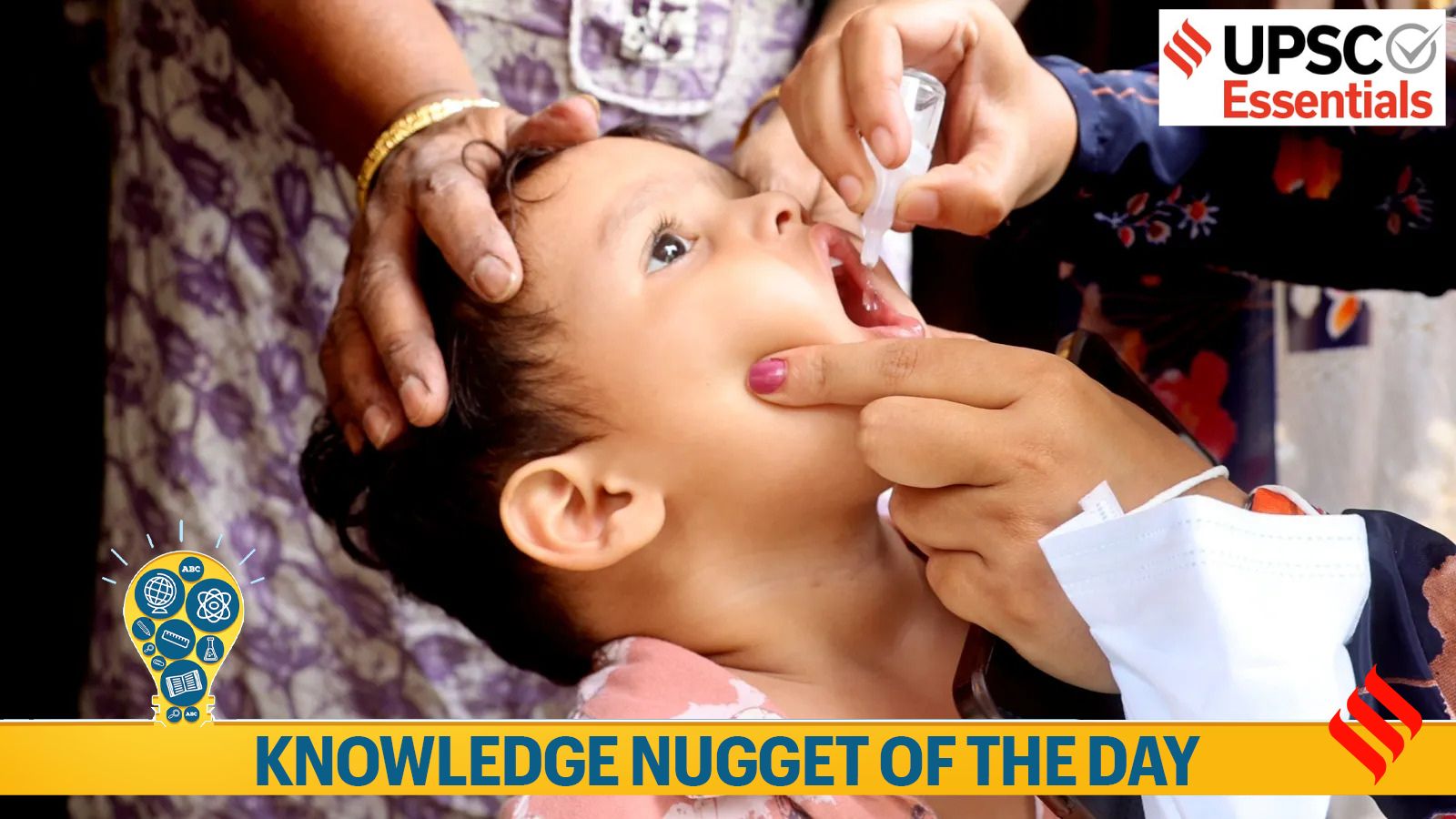
1. A vaccine-derived poliovirus is a strain related to the weakened version of the live poliovirus contained in the oral polio vaccine (OPV). ‘Polio drops’ are by and large safe — they have led to the successful eradication of the infection in most countries — but on rare occasions can trigger the disease in children with weak immune systems.
2. According to the WHO, the Global Polio Eradication Initiative uses two types of vaccine to stop polio transmission – inactivated polio vaccine (IPV) and oral polio vaccine (OPV). Unlike OPV, Inactivated polio vaccine (IPV), developed in 1955 by Dr Jonas Salk, consists of inactivated (killed) poliovirus strains of all three poliovirus types. It carries no such risk of VDPV.
3. Dr T Jacob John, former professor of virology at the Christian Medical College Vellore said that the OPV can lead to vaccine-derived infections in one of two ways.
Story continues below this ad
(i) In some cases, the weakened virus can continue circulating from child to child, regain its ability to transmit quickly, and then cause severe infection every time it spreads.
(ii) The virus in the vaccine can also cause chronic infection in children with weakened immune systems, replicating in their gut for years and slowly gaining its ability to cause severe infection.
Infographics by NotebookLM
4. According to the WHO, VDPVs are extremely rare. In addition to being reported among immunocompromised individuals, VDPVs may also develop in areas with low population immunity.
How did India manage to eradicate polio?
5. October 24 is observed as World Polio Day. The Day was established by Rotary International to commemorate the birth of Jonas Salk, who led the first team to develop the vaccine against the disease in the 1950s. There is no cure for polio, it can only be prevented through a vaccine.
Story continues below this ad
6. In 2009, India had reported 741 polio cases, the highest in the world, according to the Global Polio Eradication Initiative. In January 2011, India reported its last polio case, in West Bengal’s Howrah. The turnaround was a major success story of India’s healthcare system.
7. Vaccination against polio began in 1972, and expanded in 1985 as the country-wide Universal Immunisation Programme (UIP). For polio, one immunisation day would be fixed for the whole country and awareness created about it. The fact that polio drops could be given orally and not as an injection was an advantage, as local health workers could administer them even without special training.
8. In 1995, India launched the Pulse Polio immunisation programme, after a resolution for a global initiative of polio eradication by 2000 was adopted by the World Health Assembly (WHA) in 1988. Children in the age group of 0-5 years are administered polio drops during national and sub-national immunisation rounds (in high-risk areas) every year.
9. Celebrities like Amitabh Bachchan were roped in to create awareness. According to a UNICEF report, “Building on the huge reach of soap operas, polio and other health messages were woven into storylines and episodes.”
The polio vaccination tagline — do boond zindagi ki (two drops of life) — still has recall value.
Story continues below this ad
10. According to the WHO website, apart from routine immunisation, India conducts acute flaccid paralysis surveillance, along with environmental surveillance, which involves regular collection and testing of sewage samples from selected sites from across the country to detect polio virus in faecal matter.
BEYOND THE NUGGET: Wastewater and Environment Surveillance (WES)
1. WES is a method that analyses pooled community wastewater through the organised sewage system or the unorganised drains and nalas for pathogen detection within a population. According to India Health Fund, disease surveillance in India through wastewater was initiated in Mumbai for Polio in 2001.
2. Wastewater surveillance proved to be an effective tool in tracking Covid-19. A study from Mumbai shows that the pathogen was detected in wastewater up to three weeks before clinical diagnosis of cases.
3. The key advantage of wastewater surveillance is that it does not rely on clinical testing, thus enabling early detection of disease when clinical testing is not prevalent or when some patients exhibit mild or no symptoms and thus do not undergo clinical testing. Early detection of emerging infectious diseases is critical, as we can control diseases much more effectively when spread in the human population is limited.
Post Read Question
Consider the following diseases:
1. Polio
2. Chickenpox
3. Smallpox
Story continues below this ad
Which of the above diseases has/have been eradicated in India?
(a) 1 and 2 only
(b) 1 and 3 only
(c) 1, 2 and 3
(d) None
Answer Key
(b)
(Sources: How polio vaccine triggered the infection in a child in Meghalaya, Explained: The Pulse Polio Programme, and why India still runs it, Survey to cover 30K households in Ghaziabad, In India’s eradication of smallpox and polio, lessons on how to (and how not to) tackle Covid-19 vaccination)
Subscribe to our UPSC newsletter. Stay updated with the latest UPSC articles by joining our Telegram channel – IndianExpress UPSC Hub, and follow us on Instagram and X.
🚨 Click Here to read the UPSC Essentials magazine for June 2026. Share your views and suggestions in the comment box or at [email protected]🚨
View original source — Indian Express ↗
Related stories

The Verge
TechnologyJul 7, 2026 · 1 min
Xbox’s bold plan for the future sounds nearly impossible
The Verge

The Verge
TechnologyJul 7, 2026 · 1 min
Marshall upgrades the bass and repairability of two wireless speakers
The Verge

TechCrunch
TechnologyJul 7, 2026 · 1 min
Savi’s app aims to protect consumers from realistic AI scams like kidnappers demanding ransom
TechCrunch
TechRadar
TechnologyJul 7, 2026 · 1 min
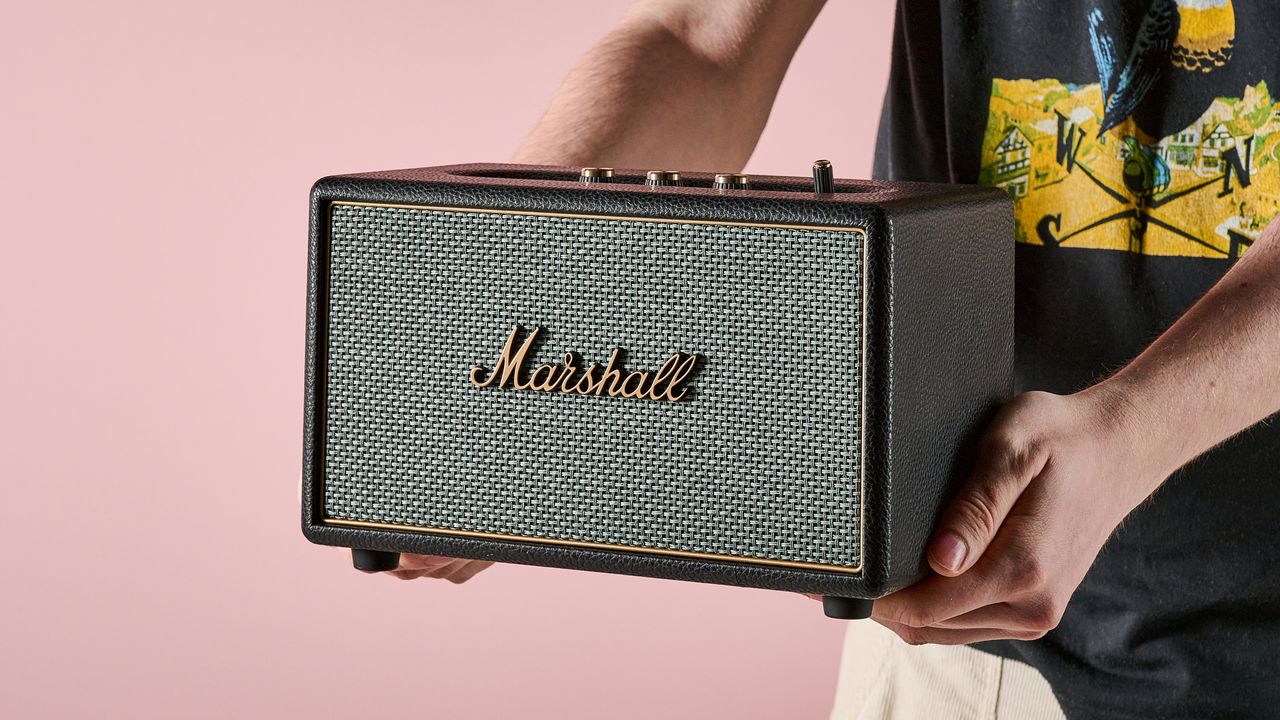
Marshall’s new home speaker is a bass beast and has a delicious design — I just wish it had this one feature
TechRadar