Indian Express
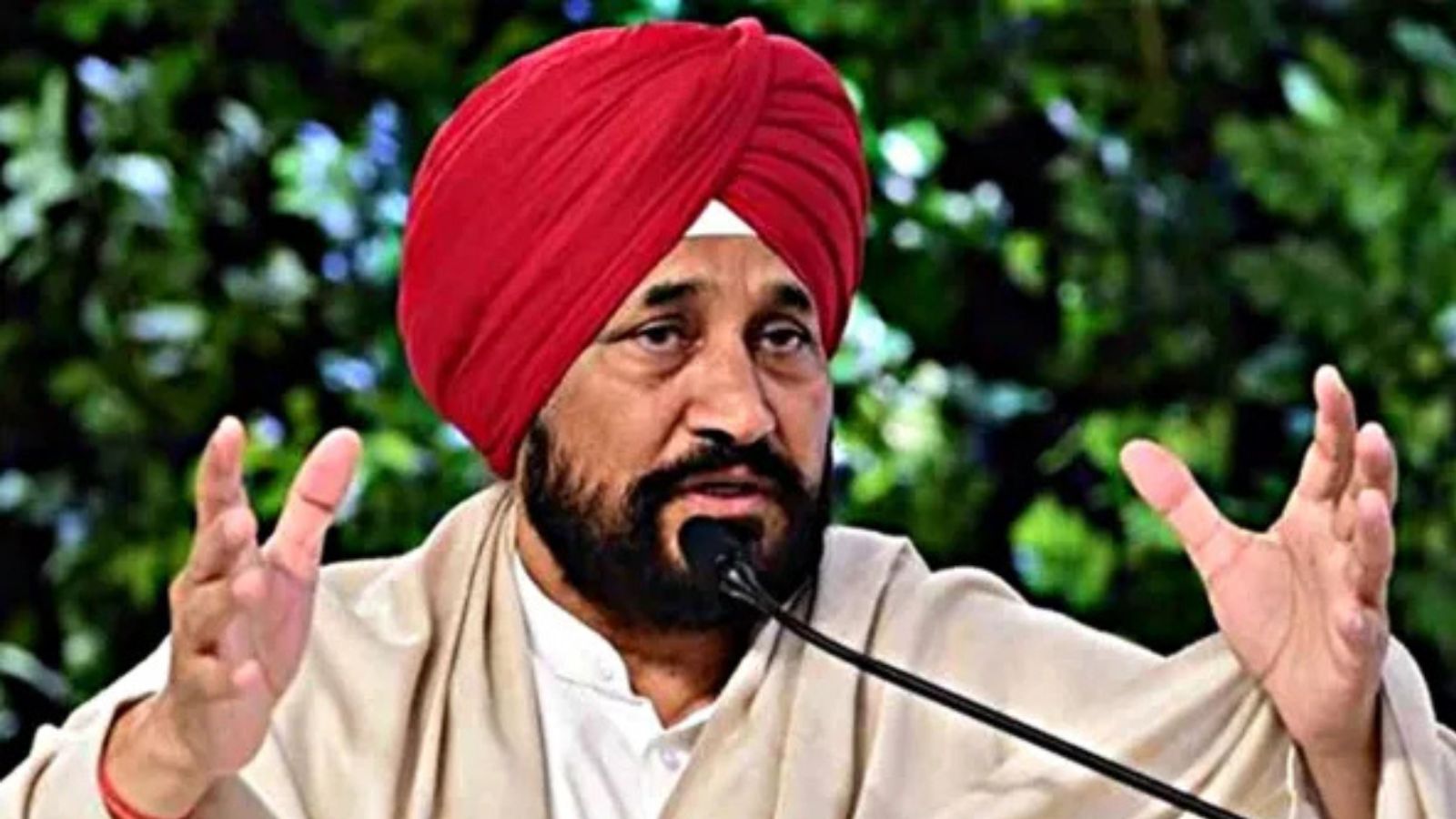
Why Channi is emerging as a new power centre in Punjab Congress politics
As the Punjab Congress prepares for the 2027 Assembly elections, an informal shift appears to be taking shape within the party. While Amarinder Singh Raja Warring continues to head the state unit after the high command’s recent announcement, former chief minister Charanjit Singh Channi—tasked with leading the party’s campaign committee for the upcoming polls—has emerged as the one around whom several senior leaders are holding consultations, reflecting the rise of a new political centre within the state unit.
Recent meetings at Channi’s residence have drawn attention within political circles. While they have not been officially described as factional gatherings, their frequency and the profile of those attending have reinforced the perception that Channi is increasingly becoming the principal point of consultation for leaders discussing the party’s organisational and electoral strategy.
The reasons for this development lie in a series of political decisions that have steadily enhanced Channi’s stature over the past two years.
Perhaps the clearest indication of the Congress leadership’s continuing confidence in Channi came during the 2024 Lok Sabha elections. After the Congress’s defeat in the 2022 Assembly polls, Channi lost both the Bhadaur and Chamkaur Sahib Assembly seats. Yet, the party high command chose to reposition him by fielding him from the Jalandhar parliamentary constituency.
The decision was politically significant. Jalandhar had traditionally been associated with the family of former Congress MP Chaudhary Santokh Singh. Following his death, his wife contested the bypoll in 2023 and lost to Aam Aadmi Party (AAP) candidate Sushil Rinku. In 2024, Chaudhary’s family was one of the strongest contenders for the ticket. Channi, meanwhile, had never contested an election from the Doaba region. Despite this, the Congress leadership backed him.
The decision paid off electorally. Channi won the Jalandhar Lok Sabha seat comfortably, securing a fresh mandate from a politically significant region outside his traditional base. For many within the Congress, the victory strengthened his credibility as a leader with statewide appeal rather than one confined to a particular constituency or faction.
National recognition
His standing has since grown further in Parliament. Channi was appointed chairperson of the key Parliamentary Standing Committee on Agriculture and Farmers’ Welfare. More recently, he was selected for the Sansad Ratna Award for outstanding parliamentary performance, becoming the first MP from Punjab in 16 years to receive the honour. He is also among only two chairpersons of parliamentary standing committees to be recognised with the award this year.
Story continues below this ad
These developments have added a national dimension to Channi’s political profile. Today, he combines several roles that few Punjab Congress leaders currently possess simultaneously: former chief minister, sitting Member of Parliament, chairperson of an important parliamentary committee, and a nationally recognised parliamentarian. That institutional stature is one reason many Congress leaders increasingly see him as a natural point of convergence.
“Former chief ministers rarely become ordinary organisational leaders. They retain administrative experience, statewide visibility and direct access to the party’s central leadership. During periods of internal uncertainty, these attributes often make them the preferred interlocutors for leaders seeking organisational consensus,” said a senior Congress leader.
Administrative experience and social representation
Political experts said that Channi’s social profile has further strengthened his position. As Punjab’s first Dalit chief minister and now the Jalandhar MP, he represents a constituency that remains electorally crucial, particularly in Doaba, where Scheduled Castes account for nearly one-third of the population. His political presence allows the Congress to project both administrative experience and social representation at a time when the party is attempting to rebuild its electoral coalition.
Political observers also see echoes of an earlier phase in Punjab Congress politics. In the run-up to the 2017 Assembly election, senior leaders gradually consolidated behind Amarinder Singh, helping establish him as the party’s undisputed electoral face despite competing internal power centres. While the present circumstances are different, the pattern of leaders gravitating towards a former chief minister during a period of organisational uncertainty bears comparison.
Story continues below this ad
None of this indicates that the Congress high command intends to replace Raja Warring as state party chief. “But whenever dissatisfaction grows inside a political party, leaders usually look for a recognised face around whom discussions can take place. Channi naturally fits that role because he has administrative experience and electoral credibility,” the leader said.
Several Congress leaders privately acknowledge that meetings at Channi’s residence have acquired political symbolism. “Whether this emerging alignment eventually alters the organisational structure of the Punjab Congress will depend on decisions taken by the party leadership. But for now, one trend is becoming increasingly visible: Channi has emerged as the party’s principal alternative centre of political gravity,” said a local leader.
View original source — Indian Express ↗
Related stories

The Punch
PoliticsJul 7, 2026 · 1 min
Insecurity: Senate decries disturbing pattern of attacks on military personnel
The Punch
The Punch
PoliticsJul 7, 2026 · 1 min
Protesters ask N’Assembly to halt ex-FUOYE VC’s ambassadorial confirmation
The Punch
The Punch
PoliticsJul 7, 2026 · 1 min
Xenophobia: Senate threatens diplomatic action against South Africa, orders fresh probe
The Punch
The Punch
PoliticsJul 7, 2026 · 1 min
Reps adjourn plenary to honour late Gombe lawmaker
The Punch