OnlineKhabar
New passport printing system to be implemented after existing stock runs low
July 7, Kathmandu
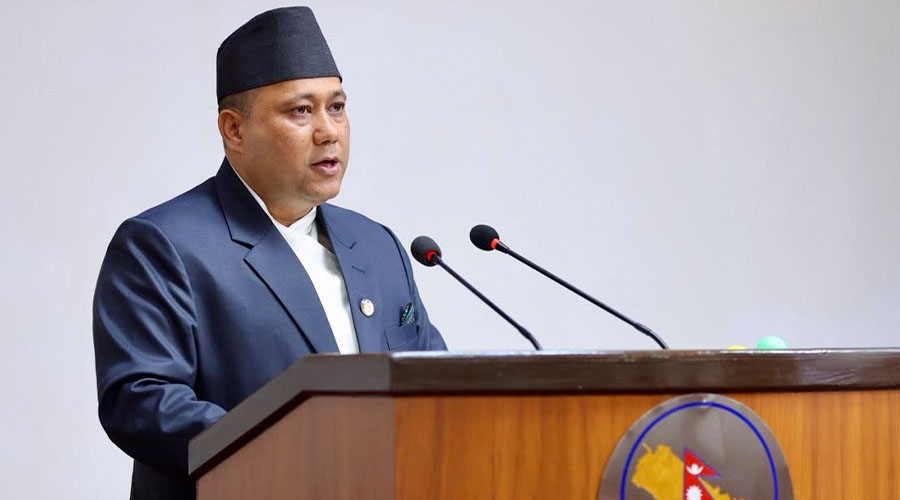
Foreign Minister Shishir Khanal has clarified that the government will begin implementing the new passport printing system only after the existing stock of passports is largely depleted, saying an immediate transition would result in financial losses for the state.
Responding to lawmakers’ questions on the Appropriation Bill during Tuesday’s National Assembly meeting, Minister Khanal said around 250,000 passport booklets were still in stock when the new government assumed office.
He explained that switching to the new system before using the remaining stock would cause the state an estimated loss of around US$2.5 million, calculated at US$10.13 per passport booklet. For this reason, the new process will begin only after the current inventory is reduced.
Minister Khanal said passport printing through the new company will commence next Monday. Although the contract had been awarded to the new company through an international tender last year, its implementation was delayed due to legal and technical hurdles.
The Department of Passports is preparing to roll out the new system from next week. As part of the transition, the personal digital data of around 10 million Nepali citizens must be migrated to the new system. Minister Khanal said passport services would be disrupted for a few days this week to facilitate the process.
To complete the preparations, the department has suspended passport application services at District Administration Offices and Nepali diplomatic missions abroad from Tuesday through Friday.
Passport services at the Department of Passports in Tripureshwor will also be affected for two days. The government plans to begin distributing passports printed by the new company from next Monday.
Referring to the ongoing investigation by the Commission for the Investigation of Abuse of Authority into passport printing, with the case now before the court, Minister Khanal said it would be inappropriate to comment on a matter under judicial consideration. However, he said work is proceeding in accordance with the contractual agreement between the government and the concerned company.
He added that the first three months following the implementation of the new system will be treated as a stabilisation period. A technical team has been kept on standby to address any issues that may arise during the transition and to ensure that public services are not significantly disrupted.
View original source — OnlineKhabar ↗
Related stories

The Punch
PoliticsJul 7, 2026 · 1 min
Atiku faults Tinubu over Almajiri commission budget, PFIPC scandal
The Punch

South China Morning Post
PoliticsJul 7, 2026 · 1 min
Europe could prosper as China’s trade ally rather than adversary
South China Morning Post

Dawn
PoliticsJul 7, 2026 · 1 min
Italy's Meloni seeks to avoid escalation after Trump revives personal feud
Dawn

Philippine Daily Inquirer
PoliticsJul 7, 2026 · 1 min
Day 2 recap: Kill-threat video takes center stage in impeachment trial
Philippine Daily Inquirer