Indian Express
FIFA World Cup 2026: When winning rests on being yourself
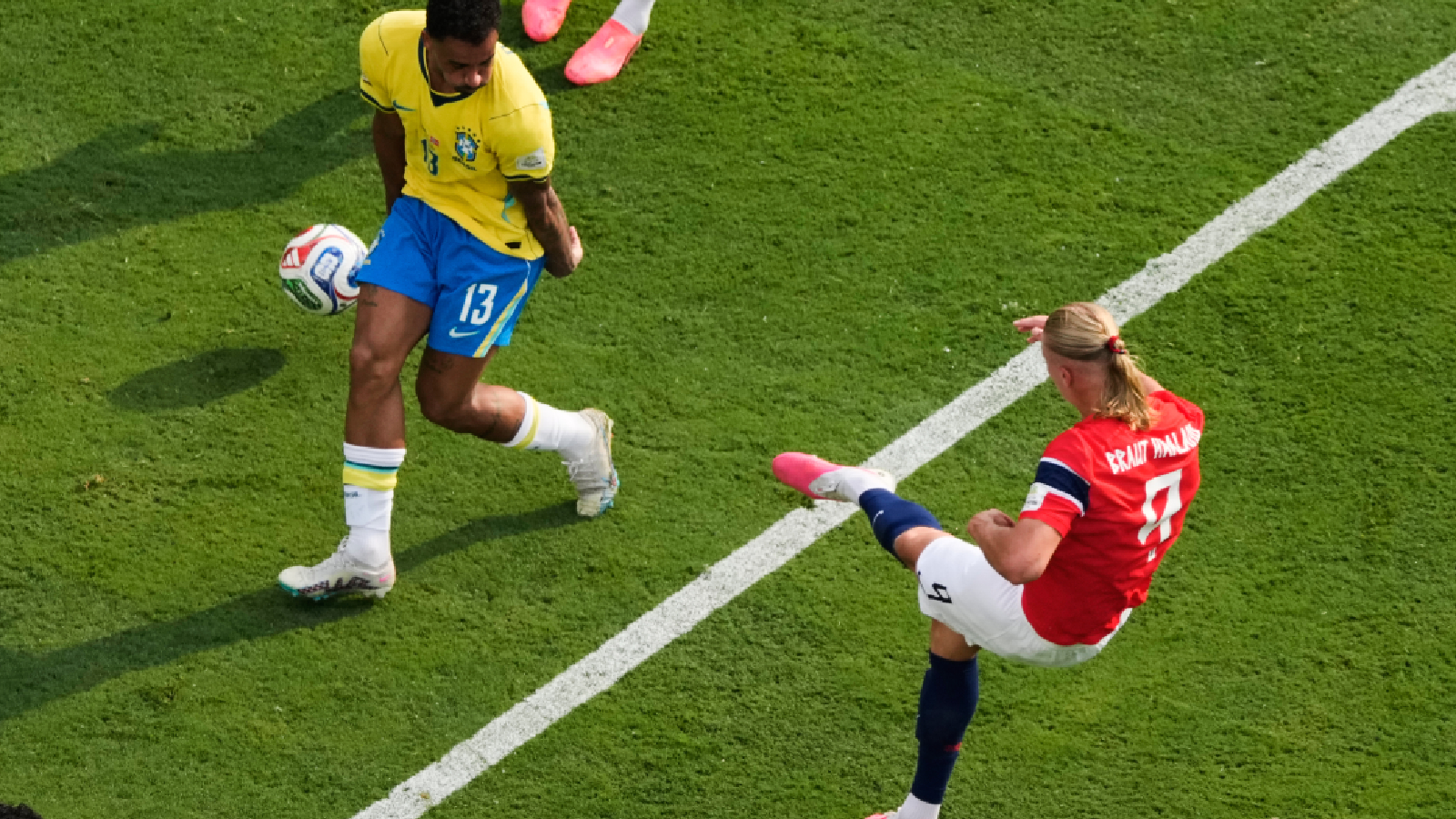
Norway's Erling Haaland (9) scores their second goal during the World Cup round of 16 soccer match between Brazil and Norway in East Rutherford, N.J., near New York, Sunday, July 5, 2026. (AP Photo/Matt Slocum)
4 min readJul 7, 2026 05:03 PM IST
First published on: Jul 7, 2026 at 05:03 PM IST
Brazil’s defeat to Norway was more than another World Cup upset. It was also a reminder that several of football’s traditional powers are wrestling with the same question. Brazil no longer quite looks Brazilian. Germany no longer feels unmistakably German. The Netherlands, once football’s great innovators, are no longer setting the tactical agenda.
Their decline has often been explained by the rest of the world catching up. That is undoubtedly a part of the story. Coaching, sports science and tactical ideas have spread across continents, shrinking the gap between football’s elite and everyone else.
But another possibility is worth considering. In trying to keep pace with modern football, some of the game’s biggest nations may have drifted away from the qualities that made them successful in the first place.
The best international teams have always evolved with the game. But the most successful ones have usually adapted without becoming copies of somebody else. Brazil perhaps illustrates that best. Over the past decade, Brazil have become more structured, more tactically disciplined and, in many ways, more European in their approach. Yet, somewhere along the way, Brazil seem to have misplaced some of the instincts that once made them unique. The irony is that Brazil’s greatest teams were never tactically naive. The 1970 side had structure. The 2002 World Cup winners were exceptionally well organised. But those systems existed to maximise Brazilian creativity, not restrain it.
Germany’s story leads to a similar conclusion. German football was defined by clarity, efficiency and competitiveness. Even when Germany modernised under Joachim Lowe, culminating in the 2014 World Cup triumph, those qualities remained intact. In the years that followed, however, their football became more elaborate, but the ruthless directness gradually faded.
Dutch football earned its reputation not merely because it played attractive football but because it consistently changed how football itself was played. Today, the Netherlands continues to produce excellent footballers and coaches, but it no longer feels like football’s principal laboratory.
This is not a problem unique to football. For years after artificial turf transformed the sport, Indian hockey tried to emulate the European and Australian model. But India could never become a better version of Europe than Europe itself. The revival came only when Indian hockey found a balance.
For decades, England remained attached to an outdated version of English football built around physicality and direct play, even as the Premier League became increasingly shaped by continental ideas. Their improvement has come by embracing tactical flexibility without abandoning traditional strengths. England have also become one of the most consistent teams in recent years, reaching two European Championship finals, a World Cup semifinal and two World Cup quarterfinals in the last eight years.
Perhaps that is becoming the defining challenge for international sport. Globalisation has made teams tactically smarter. Young players across continents learn similar positional principles and coaching methods. Inevitably, national styles have become less distinct. That makes identity even more valuable.
Football has always evolved by borrowing ideas, but the strongest teams have rarely succeeded by becoming imitations of someone else. They have taken new ideas and moulded them around their own culture, history and strengths.
That may be the lesson for many of football’s traditional powers.
The writer is deputy associate editor, The Indian Express. [email protected]
View original source — Indian Express ↗
Related stories

ESPN
SportsJul 7, 2026 · 1 min
ESPYS 2026: Stats behind Best Athlete - Men's Spor...
ESPN

ESPN
SportsJul 7, 2026 · 1 min
$18 million too much for Carlsson? Is Larkin stayi...
ESPN

ESPN
SportsJul 7, 2026 · 1 min
The not-quite-dying art of the slice
ESPN
ESPN
SportsJul 7, 2026 · 1 min
WNBA Power Rankings: Valkyries ride five-game winn...
ESPN