Indian Express
How Chinese researchers just mapped human brain 478 times faster than an NVIDIA A100
3 min readUpdated: Jul 7, 2026 05:28 PM IST
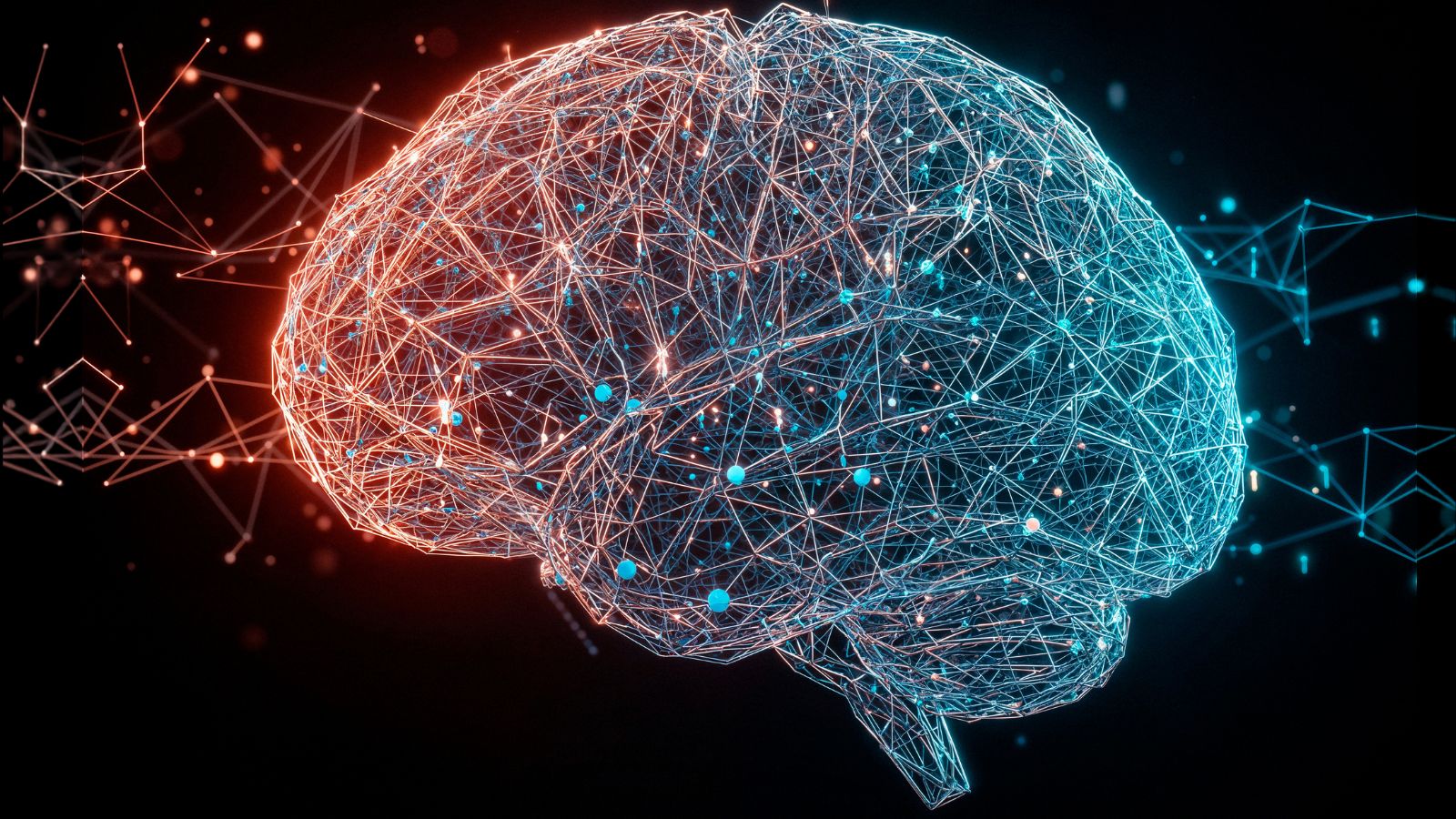
Chinese researchers have developed an AI chip capable of reconstructing complex brain structures in real time. (Image for representation: Magnific)
Chinese researchers have developed a new artificial intelligence chip capable of reconstructing complex brain structures in real time, a breakthrough that could accelerate the diagnosis of brain diseases, neurosurgery, and the development of brain-computer interfaces.
According to the research team, the chip can map the brain’s folded cortex in under half a second while delivering performance up to 478 times faster than NVIDIA’s A100 GPU for the same task.
The study, conducted by researchers from Peking University and the Chinese Academy of Sciences, was published in the journal Science.
Chip combines memory and computing
The newly developed 40-nanometre computing chip integrates an artificial neural network directly into its hardware using a computing-in-memory architecture.
Unlike conventional processors, which separately handle data storage and computation, the new chip performs both tasks within the same memory array. This significantly reduces delays caused by constant data transfers between memory and processing units. Researchers said the design allows the system to reconstruct the brain’s highly folded cortical surface in less than 0.5 seconds.
The research team reported that the chip outperformed systems powered by NVIDIA’s widely used A100 GPU by a factor of 50 to 478 times, depending on the specific brain-mapping workload.
One key innovation lies in the chip’s use of phase-change memristors. Instead of treating “conductance drift” as a hardware limitation, the researchers repurposed it to perform neural dynamic computations, improving both speed and energy efficiency. This approach enables high-fidelity calculations while reducing power consumption.
Story continues below this ad
Brain disease diagnosis
Researchers believe the technology could have several medical applications where rapid brain mapping is essential.
Potential uses include:
Real-time neuronavigation during brain surgery
Early screening for Alzheimer’s disease
Brain-computer interface development
Personalised brain modelling
Clinical decision support
Lead researcher Yang Yuchao, a professor at Peking University’s School of Integrated Circuits, said the breakthrough could eventually enable the creation of personalised digital brain twins to support diagnosis and treatment planning.
Mapping the human brain remains computationally demanding because of the cortex’s complex folded structure, which dramatically increases the brain’s surface area while fitting inside the skull.
Also read: Swimming versus running: Which is better for your heart health? New study offers answers
Traditional computer architectures often struggle with these calculations because memory and processors operate separately, creating a major performance bottleneck. By merging memory and computation, the new chip delivers millisecond-scale processing while reducing latency and energy use.
Story continues below this ad
Researchers from Germany’s Juelich Research Centre, who contributed an accompanying analysis, compared the design to processing milk directly on a farm rather than transporting it to a factory, highlighting the efficiency gains from performing computations where the data is stored.
View original source — Indian Express ↗
Related stories

TechRadar
TechnologyJul 7, 2026 · 1 min
The ultra-compact Anker C300X portable power station with a foldable 60W solar panel can keep the lights and other…
TechRadar

Portugal Resident
TechnologyJul 7, 2026 · 1 min
Portugal v Spain World Cup clash sets global internet traffic record
Portugal Resident

The Verge
TechnologyJul 7, 2026 · 1 min
Google Search lets creators know more about their reach
The Verge

The Verge
TechnologyJul 7, 2026 · 1 min
Solos debuts an even lighter version of its camera-less smart glasses
The Verge