Indian Express
Madras High Court orders police protection for inter-caste couple, family facing boycott
The Madras High Court recently directed the police to provide protection to a man and his family after they allegedly faced a social boycott and were prevented from entering their village following his inter-caste marriage.
Justice G K Ilanthiraiyan also ordered the police to complete the investigation into the criminal case registered against the alleged perpetrators within 12 weeks.
“The sixth respondent (police) is directed to provide adequate police protection to the petitioner and his family members at the hands of the respondents 7 to 11 (village heads),” the June 30 order read. The petitioner had sought directions for a proper investigation into his complaint alleging social boycott, besides seeking police protection for himself and his brother to enable them to reside in their home.
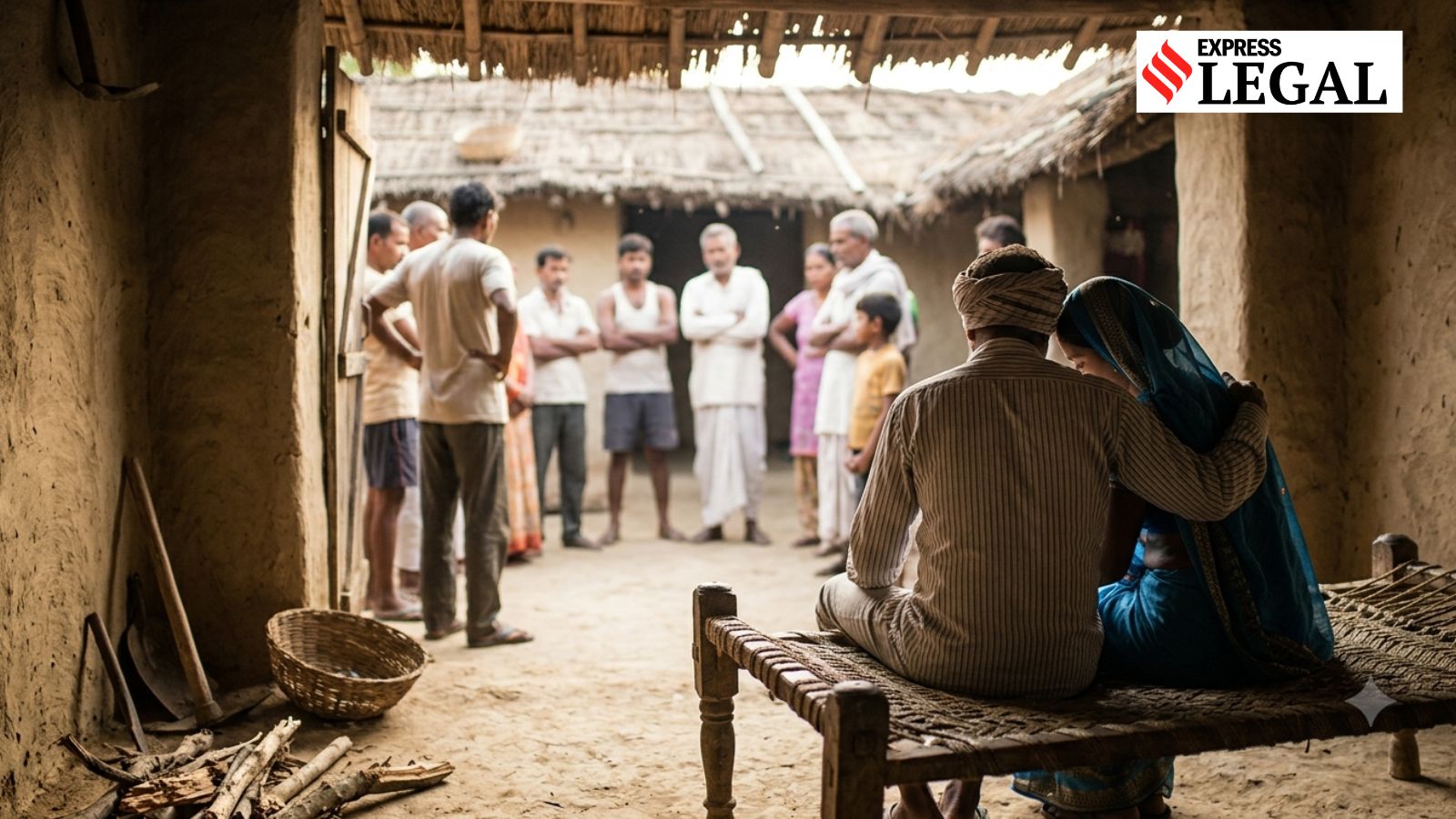
According to the petitioner, following his inter-caste marriage, some villagers condemned it and orchestrated a social boycott. The petition alleged that his house was locked and that he and his family were forced to stay outside the village because they were not allowed to return.
After he lodged a complaint, the police registered a First Information Report (FIR) for offences under sections 296(b) (obscene acts and songs), 127(2) (wrongful confinement), 324(4) (loss or damage due to mischief), and 351(2) (criminal intimidation) of the Bharatiya Nyaya Sanhita (BNS) against the accused.
Justice G K Ilanthiraiyan directed the police to file a final report on the matter within 12 weeks.
The petitioner further alleged that while the investigation was pending, he was once again barred from entering his house and village. He then met the tahsildar, who convened a peace committee meeting, but the others allegedly failed to attend it. Although the tahsildar orally instructed the villagers to allow the petitioner to reside in his house, the direction was allegedly ignored.
Police protection, probe ordered
Taking note of these circumstances, the high court directed the petitioner to submit a fresh complaint before the revenue divisional officer (RDO). It ordered the RDO to issue notices and conduct a probe.
Story continues below this ad
“The petitioner is directed to lodge a fresh complaint before the third respondent RDO. The third respondent, in turn, is directed to issue notices to respondents 7 to 11, conduct an enquiry, and pass appropriate orders in accordance with law within a period of 12 weeks,” the order read.
The court further directed the police to file a final report within the 12-week period and provide protection to the petitioner and his family members.
Affects right to liberty: Gauhati HC ruling
In another case pertaining to a village boycott, the Gauhati High Court recently ruled that a dispute over the history of Christianity in Nagaland cannot justify socially boycotting a person for expressing his views.
The court quashed the village council’s proclamation that asked residents not to cooperate with a seminary principal who published articles questioning certain historical claims.
Story continues below this ad
Justice Susmita Phukan Khaund was hearing a writ petition filed by the principal of Haven of Hope Seminary, Dimapur, who had challenged before the court a series of notices issued by the Chungtia village council, including a proclamation directing villagers not to cooperate with him, after he published articles in an Ao-language newspaper.
“The proclamation of non-cooperation indeed infringes the right to liberty and the right to live with dignity. There is not an iota of doubt that the petitioner will be locked up from the entire area, if the citizens refuse to cooperate with the petitioner and his right to life and to live with dignity will be affected,” the court said on June 23.
View original source — Indian Express ↗
Related stories

The Punch
WorldJul 7, 2026 · 1 min
Police demote inspector, corporal caught using POS for extortion in Delta
The Punch
The Punch
WorldJul 7, 2026 · 1 min
NDDC strengthens anti-corruption, transparency unit
The Punch
The Punch
WorldJul 7, 2026 · 1 min
Coastal highway not responsible for Lagos flooding, Sanwo-Olu, Umahi insist
The Punch
The Punch
WorldJul 7, 2026 · 1 min
Controversial budget items are N’Assembly constituency projects – Almajiri commission
The Punch