Indian Express
Can judges avoid impeachment by resigning? The Justice Yashwant Varma case explained
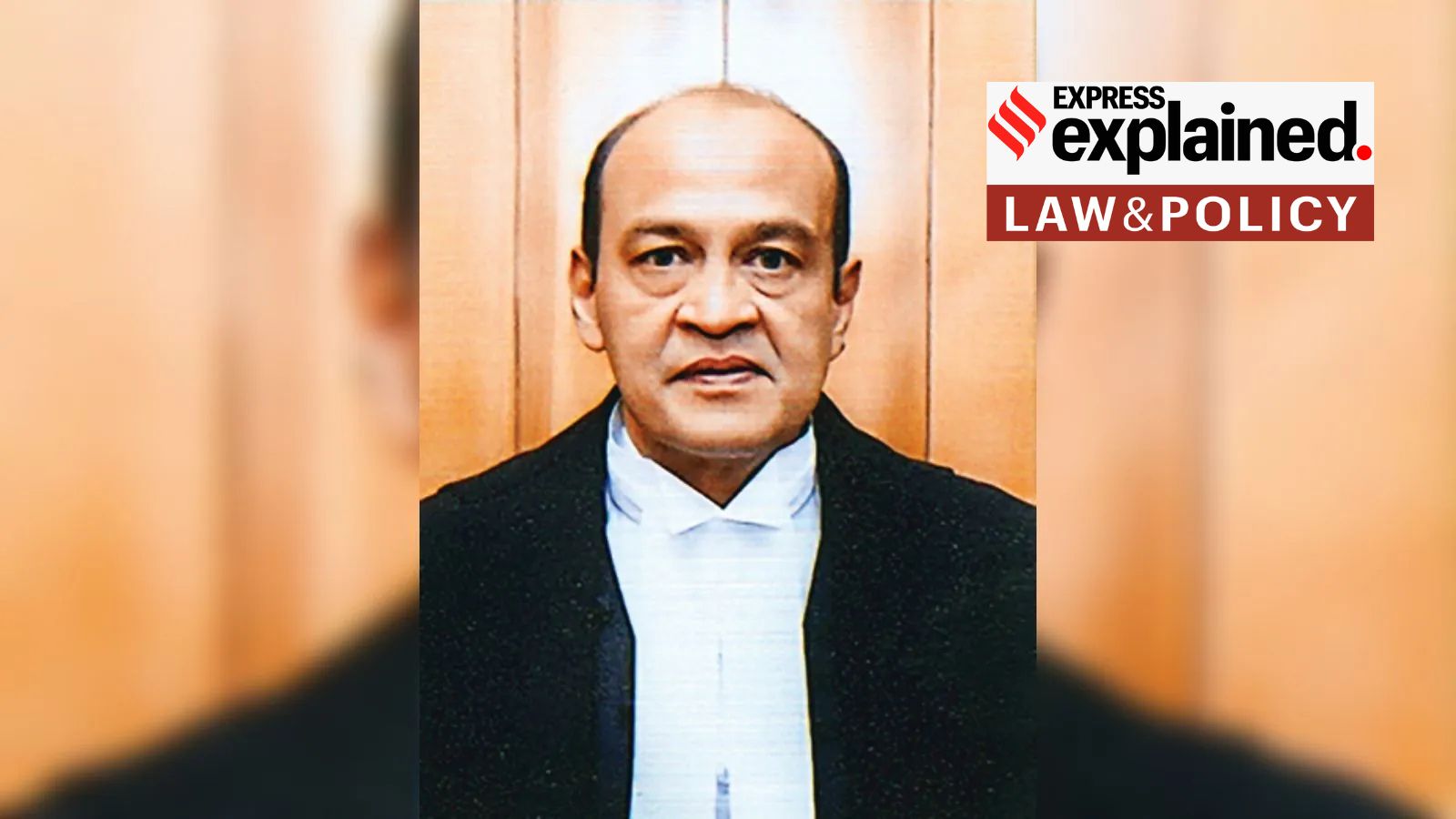
Lok Sabha Speaker Om Birla’s decision to table the report of the parliamentary investigative committee against former Allahabad High Court judge Yashwant Varma will bring India’s judicial accountability framework into uncharted territory.
When Justice Varma resigned in April, it was widely assumed that the impeachment proceedings against him had hit a dead end. However, legal experts argue that tabling the report is a crucial step for public accountability, challenging a long-held assumption that a judge’s resignation automatically extinguishes a parliamentary probe.
The impeachment proceedings against Justice Varma can be traced back to last year when wads of burnt and partially destroyed currency notes were recovered from his official residence in New Delhi. This triggered an in-house inquiry by the Supreme Court, which reportedly found him culpable.
Subsequently, over 146 Lok Sabha MPs moved a motion for his removal, prompting the Speaker to constitute a three-member investigative committee under the Judges (Inquiry) Act, 1968. Before the committee could conclude its hearings, Justice Varma tendered his resignation to President Droupadi Murmu.
What does the law say about a judge’s resignation?
Under Article 217 of the Constitution, a High Court judge can resign by writing to the President. In a 1978 judgment, the Supreme Court ruled that a judge’s resignation is a unilateral act that takes effect immediately on the date chosen by the judge, without needing formal acceptance.
Why did previous impeachment probes lapse?
No judge has ever been impeached in India.
In 2011, impeachment proceedings against Sikkim High Court Chief Justice P D Dinakaran and Calcutta High Court judge Soumitra Sen were dropped after they resigned. Justice Dinakaran had resigned while the committee was in the midst of its probe against him. Upon his resignation, the Rajya Sabha secretariat reasoned that since the goal of the probe was the removal of the judge, a resignation rendered the process meaningless and the committee’s work infructuous.
The same rationale was followed when Justice Sen resigned, with the Lok Sabha dropping the impeachment vote even though the Rajya Sabha had passed the impeachment motion against him before he had resigned.
Story continues below this ad
However, legal scholars point out that the law does not explicitly state that an inquiry must lapse upon resignation. Shubhankar Dam, Chair Professor of Public Law and Governance at the University of Portsmouth School of Law, said that the 1978 Supreme Court judgment did not account for the implications of a judge resigning while facing a misconduct probe.
“After the precedent set by Justices Dinakaran and Sen, resignation is the easiest way for judges to evade accountability and retain post-retirement benefits,” Dam said. He added that the report matters as a parliamentary and public record of a judge’s conduct, especially since there is already a lot of information about the proceedings against Justice Varma in the public domain due to disclosures by Chief Justice Sanjiv Khanna and the media leak of the Supreme Court in-house inquiry probe report.
Was there any internal resistance to ending the Justice Dinakaran parliamentary probe?
During the Justice Dinakaran impeachment episode in 2011, jurist G. Mohan Gopal, then a member of the inquiry panel probing the judge, had written to his fellow committee members urging them to complete the investigation despite the judge’s resignation less than three weeks earlier.
Story continues below this ad
In his letter, Gopal drew a distinction between the two parts of the procedure under the Judges (Inquiry) Act: the “investigation and proof” of misbehaviour, and the actual “removal from office” by Parliament. He argued that establishing the truthfulness of the charges is an end in itself.
“If judges are given the de facto power to ‘veto’ even this narrow sliver of accountability for misbehaviour, the public faith in the system may be eroded further,” Gopal wrote. He warned that aborting the probe would create an “absurd situation” where a judge could end an investigation at any point simply by resigning.
Ultimately, the Justice Dinakaran probe was wound up, partly because a vacancy on the probe committee made it dysfunctional, and the Rajya Sabha chairman, Vice President Hamid Ansari, felt that after Justice Dinakaran’s resignation, the primary objective of his removal was moot.
What are the implications of tabling the report now?
Tabling the report against Justice Varma would serve two major purposes.
Story continues below this ad
First, it would bring the findings of a constitutionally-mandated, taxpayer-funded inquiry into the public domain. Lawyer and legal scholar Alok Prasanna Kumar said this was an opportunity for the Speaker to “overturn the unfortunate precedent set in the Dinakaran case”, which sent the message that a judge could escape scrutiny by resigning before the process concluded.
“This is not just a removal process but an accountability process that allows the public to know whether a judge has committed misconduct,” Kumar explained. “This is an inquiry conducted on public money under a constitutional process, and we as the public are entitled to know what the committee has found.”
Second, the findings could have tangible legal and financial consequences. Upon resignation, a judge is typically entitled to the same pensionary benefits as one who retires normally from service.
Dam questioned the fairness of this: “This is not a merely legal or academic question. There is public money involved in the post-retirement benefits that a judge enjoys. Why should a judge found guilty by two probe committees enjoy post-retirement benefits upon resignation?”
Story continues below this ad
Kumar pointed out that if the committee’s report establishes the charges, the removal could theoretically be backdated to the beginning of the process. A formal impeachment by Parliament could also stop the judge’s pension and other post-retirement benefits, and potentially pave the way for further criminal action.
View original source — Indian Express ↗
Related stories

The Verge
TechnologyJul 7, 2026 · 1 min
Microsoft fixes storage-hogging Windows 11 folder
The Verge

The Next Web
TechnologyJul 7, 2026 · 1 min
AI data centres are driving up power bills at America’s Rust Belt factories
The Next Web

TechRadar
TechnologyJul 7, 2026 · 1 min
Why Nvidia's NemoClaw signals the true enterprise agent era
TechRadar
Dawn
TechnologyJul 7, 2026 · 1 min
Trump says he will lift Turkey sanctions, decide on selling F-35s
Dawn