Indian Express
Satluj: A cop blew the whistle on Jaswant Singh Khalra’s torture, death; he was then killed
Nearly three decades after he broke one of Punjab’s most significant human rights stories, veteran journalist Satinder Bains says watching Satluj, formerly titled Panjab 95, brought back memories of the investigation that changed his career. A young reporter in Indian Express, he reported on the case that has once again shocked an entire country.
The Honey Trehan-directed film, inspired by the life of Sikh human rights activist Jaswant Singh Khalra, is no longer available on OTT platforms in India but continues to stream overseas. After watching the film in Canada, where he is now based, Bains shared a video on Facebook, praising the film for staying largely faithful to the events he reported in 1996 while also pointing out a few historical differences.
‘Watching the film took me back 30 years’
Bains recalled that Satluj transported him back to May 5, 1996, when he was working as a reporter with The Indian Express in Amritsar and published the story that later became a crucial part of the investigation into Khalra’s disappearance.
“Watching this film took me 30 years back in time, to when I did this story in The Indian Express on May 5, 1996,” Bains said.
According to the journalist, the breakthrough came when Kuldeep Singh, then a Special Police Officer (SPO), approached him claiming he knew what had happened to Khalra.
“He came to me and said he had a story. The police had promised to make him a constable but backed out. He wanted to tell me what had happened to Jaswant Singh Khalra,” Bains recalled.
Bains said he first discussed the matter with his editor before documenting Kuldeep Singh’s statement.
Story continues below this ad
Bains also said the film compresses parts of the chronology surrounding the case. According to him, Kuldeep Singh first approached The Indian Express, whose report brought his account into the public domain before the case gathered momentum.
“First, The Indian Express exposed him. Then the CBI made him testify in court,” Bains said, adding that Kuldeep Singh’s testimony later became part of the CBI investigation and was presented before the Supreme Court.
Bains also recalled that after Khalra’s disappearance, the Punjab government had told the Supreme Court in an affidavit that he was missing and not in police custody. According to the journalist, it was only after The Indian Express published Kuldeep Singh’s account that details surrounding the alleged killing became public.
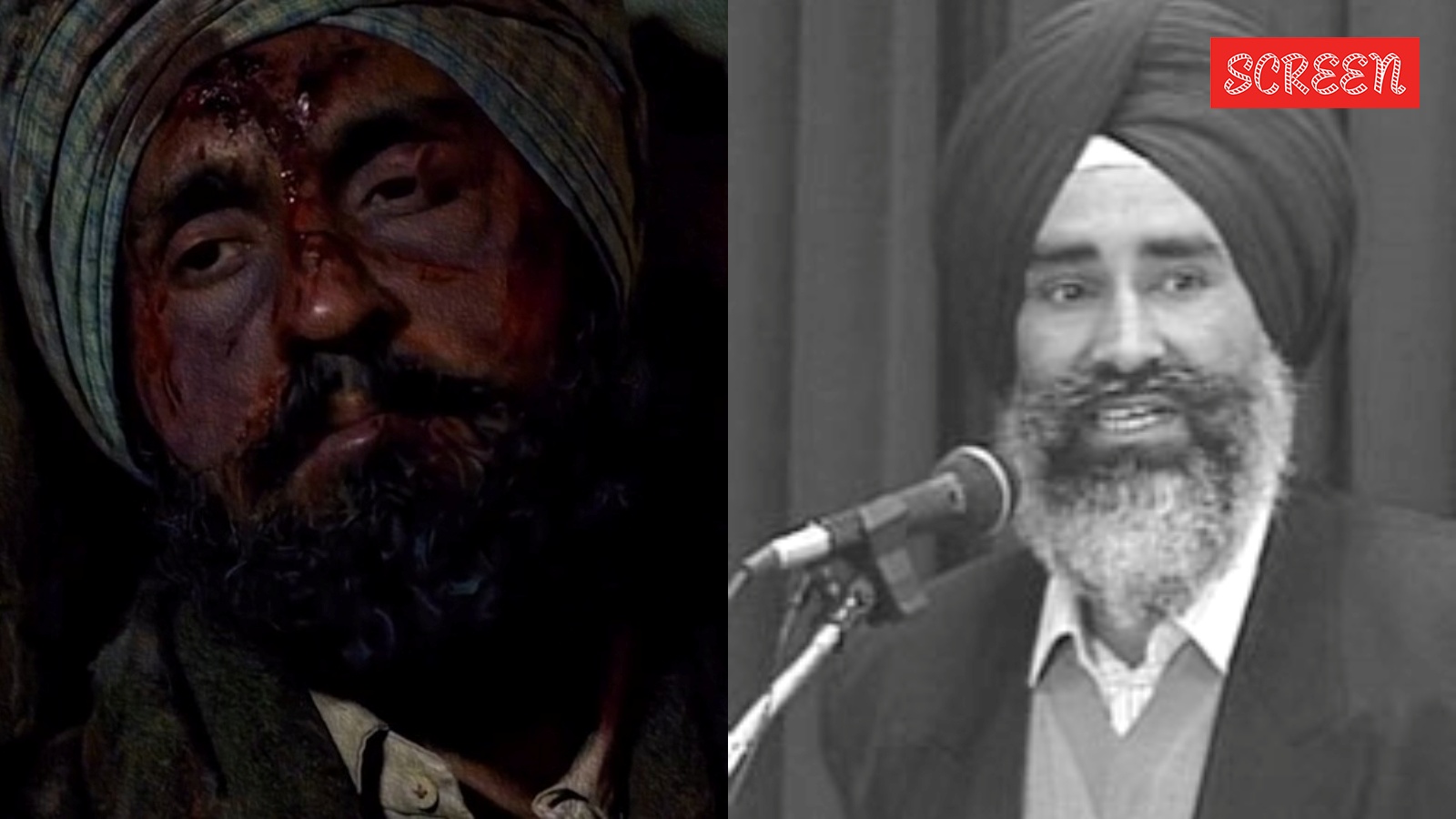
ALSO READ: Satluj ban: Jaswant Singh Khalra ‘challenged the darkness’ in last speech; real-life story
Story continues below this ad
Bains points out one difference between the film and his reporting
While praising Satluj for staying largely faithful to the events, Bains said one crucial scene differs from what whistleblower Kuldeep Singh had told him nearly three decades ago.
Recalling Kuldeep Singh’s testimony, Bains said Jaswant Singh Khalra was allegedly subjected to severe torture after his abduction in September 1995. “In October 1995, when he was tortured… he was tortured heavily. Jaswant Singh Khalra was actually crying a lot and screaming, and he asked for water,” Bains said.
According to the journalist, the film shows senior police officer Ajit Singh Sandhu pulling the trigger. However, Bains said Kuldeep Singh’s account identified SHO Satnam Singh as the person who shot Khalra.
“The SHO told Kuldeep Singh to go and get water. When he returned with water, the SHO shot Khalra. He fired two bullets, one in the heart and one in the head,” Bains said, adding that Ajit Singh Sandhu was at the police guest house and was later informed about the shooting.
Story continues below this ad
Bains presented this as the version narrated to him by Kuldeep Singh, whose testimony later formed part of the CBI investigation and was presented before the Supreme Court.
‘Kuldeep Singh also paid the price’
Bains also shared what happened to Kuldeep Singh after he decided to speak out.
According to the journalist, the whistleblower went into hiding after a police raid at his home before later testifying in court. He said Kuldeep Singh’s body was eventually found and identified later, adding that the circumstances surrounding his death remain unknown.
“Later, his dead body was found. It is still not known how he died. He was thrown away as an unidentified body. When he was later identified, it was confirmed that he was Kuldeep Singh,” Bains said.
Story continues below this ad
He also said Kuldeep Singh had later regretted remaining silent for as long as he did and believed Jaswant Singh Khalra had been gravely wronged.
‘A good film has been made’
Although Bains said the filmmakers never consulted him during the making of Satluj, he praised the project for accurately portraying many of the events he had reported.
“I didn’t know that a film would be made on this issue. I am thankful to the filmmakers who made the film. Although I was not consulted, a good film has been made. A lot of facts are true,” he said.
Bains also referred to the film’s portrayal of former Punjab DGP KPS Gill, saying it showed what he believed had happened during the final hours before Khalra’s death. However, he made it clear these remarks were his understanding of the events while discussing the film.
Story continues below this ad
Describing Khalra as someone who made a tremendous sacrifice while documenting alleged human rights violations in Punjab, Bains said he hopes more people watch the film and engage in discussions on human rights.
“I feel a sense of satisfaction that, as a journalist, I got an opportunity and did justice to that story. I hope more people will watch it, and the debate on human rights will start again,” he added.
Why Satluj has been in the spotlight
The film, previously titled Panjab 95, premiered on ZEE5 on July 3 after remaining unreleased for nearly four years. Inspired by the life of Jaswant Singh Khalra, Satluj quickly generated discussion on social media before it was removed from the streaming platform in India on July 5, with ZEE5 citing “current developments.” However, the film continues to be available in countries including the US, Canada and Australia.
The film’s release was delayed for years after the Central Board of Film Certification (CBFC) proposed 127 cuts, including changing the protagonist’s name and removing several references to the Punjab Police. The makers refused to accept the suggested edits, arguing that they would fundamentally alter the film’s core message. The project also lost its scheduled premiere at the Toronto International Film Festival in 2023 before finally releasing on ZEE5 under its new title earlier this month.
Story continues below this ad
Director Honey Trehan has previously said he still does not know who objected to the film throughout its four-year struggle for release, adding that all communication regarding the objections came through lawyers or third parties.
View original source — Indian Express ↗
Related stories

Rolling Stone
EntertainmentJul 7, 2026 · 1 min
Dolly Parton’s Musical Will Debut on Broadway on the Country Legend’s Birthday
Rolling Stone

E! Online
EntertainmentJul 7, 2026 · 1 min
Cindy Crawford, Kaia Gerber Twin in Matching Mother-Daughter Moment
E! Online

E! Online
EntertainmentJul 7, 2026 · 1 min
Taylor Swift Wins Lawsuit Days After Travis Kelce Wedding
E! Online

Lovin Malta
EntertainmentJul 7, 2026 · 1 min
Watch: CCTV Captures Violent Attack On St Julian’s Apartment Block
Lovin Malta