Indian Express
Trump likely to back F-35 jets sale to Turkey despite Netanyahu’s power balance warning
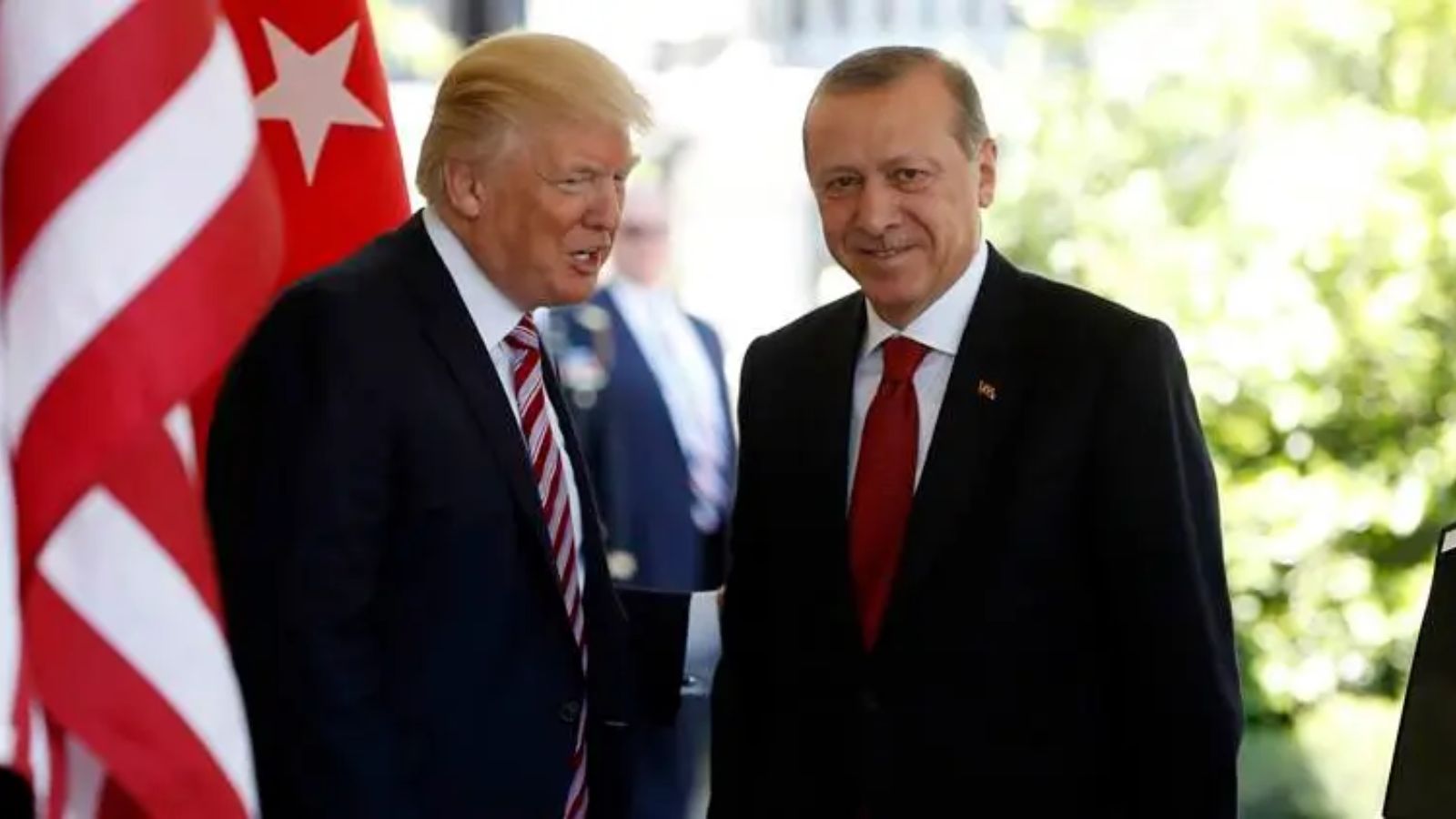
US President Donald Trump is expected to back the potential sale of F-35 stealth fighter jets to Turkey during the NATO summit in Ankara, a move that could reverse one of Washington’s biggest defence disputes with Ankara and test relations with both Congress and Israel.
According to a Reuters report, Trump is likely to back the proposal despite unresolved legal and congressional hurdles that currently prevent the transfer of the advanced fighter aircraft to Turkey. Trump’s move reflects a warmer relationship between the US President and his Turkish counterpart, President Recep Tayyip Erdogan, since Trump’s return to office last year.
Turkey was removed from the F-35 programme in 2019 after purchasing the Russian-made S-400 air defence missile system, a decision that prompted the United States to impose sanctions on a major Turkish defence company in 2020. Congress also enacted legislation barring F-35 sales to Turkey as long as it retains the S-400 system, citing concerns that the Russian platform could compromise the security of the fifth-generation fighter jet.
If the law doesn’t permit it, how will it happen?
Reuters reported that one proposal, which has gained traction in recent weeks, involves transferring Turkey’s S-400 system to a third country. However, no agreement has been reached, and it remains unclear whether Russia would approve such a move given end-user restrictions attached to its defence exports.
Trump had hinted at a possible breakthrough last month when asked whether he had any “gifts” for Turkey, replying that he would “probably do something that will make them very happy.”
US Vice President JD Vance also indicated that the administration is reviewing whether Turkey has met the legal requirements necessary for a return to the F-35 programme. He said Defence Secretary Pete Hegseth and his team were examining whether the certifications required under US law could be met before any decision is taken.
Turkish Foreign Minister Hakan Fidan said last week that Erdogan and Trump share a “strong political will” to remove US sanctions imposed on Turkey, although no timeline has been announced. Reuters also reported that US Ambassador to Turkey Tom Barrack had described recent discussions between the two countries as the “most fruitful conversations” on the issue in nearly a decade.
Story continues below this ad
Israel voices strong opposition
The possibility of renewed F-35 sales has drawn sharp opposition from Israel.
According to the Associated Press, Israeli Prime Minister Benjamin Netanyahu said in an interview with Fox & Friends that the United States should not sell the fighter jets to Turkey. Netanyahu argued that Turkish President Erdogan “calls openly for the annihilation of Israel” and warned that such a sale would alter the regional military balance.
Netanyahu said providing Turkey with F-35s would “upset the power balance in the Middle East,” which he said is maintained through Israel’s air superiority and the United States’ strategic posture in the region.
Relations between Turkey and Israel have deteriorated significantly in recent years, particularly over the war in Gaza. Erdogan has repeatedly accused Israel of committing genocide during its military campaign following Hamas’ October 7, 2023, attack, allegations that Israel rejects.
Story continues below this ad
NATO summit focuses on defence spending
The discussions over Turkey’s possible return to the F-35 programme come as NATO leaders gather in Ankara for a summit largely focused on strengthening the alliance’s military capabilities and increasing European defence spending.
According to another AP report, NATO unveiled a series of defence projects worth billions of dollars aimed at demonstrating to Trump that allies are translating higher defence budgets into tangible military capabilities. NATO Secretary-General Mark Rutte announced new multinational procurement programmes, including the purchase of Saab GlobalEye surveillance aircraft, additional Triton surveillance drones and new Airbus air-to-air refuelling and transport aircraft.
Rutte said the alliance must convert increased defence spending into “military capabilities,” while US Undersecretary of Defense Michael Duffy stressed the need for greater defence production and stronger industrial partnerships between the United States and Europe.
Why the deal matters
A decision to restore Turkey’s access to the F-35 programme would mark a major shift in US-Turkey defence relations after years of tensions triggered by Ankara’s purchase of the Russian S-400 system. Beyond bilateral ties, the move carries wider strategic implications for NATO, as Turkey possesses the alliance’s second-largest military and occupies a critical geopolitical position bridging Europe, the Middle East and the Black Sea region.
Story continues below this ad
At the same time, any reversal is likely to face scrutiny from the US Congress and strong opposition from Israel, making it one of the most closely watched defence issues at this year’s NATO summit.
View original source — Indian Express ↗
Related stories

The Punch
WorldJul 7, 2026 · 1 min
FG suspends new internet, digital platform regulations
The Punch
The Punch
WorldJul 7, 2026 · 1 min
Oil firms decry multiple taxes, seek PIA review as Nigeria joins IEA
The Punch
The Punch
WorldJul 7, 2026 · 1 min
Kano judiciary sacks Sharia court judge, suspends others over misconduct
The Punch
The Punch
WorldJul 7, 2026 · 1 min
Police recover pistol in Bayelsa, hunt fleeing drug suspects
The Punch