Indian Express
‘Success doesn’t exist only abroad’: Techie leaves US to build global firm in Chandigarh
Leaving behind an annual salary of nearly $200,000, a secure career, permanent immigration status and what many describe as the “American dream” is a choice few make. Yet after spending nearly 15 years in the United States, an entrepreneur chose to return to Chandigarh with a different dream: to build a company that could prove global technology consulting and strategic decision-making can emerge from Chandigarh and Mohali.
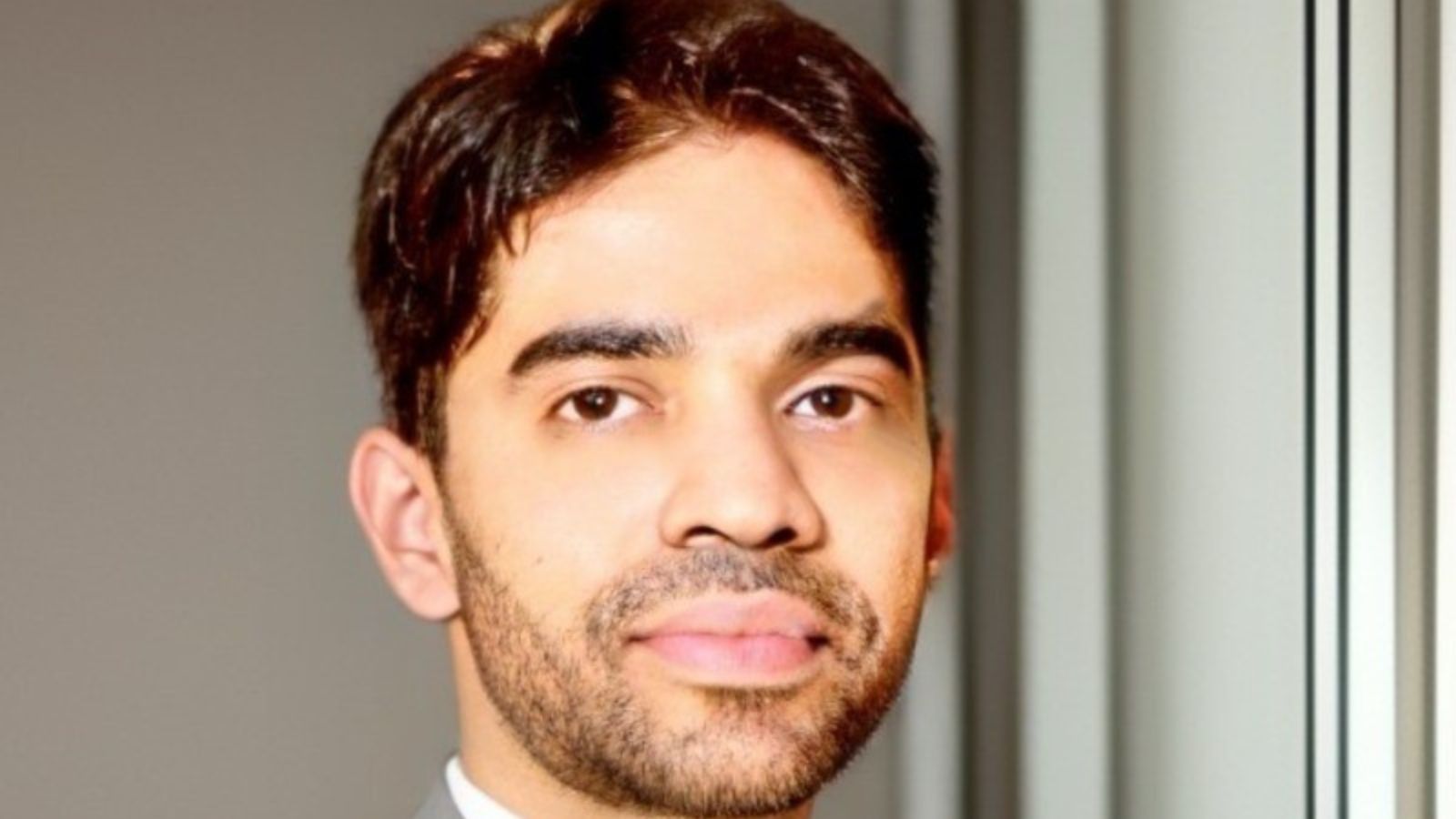
Today, through his firm TechHarbor Partners, Utkarsh Mahajan, a resident of Chandigarh, hopes to demonstrate that companies from the region can not only execute technology projects but also advise global businesses, governments and large organisations on complex technology decisions while being in their homeland. Now two years old, TechHarbor Partners has grown to a team of 27 employees.
Operating entirely remotely, with no external funding or support, the firm achieved a major milestone by building a team of over 20 employees from scratch while successfully serving Fortune 500 clients right from its hometown. To date, the company has served about 60 clients.
Mahajan’s journey, however, began much earlier than in America.
Not a fan of rote learning
It started in a small CA coaching class in India where everyone around him was busy memorising textbook answers. He recalls feeling out of place because his instinct was to understand how things actually worked rather than simply memorise them. That disconnect between theory and practical thinking became the biggest reason for moving abroad.
“I wanted to learn by doing, not only by cramming,” he says. It was then that the United States became his classroom for the next 15 years.
Working with large organisations in the airline, retail and manufacturing sectors, he gained first-hand experience of how global companies use technology to solve business problems instead of merely installing software.
He worked in environments where decisions affected thousands of employees and millions of customers, giving him an understanding of technology from a strategic business perspective rather than just a technical one.
Story continues below this ad
Professionally, life in America offered everything he could have asked for: a high-paying job, financial security and career stability. But family circumstances eventually forced him to pause and ask himself a difficult question.
“Was I going to spend the rest of my career improving other people’s plans, or was I finally going to build something of my own?”
That question changed everything.
“Instead of continuing a comfortable corporate career, I decided to return to Chandigarh and start from scratch,” he said.
According to him, America allowed him to join some of the world’s largest systems, but India allowed him to design one himself.
Story continues below this ad
Through TechHarbor Partners, his ambition is to build a consulting company that helps organisations make better technology decisions, then successfully execute them.
He believes India has long been viewed merely as the place where background technology work gets done.
“We have enough talent to sit at the decision-making table too. Chandigarh and Mohali already have professionals who have managed technology programmes worth hundreds of millions of dollars globally. The missing link is bringing high-end technology strategy and consulting back home,” he said.
His years in America continue to shape the way he works today. Rather than asking clients which software they want, he begins with different questions: What business problem are they trying to solve? How will that decision improve their operations? How will it affect their financial performance? TechHarbor’s portfolio consists entirely of businesses based in the US, Europe, the Middle East, and Africa, as well as various Public Sector Undertakings (PSUs).
Story continues below this ad
Challenges in India
Returning home, however, was anything but easy. The biggest challenge was not changing countries but adjusting to a different culture of accountability.
“Many everyday processes which took only minutes in the United States often required days in India. Pollution, traffic, paperwork and reverse culture shock added to the transition. Equally challenging was building an entirely new professional network in a city where technology consulting is still an emerging concept,” Mahajan said about challenges.
Those experiences influenced the culture of TechHarbor Partners. He added, “This is why my company focuses on clear commitments, transparent communication and disciplined delivery so that clients never have to chase updates or wonder whether promises will be fulfilled.”
While optimistic about the future, he believes Chandigarh still has some distance to cover before matching larger technology centres like Bengaluru or Pune.
Story continues below this ad
He says the city possesses exceptional talent and Mohali is steadily emerging as an important technology and Global Capability Centre (GCC) destination. The local startup landscape is also showing significant growth; in Chandigarh, as many as 727 startups have registered, of which the majority are in IT services, according to data from the DC Office. However, many businesses still see technology firms primarily as execution partners rather than strategic advisors.
Ironically, he says, that is exactly why he chose to return. “If everyone waits for Chandigarh to become like Bengaluru before building serious companies here, it never will. Someone has to help build that ecosystem.”
Looking ahead, his ambitions extend far beyond growing his own company.
He wants TechHarbor Partners to become a globally trusted consulting firm that businesses, government departments, and even defence organisations can approach to manage large-scale transformation programmes, solve complex technology challenges, and convert ambitious ideas into successful outcomes.
Story continues below this ad
He also hopes his journey inspires young professionals to believe that meaningful global work does not always require leaving India permanently.
His advice to students and young professionals considering careers abroad reflects his own experience; he said, “I encourage them to seek international exposure if possible because it teaches accountability, decision-making and global standards. However, I will caution against viewing overseas settlement as the only measure of success.”
“Go abroad if you can, learn from the best systems, understand how organisations make decisions and solve problems. But don’t assume success exists only outside India,” Mahajan added.
“The real question is whether you are willing to do the hard work wherever you are and take ownership for what you build.”
Story continues below this ad
For him, leaving behind a $200,000 salary was never about sacrificing success. It was about returning home to create it.
View original source — Indian Express ↗
Related stories

The Punch
WorldJul 7, 2026 · 1 min
FG suspends new internet, digital platform regulations
The Punch
The Punch
WorldJul 7, 2026 · 1 min
Oil firms decry multiple taxes, seek PIA review as Nigeria joins IEA
The Punch
The Punch
WorldJul 7, 2026 · 1 min
Kano judiciary sacks Sharia court judge, suspends others over misconduct
The Punch
The Punch
WorldJul 7, 2026 · 1 min
Police recover pistol in Bayelsa, hunt fleeing drug suspects
The Punch