Indian Express
After Mankhurd tragedy, BMC vows crackdown on illegal structures
3 min readMumbaiJul 7, 2026 09:17 PM IST
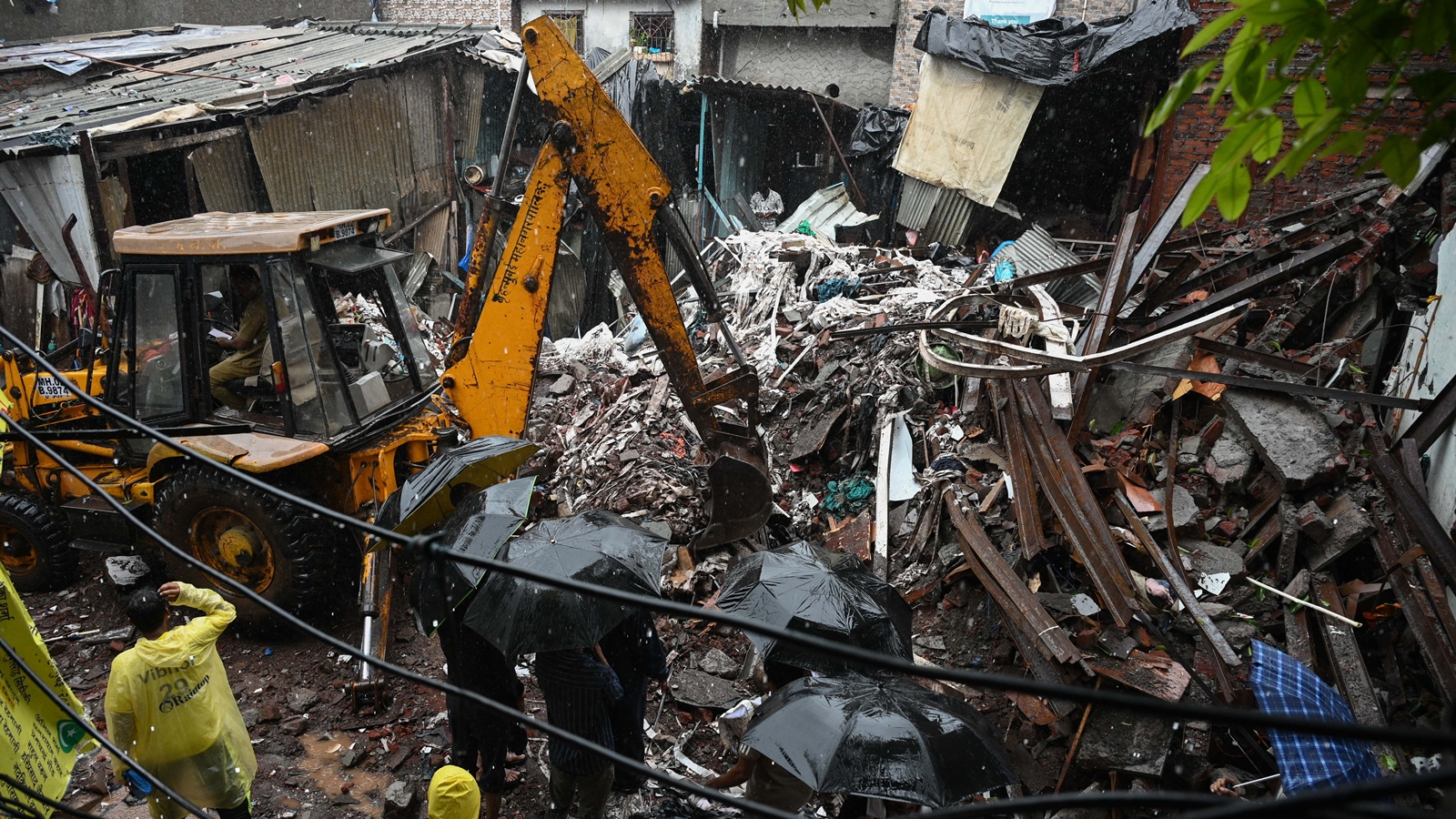
Six people died after building collapsed in Mankhurd. (Express photo by Sankhadeep Banerjee)
A day after six people, including five minors, lost their lives in a house collapse in Mankhurd in Mumbai’s eastern suburbs, Mumbai Municipal Commissioner Ashwini Bhide said the Brihanmumbai Municipal Corporation (BMC) would intensify its action against illegal encroachments across the city.
“We are going to look seriously into the issue of illegal encroachments on government land. We will jointly carry out an inspection with the collector’s office to identify land that has been encroached upon illegally, following which appropriate measures will be taken to remove the encroachments,” Bhide told reporters on Monday.
Speaking to The Indian Express, Mumbai (Suburban) Collector Saurabh Katiyar said the latest regulation issued by the state government mandates that any unauthorised housing unit built before 2011 can be demolished only after alternate rehabilitation is provided. He said the BMC’s regulations restrict informal houses to a maximum height of 14 feet. However, a large number of such houses exceed the 14-foot limit and comprise multiple storeys.
“For the time being, we have launched a drive under which any illegal residential unit with more than one floor and exceeding 14 feet in height will be demolished immediately. Thereafter, depending on the legal status of the occupants, alternate accommodation may be provided through the Slum Rehabilitation Authority (SRA),” Katiyar told The Indian Express.
Meanwhile, an official from the civic ward office said illegal portions of more than 10 structures surrounding the house that collapsed have been removed.
Located at the far eastern edge of Mumbai, the Mankhurd-Shivaji Nagar belt lies adjacent to the Deonar landfill, one of India’s oldest operational dumping grounds. Its proximity to the landfill has kept land and housing prices relatively low, making the area a preferred destination for low-income families.
The landfill began operations in 1927, when the surrounding areas were largely uninhabited. However, following Independence, particularly during the rapid urban expansion of the 1990s and 2000s, migrants from across the country settled in Mankhurd, Govandi and Shivaji Nagar, where inexpensive housing was available close to the landfill.
Story continues below this ad
Much of Mankhurd and Govandi was developed on reclaimed land, marshes and filled-up dumping grounds. The soil has a low bearing capacity and becomes even weaker when saturated during heavy rainfall, increasing the risk of structural settlement and collapse.
Hasan Shaikh, a local resident and social worker, said that until the mid-2000s, most homes in Mankhurd and Shivaji Nagar were single-storey structures. However, as vacant land became scarce, residents increasingly began constructing additional floors above existing homes.
“People started building another floor on top of their houses and either sold it to new families or rented it out,” Shaikh said.
Pratip Acharya is a seasoned journalist based in Mumbai reporting for The Indian Express. With a career spanning over a decade, his work demonstrates strong Expertise and Authority in critical urban issues, civic affairs, and electoral politics across Eastern and Western India.
Expertise & Authority
Current Role: Journalist, The Indian Express (IE), reporting from Mumbai.
Core Authority: Pratip's reporting focuses sharply on local democracy and development, specializing in:
Urban Governance and Civic Affairs: Providing in-depth analysis of municipal decision-making, city planning, and local infrastructure, essential for informed urban reporting.
City Politics and Environment: Covering the political dynamics of Mumbai and surrounding areas, alongside critical environmental challenges impacting the metro region.
Electoral Coverage (High-Stakes Experience): He has extensive experience in high-stakes political reporting, having covered major elections, establishing his Trustworthiness in political analysis:
National: Lok Sabha elections in 2014 and 2019.
State: West Bengal Assembly elections in 2016 and Maharashtra Assembly elections in 2019.
Major Assignments (Ground Reporting): Pratip demonstrated commitment during crises by conducting ground reporting throughout the Covid-19 pandemic since its breakout in 2020, offering first-hand accounts and analysis of the public health crisis.
Experience
Extensive Experience: Starting his career in 2014, Pratip has built his foundation across multiple prominent English dailies:
Started at The Times of India in Kolkata (2014).
Relocated to Mumbai (2016) and worked with The Free Press Journal and Hindustan Times before joining The Indian Express.
Pratip Acharya's diverse experience across major publications, coupled with his specialized focus on the intricate details of urban governance and a track record of covering major electoral and health crises, establishes him as a trusted and authoritative source for news from India's critical metropolitan centres. ... Read More
View original source — Indian Express ↗
Related stories

Dawn
TechnologyJul 7, 2026 · 1 min
Three ships struck in Hormuz flare-up, Qatar slams Iranian attack
Dawn

ZDNet
TechnologyJul 7, 2026 · 1 min
You can soon restore Windows 11 from scratch even if it can't boot up - here's how
ZDNet

Engadget
TechnologyJul 7, 2026 · 1 min
Google's next Pixel event is on August 12
Engadget

TechRadar
TechnologyJul 7, 2026 · 1 min
Asus ProArt PA32KCX review: Over $8K for a 32-inch 8K monitor and a whole lot of dimming zones
TechRadar