
Hacker Noon
Readers Have a Pretty Clear Message for AI-Hungry Hardware Companies: We’ll Just Buy Less Stuff
:::info Welcome to 3 Tech Polls , HackerNoon's brand-new Weekly Newsletter that curates Results from our Poll of the Week , and related polls around the web. Thanks for voting and helping us shape these important conversations! ::: \ AI was supposed to make our devices smarter. For a lot of people, it may first make them more expensive. That was the thinking behind last week’s front-page poll, where we asked readers: “Now that AI is making consumer hardware like phones and laptops more expensive, what are you most likely to do?” A total of 470 people voted , and the results were not exactly a love letter to the next upgrade cycle: 33% said they would upgrade less often 22% said they would buy cheaper models 20% said they would switch brands 25% said they would pay up anyway The simplest read is that the largest group of readers is not planning to storm off, boycott every gadget maker, or swear off new hardware forever. They are doing something more dangerous for the tech industry: they are slowing down. That matters because modern consumer tech has spent years training us to treat upgrades as routine. New phone every few years. New laptop when the old one starts wheezing. New console when the ecosystem moves forward. But if AI-driven component costs are now going to show up in the final price of everyday hardware, readers seem to be saying the same thing: fine, then the old device gets another year. And honestly, that may be the most rational response. \ Why Prices Are Going Up The price hikes are no longer theoretical. Microsoft said Xbox console prices will rise worldwide from August 1, with 512GB models going up by $100 and 1TB models by $150. The company also said console storage and memory prices have risen by more than 2.5x and could double again by fall 2027. Apple has also raised prices on several MacBook and iPad models, with Reuters reporting increases including the 512GB MacBook Air rising to $1,299 from $1,099 and the 128GB iPad Air rising to $749 from $599. Valve’s new Steam Machine has landed in the same hostile component market, starting at $1,049 for the 512GB model and $1,349 for the 2TB version. The common thread is memory and storage. The AI boom is eating enormous amounts of DRAM, NAND, high-bandwidth memory, SSD capacity, and data center infrastructure. Reuters reported this week that Samsung is expected to post another record quarter as AI growth strains memory supply and pushes chip prices higher, with analysts expecting the memory market to remain undersupplied at least through next year. Business Insider, citing comments from Currys CEO Alex Baldock, reported that smartphones and laptops are likely to see higher prices later this year because AI data centers are soaking up global memory-chip supply. That brings us to the awkward part. \ The Optics Are Ugly The companies raising prices are not merely victims of the AI boom. Some of them are also among its biggest promoters, financiers, and beneficiaries. Microsoft is the cleanest example. It is raising Xbox prices because memory and storage have become more expensive, but Microsoft is also one of the world’s most aggressive AI infrastructure spenders. In its fiscal 2026 third-quarter earnings commentary, Microsoft said capital expenditures were $31.9 billion, with roughly two-thirds of that going to short-lived assets, primarily GPUs and CPUs. Apple’s position is more complicated, because it is not building AI infrastructure at Microsoft’s hyperscaler scale, but it is still selling Apple Intelligence as part of the future of the iPhone, iPad, and Mac. The company previewed the next generation of Apple Intelligence and Siri AI at WWDC in June. This is the optics problem readers are reacting to, even if they do not phrase it in supply-chain terms. Consumers are being asked to pay more for hardware partly because the industry is racing to build AI systems that consumers did not necessarily ask to subsidize through higher device prices. \ Necessary? Maybe. Inevitable? Not Entirely. To be fair, component inflation is real. Memory shortages are real. AI data centers really are competing with consumer electronics for parts. If Apple, Microsoft, Valve, Sony, Samsung, Dell, Lenovo, and every other hardware company are buying into a stressed supply chain, someone eventually pays. Sometimes that is the company through lower margins. Sometimes it is the buyer through higher prices. Usually, it is both. But “real” is not the same as “inevitable.” The industry made choices. It chose to turn AI into an arms race. It chose to pour money into massive data centers before the revenue model was fully settled. It chose to market AI as an unavoidable platform shift rather than a useful feature set that should earn its place. Goldman Sachs has estimated that AI infrastructure could require about $7.6 trillion in capital expenditure between 2026 and 2031 across compute, data centers, and power. When investment happens at that scale, the costs do not stay politely contained inside earnings calls. They leak into electricity grids, water systems, chip supply, memory prices, cloud bills, and, yes, the price of the laptop you were planning to buy. \ The Reader Message Is Pretty Simple HackerNoon does not think consumers should be expected to quietly absorb every cost of the AI buildout. The poll results suggest many readers feel the same way. Only 25% said they would simply pay up anyway. That is a meaningful group, but it is not a majority. The other 75% chose some form of resistance: delay the upgrade, buy a cheaper model, or switch brands. That last number should make hardware companies nervous. Consumers do not always rebel dramatically. More often, they adapt. They keep the old phone. They buy the base model. They skip the storage upgrade. They wait for a sale. They look at refurbished devices. They switch from the brand they used to buy automatically to whichever company seems least interested in testing their patience. The irony is that AI was supposed to make technology feel more capable and personal. Instead, for many consumers, its first tangible effect may be a worse shopping experience: higher prices, fewer affordable configurations, and a nagging feeling that they are paying for someone else’s data center bill. \ Tech Companies Still Have to Make the Case Better on-device AI could be genuinely useful. More powerful local models could improve accessibility, privacy, creativity, gaming, productivity, and search. AI features that run well on consumer hardware may eventually justify better chips, more memory, and higher baseline specs. But “eventually” is doing a lot of work there. Right now, readers are looking at the bill before they have seen enough of the benefit. That is why “upgrade less often” won the poll. It is not anti-technology. It is not even necessarily anti-AI. It is a consumer saying: show me why this is worth it. Until then, the old laptop still opens. The old phone still texts. The old console still plays games. And if the AI boom is going to make the next device more expensive, a lot of people seem perfectly willing to make the current one last. \ :::info Weigh in on the Poll Results here! ::: \ \ 🌐 From Around the Web: Polymarket Pick Who Will Win the FIFA World Cup? It has now been a few weeks since the FIFA World Cup Began, and typical FIFA fashion, we’ve already had a few twists and turns. As of July 6 , the World Cup is in the Round of 16 , with the quarterfinal picture starting to take shape. Morocco, France, Norway and England are already through after wins over Canada, Paraguay, Brazil and Mexico, respectively. The big shock so far is Brazil’s elimination , with Norway winning 2-1. Next up are Portugal vs Spain and USA vs Belgium early on July 7, followed by Argentina vs Egypt later the same day. That said, users at Polymarket appear to think that we may have a showdown between France and Argentina once again, with the former being the clear favorite. \ The last FIFA World Cup final had one of the wildest finals ever. Argentina led 2–0 through goals from Lionel Messi and Ángel Di María . France looked beaten, but Kylian Mbappé scored twice in about two minutes late in the second half to make it 2–2 . In extra time, Messi scored again to put Argentina ahead 3–2 , but Mbappé completed his hat-trick with a penalty to make it 3–3 . Argentina then won the penalty shootout, giving Lionel Messi his first World Cup and Argentina their third World Cup title . Mbappé won the Golden Boot after scoring eight goals in the tournament. Can Mbappe return France its glory? Well, there’s only one way to find out :grinning: \ We want to hear from you! \ :::tip Vote on this week’s poll: What would you be most comfortable letting an AI agent do without supervision? ::: \ That’s it, folks! We’ll be back next week with more data, more debates, and more donut charts!
View original source — Hacker Noon ↗
Related stories

Dawn
TechnologyJul 7, 2026 · 1 min
Three ships struck in Hormuz flare-up, Qatar slams Iranian attack
Dawn

ZDNet
TechnologyJul 7, 2026 · 1 min
You can soon restore Windows 11 from scratch even if it can't boot up - here's how
ZDNet
Engadget
TechnologyJul 7, 2026 · 1 min
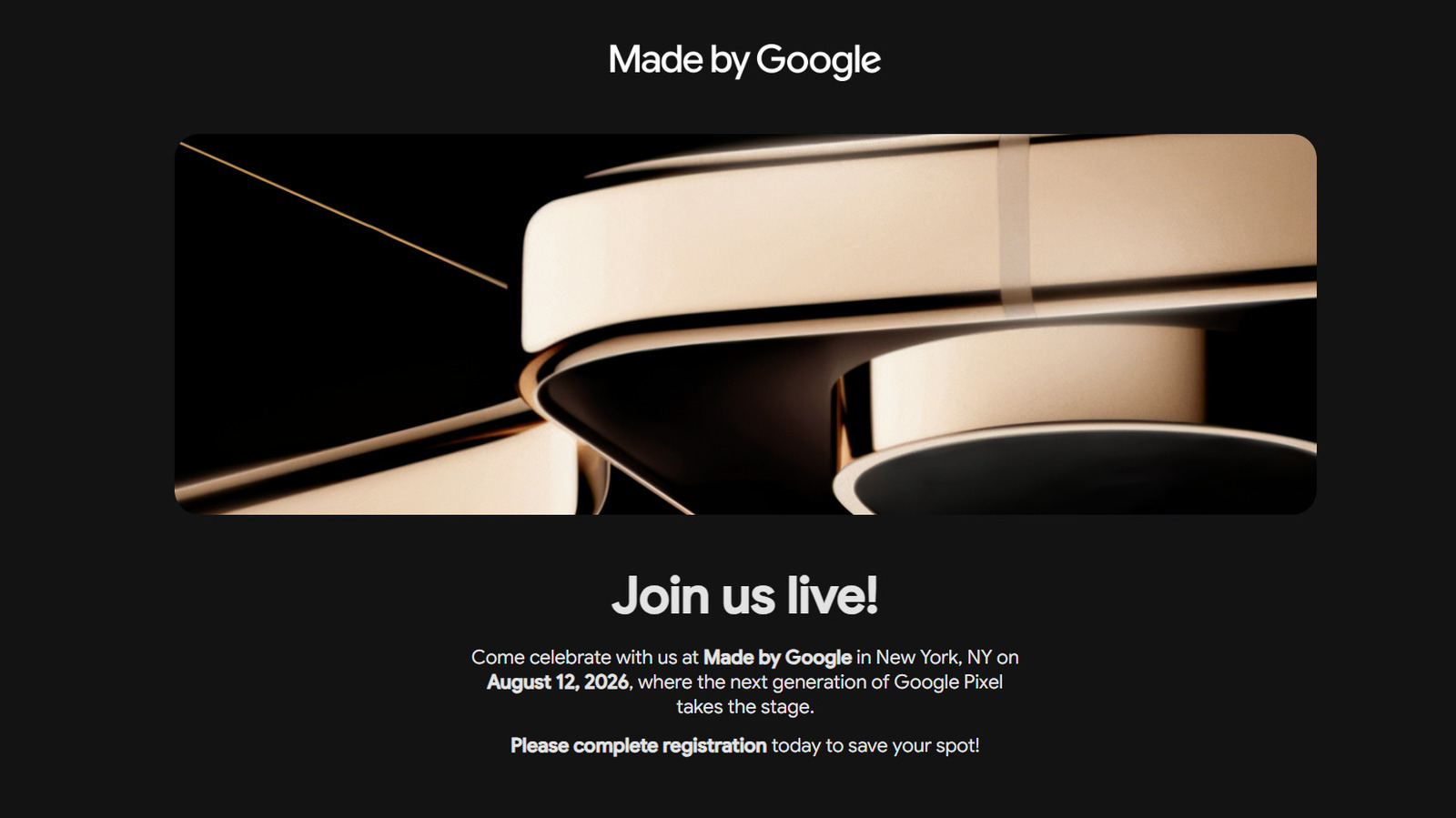
Google's next Pixel event is on August 12
Engadget
TechRadar
TechnologyJul 7, 2026 · 1 min
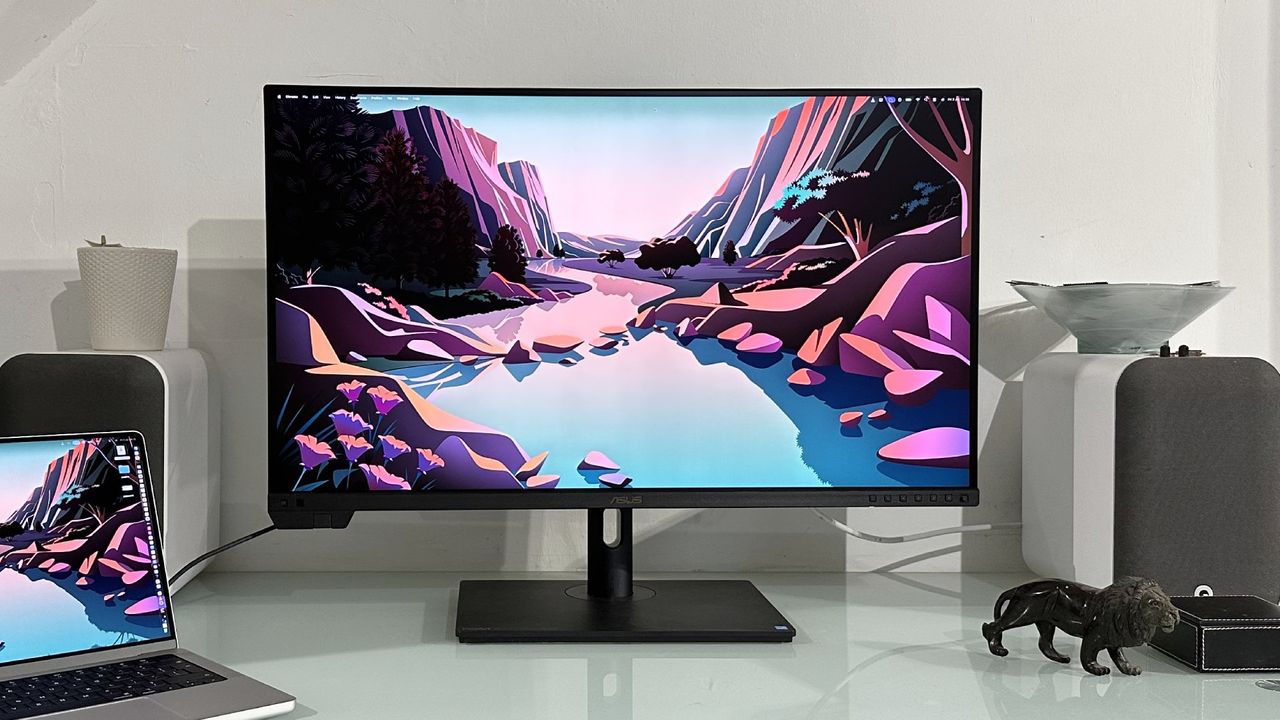
Asus ProArt PA32KCX review: Over $8K for a 32-inch 8K monitor and a whole lot of dimming zones
TechRadar