Times of Israel
State comptroller: Government has no policy to combat foreign election meddling
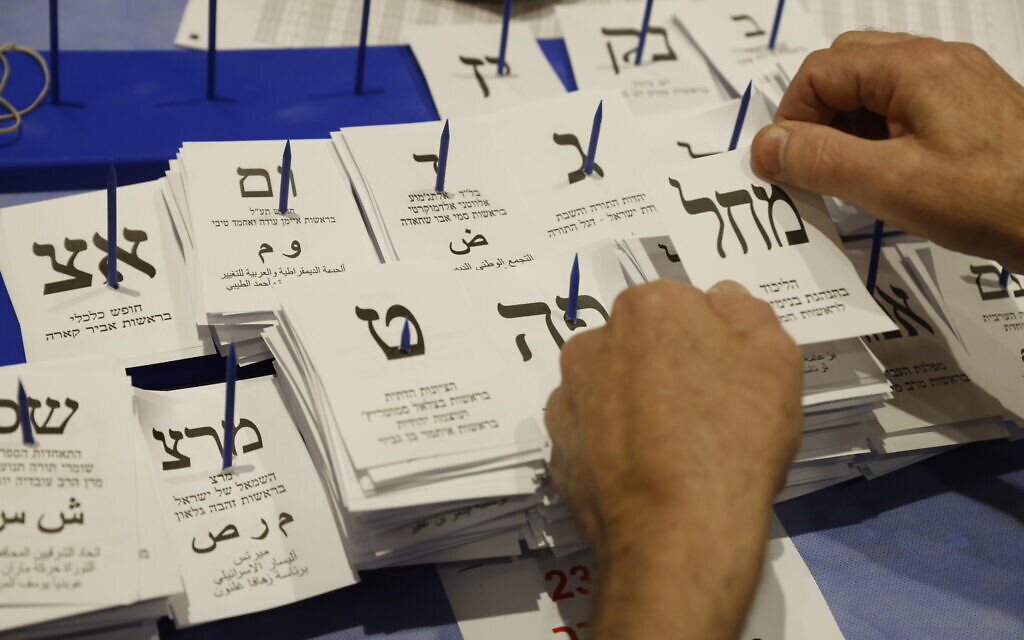
A state comptroller’s report released on Tuesday about the threat of foreign interference in Israeli elections found that the government has no national policy to combat the issue.
Outgoing State Comptroller Matanyahu Englman said that Iran and other hostile actors are systematically exploiting social media to deepen social divisions in Israel, spread panic and manipulate the public’s perception of reality.
“We found that Israel’s national preparedness is fundamentally inadequate: nine years after the threat was first identified by the state, there is still no national policy, and no government body is leading efforts to address the issue,” Englman said in a statement accompanying the issuing of the report.
A national action plan was presented to the prime minister a year ago, but it has not yet been reviewed, wrote Englman, who also warned that foreign election interference could undermine public trust in the upcoming election results.
His report sounded an alarm over the fact that the Shin Bet only started preparing in January for the upcoming elections — slated to be held in October — while the National Security Council “ceased dealing with the matter” in August 2025.
Get The Times of Israel's Daily Edition
by email and never miss our top stories
By signing up, you agree to the terms
Foreign election interference is even more likely, given the advent of AI tools, which allow hostile elements to rapidly create highly credible fictitious identities and fake content on a huge scale, Englman said.
“Without an immediate and organized government response, attempts to interfere in Israel’s domestic public discourse could even lead to harm to the state’s sovereignty and undermine public trust in the democratic process,” wrote the outgoing state comptroller.
“I wish to raise a [warning] flag: leaving the gaps in addressing foreign influence in the digital sphere unresolved leaves the Israeli public exposed and demands decisive national action.”
In response to the report, the Central Elections Committee said that it established a dedicated task force to prepare for foreign election interference operations.
“Regarding the recommendation to establish a ‘hotline’ for public inquiries, it should be emphasized that responsibility for addressing foreign influence lies with the security agencies,” the committee said, seemingly passing primary responsibility for the issue off to the government.
“In this context, the committee is currently examining a suitable framework for receiving information from civil society groups with expertise in the field, based on criteria falling within the committee’s mandate and authority, while upholding freedom of expression and campaigning,” it said.
“Furthermore, any party that believes it has been harmed by improper influence may file a petition with the elections committee, which will be deliberated in the standard manner and on an expedited timeline,” it added.
Foreign actors have tried to meddle in Israel’s politics before. A joint study by the Institute for National Security Studies and the Institute for the Research of the Methodology of Intelligence revealed that, ahead of the 2022 Knesset elections, multiple covert campaigns unfolded on social media.
One sought to fracture the Religious Zionism party, using dozens of fake Twitter accounts posing as Israelis to urge far-right political leader Itamar Ben Gvir to end his Otzma Yehudit party’s joint electoral run with Religious Zionism.
Another campaign aimed to suppress voter turnout, coordinating hundreds of accounts — including some posting in Arabic — days before and on election day.
After the vote, a small network of accounts across Facebook, Twitter, Instagram and Telegram sought to sow distrust in the results, spreading claims of election fraud and mobilizing protests, supported by thousands of fake followers to amplify credibility.
Stav Levaton contributed to this report.
View original source — Times of Israel ↗
Related stories

The Punch
PoliticsJul 7, 2026 · 1 min
Reps issue final summons to Accountant-General over snub, threaten sanctions
The Punch
The Punch
PoliticsJul 7, 2026 · 1 min
Senate grills NWDC over N943m board allowances, appointments
The Punch

CBC
PoliticsJul 7, 2026 · 1 min
3 tankers attacked in Strait of Hormuz, U.K. military says
CBC
The Guardian
PoliticsJul 7, 2026 · 1 min
Revealed: Farage’s £5m gift reported to UK crime agency over money laundering concerns
The Guardian