The Guardian
EasyJet’s board has surrendered too easily to US bidder
Some foreign takeover swoops on UK listed companies are easier to swallow than others. Sometimes it is hard to mount an argument that shareholders should stick to the virtuous path of independence and say no to an offer of hard cash at a fat premium. The current £10bn bid for Intertek, the FTSE 100 product testing and quality inspection firm that had been going sideways for a while, probably falls into that category. The bid premium on that one was about 60%.
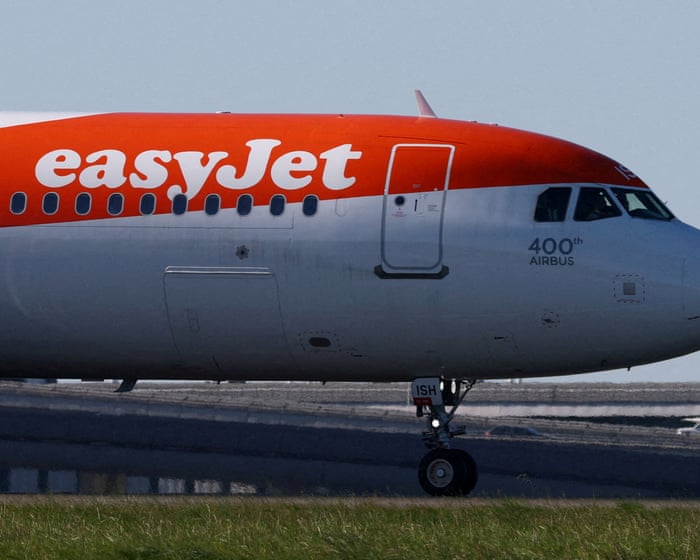
EasyJet, on other hand, looks a case of a board giving up before it has put up a proper fight. The story so far at the budget airline is that three non-starter offers from Castlelake, a US private investment firm that is big in aircraft financing and leasing, were rejected in the standard manner as “fundamental” undervaluations. The last of those was at 625p. A fourth, at 650p a share, was dismissed in the softer language of “substantial”. Then “an agreement in principle” was reached at the weekend at 690p, or £5.5bn. Castlelake has until 3 August to put up or shut up.
The long dance may give an impression that easyJet’s board, led by chair Sir Stephen Hester, has pushed the would-be bidder to its financial limits. And, of course, 690p can look superficially attractive against 464p, which is one relevant marker because it is where easyJet stood on the day before the Iran conflict broke out and knocked all airlines’ share prices.
But impressions can be misleading. What’s missing in the valuation debate is how far easyJet could expect to travel under its own power in reasonably short order. On that score, Hester et al got it right in the early stages of this scrap when they pointed out that the airline business is volatile, but easyJet had improved pre-tax profits by 46% to £665m in the two years to September 2025, has a solid balance sheet and a plan to hit £1bn-plus of profitability.
True, the “medium term” nature of that plan made timing a little vague. The Iran conflict, by upsetting consumer confidence and inflating the cost of jet fuel, may have delayed arrival by a year or so. But the board was clear: the target was intact.
What’s more, one could see how it could be achieved. EasyJet’s holidays business has been built from scratch to become a substantial operation – it hit its target of £250m of profit early. There also ought to be improvements as older A319s aircraft are replaced by more fuel-efficient A320 and A321s. Then there are the “multiple opportunities to capture route maturity gains”, as easyJet put it, referring to a rejigging of its network. It was on the basis of those arguments that the board branded the offer at 625p as an attempt to grab the business “on the cheap”.
Now, seemingly, shareholders are being warmed up to be told by Hester that a bump to 690p – or just 6% from the “substantial” undervaluation of 650p – represents unmissable value. The stance smacks of timidity.
Yes, we know life rarely runs smoothly for airlines. When it’s not foreign wars or Covid, then French air traffic controllers or Icelandic volcanoes can cause trouble. But it is only 13 months since easyJet’s shares were trading at 586p. It should not require miracles to get back to that level, and then to take a short-haul hop to 700p and beyond by achieving the £1bn figure and keeping going.
One other point is relevant: the art of valuing airlines isn’t just about year-on-year profits. The assets also count. In easyJet’s case, they include 208 aircraft it owns outright, aircraft on order at a time of constrained supply from Airbus and Boeing plus an enviable collection of landing slots at in-demand airports, notably Gatwick. Even if airlines’ share prices rarely reflect asset value, City analysts’ estimates that easyJet is worth 600p-650p on that score are not irrelevant.
One can’t know how much pressure Hester was under from shareholders to back an outline deal at 690p. But the board’s job is to form its own view, rather than to be an echo chamber. EasyJet used to be a great business, has good assets and a credible path to get its operational metrics closer to market-leading Ryanair’s. Yes, the capital expenditure demands are hefty in the next couple of years, but this is not a crisis-ridden business in need of rescue by US financiers with a greater appetite for borrowing.
Unfortunately, one fears Castlelake will probably succeed in the end, even if the current market price of 600p-ish reflects the risk that regulators will object to its clever (or too clever) ideas on how bypass EU ownership rules. But it’s not too late for Hester to find a way to aim higher on pure price grounds. You only get to sell once: at least go out in style.
View original source — The Guardian ↗
Related stories

Bloomberg
BusinessJul 7, 2026 · 1 min
We Are A Blockchain Capital Market: Cagney
Bloomberg
Bloomberg
BusinessJul 7, 2026 · 1 min
NATO Agrees to $50 Billion in Defense Deals to Placate Trump
Bloomberg

Bloomberg
BusinessJul 7, 2026 · 1 min
Andrew Cuomo Discusses OKX, Clarity Act, 24/7 Trading
Bloomberg

Bloomberg
BusinessJul 7, 2026 · 1 min
AI Chip Selloff Spreads Across Global Markets | Bloomberg Tech 7/07/2026
Bloomberg