The Next Web
Over 100 US-built autonomous ATVs have been fighting in Ukraine for nine months
TL;DR
Forterra deployed 100+ autonomous ATVs in Ukraine since October, completing 1,100 missions and 52 casualty evacuations. The largest US combat UGV deployment.
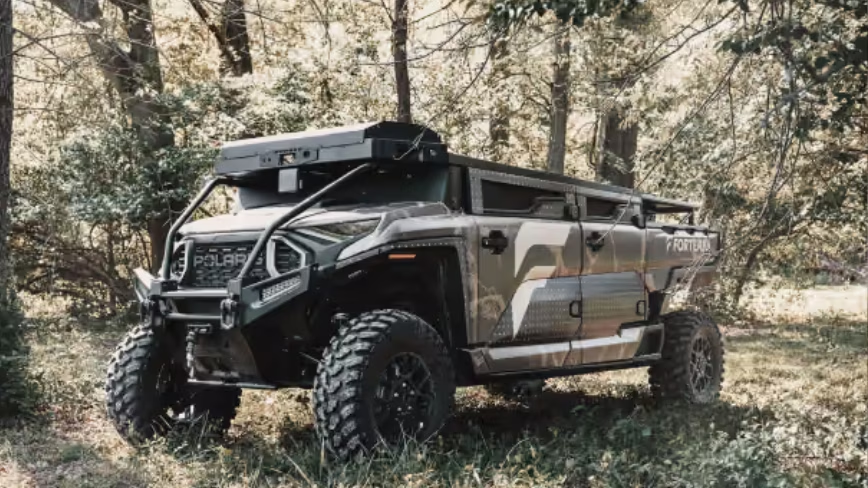
Forterra, a US builder of autonomous vehicles, revealed that more than 100 of its self-driving ATVs have been deployed in combat zones in Ukraine for the past nine months. The company says it is the largest deployment of autonomous ground vehicles in combat by any US defence tech company. Since arriving in October, the vehicles have driven more than 2,500 miles across more than 1,100 missions, carried 777,440 pounds of cargo, and completed 52 casualty evacuations.
The Lancer vehicles are based on Polaris ATVs fitted with a custom sensor and compute stack. They are gas-powered and can carry 750 kilograms, three times the capacity of Ukraine’s own battery-powered UGVs. “This UGV for logistics and just maintaining our defence is the most important UGV in Ukraine,” a Ukrainian soldier told TechCrunch. “It’s fucking fantastic, and we are dying to get more.”
The deployment was funded by US defence dollars as part of the effort to transform the US military through its support of Ukrainian resistance. Aerial drones have created extensive no-go zones where surveillance leads to death from above, driving Ukrainian strategists toward ground-based autonomy. Some Lancers have been lost in combat, particularly when stuck in deep mud where Russian forces can target them. Adding a Starlink antenna was the modification that made the vehicles operationally useful. Ukraine’s unmanned warfare industry is already producing billion-dollar companies, and the Forterra deployment adds a US hardware layer to that ecosystem.
The limits of autonomy are clear. Ukrainian soldiers have mainly been teleoperating the vehicles in combat zones because the autonomous systems cannot yet identify unexpected enemy forces and react appropriately. “We actually need to be able to respond to the enemy threats, live, while it’s in front of the enemy, which the autonomy doesn’t know how to do yet,” the soldier said. Forterra is working on combining classical robotics algorithms with generative AI to enable more generalised reactions.
The 💜 of EU tech
The latest rumblings from the EU tech scene, a story from our wise ol' founder Boris, and some questionable AI art. It's free, every week, in your inbox. Sign up now!
The Ukrainian soldiers’ main demand is cost reduction. Forterra’s Lancers use Polaris’s commercial supply chain to keep prices down, but they are still too valuable to deploy as freely as drones. “Attrition is just a fact of this battlefield, and we have lost a few at this point, and it hurt, and we need more, and therefore we need them cheaper,” the soldier told TechCrunch. The Pentagon’s drone-dominance push is driving billions into autonomous military vehicles, with competitors like Scout AI ($100M raise), Field AI, and Overland AI also trialling UGVs with the US military. Forterra has raised more than $500 million in venture funding.
Published July 7, 2026 - 5:22 pm UTC
Back to top
View original source — The Next Web ↗
Related stories
Engadget
TechnologyJul 7, 2026 · 1 min
Hasbro and Scooby Doo team up for one of the goofiest Transformers yet
Engadget

TechCrunch
TechnologyJul 7, 2026 · 1 min
Discord admits AI moderation bug wrongfully banned users over harmless images
TechCrunch

Stuff
TechnologyJul 7, 2026 · 1 min
Prince Harry attacks judge in hacking case and accuses him of ‘whitewash’
Stuff

Indian Express
TechnologyJul 7, 2026 · 1 min
Maharashtra Council passes Bill to recognise women farmers, extend access to welfare schemes
Indian Express