CNA
Commentary: AI will change warfare but people remain core to SAF
SINGAPORE: In his message marking this year’s Singapore Armed Forces (SAF) Day on Jul 1, Defence Minister Chan Chun Sing paid homage to the extraordinary dedication of SAF servicemen and women that underpins the safety and security enjoyed by Singaporeans every day.
He also pointed out that Singapore's success ultimately rests on the resolve of all Singaporeans to safeguard what previous generations have built.
This emphasis on the human elements of national defence comes as artificial intelligence shapes warfare development around the world.
FUTURE WARS TAKING SHAPE
Starting from a foundational level, AI has been used by for intelligence analysis and operational planning. The Israeli military reportedly used machine learning systems to process data and recommend targets for strikes in its operations in Gaza.
Meanwhile, the US used large language models in its military operation against Iran to prioritise targets and plan strikes amid a fluid and dynamic combat environment.
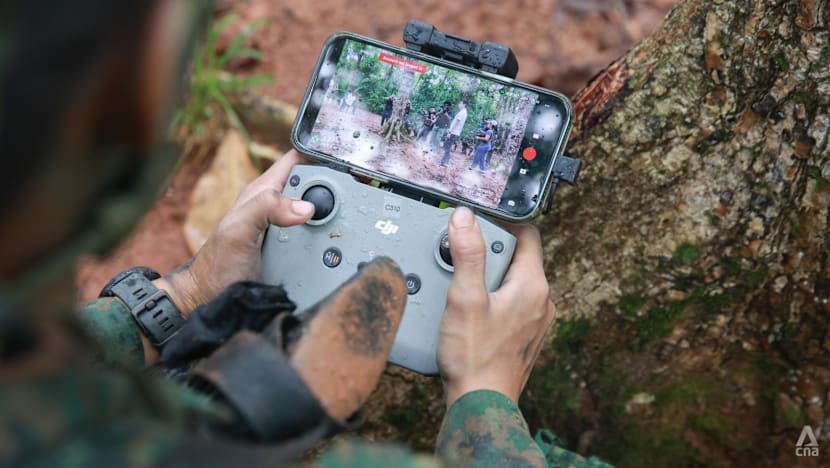
The use of drones or unmanned combat systems has also become a key characteristic of modern wars, as displayed by both Ukrainian and Russian forces, and by Iran against the US and its allies in the region.
But drone technology is not standing still. Experts expect drones to be equipped with ever more sophisticated autonomous guidance systems driven by AI that will enable them to search wide swathes of the battlefield, identify and subsequently attack targets on their own.
AI also plays a critical role in cyber warfare and information operations. It can turbocharge online attacks and the creation of fake content, accounts and bot networks to spread disinformation and deepen divisions.
Finally, AI can be deployed to more administrative or back-end tasks required to keep large militaries running smoothly, for example in human resources or finance planning, logistics operations and procurement processes.
HUMANS REMAIN AT THE CORE
These developments raise questions about whether AI will threaten human roles in the military. But there is much to suggest that the human element will remain crucial for the foreseeable future.
Minister Chan said at a Jun 24 dialogue that, although AI accelerates decision-making in defence, such as in acquiring targets and selecting weapon systems, there must still be a “man in the loop”.
“It cannot be so autonomous, whereby you just take decisions, and you don’t know what you are hitting,” he said. He explained that an overreliance on technology is tantamount to a “dereliction of duty... to an algorithm that you do not understand”.
This is especially so when such decisions in a combat situation can have literal life-or-death consequences. For a conscript armed forces such as Singapore’s, the vigilance, training and commitment of military personnel are the deciding factors of mission success, more so than just having the best-in-class equipment and weaponry.
Another factor to consider is that most AI expertise currently resides with the private sector. Any military seeking to adopt AI must build deep partnerships with the broader industry, companies that are developing AI, and third-party evaluators who are experts in AI capabilities and limitations.
In particular, the effective use of AI will require addressing many of its current flaws. These include a tendency towards subtle biases and hallucinations, potential for sycophancy or telling the user what they want to hear, and an inability to make decisions in line with ethical considerations. These have a significant impact on the outcome of military operations.
As such, the military will need to set policies, guardrails and procedures for AI systems, and also provide training for human users to ensure that AI does not lead to damaging mistakes.
In these instances, it is impossible, and potentially foolhardy, to take humans out of the loop, given the need for human-to-human interactions and the ability to make nuanced decisions.
LEARNING TO INTEGRATE AI
Mr Chan highlighted in his SAF Day message the challenge that institutions like the SAF face in safeguarding Singapore.
“Each action signals our determination to get it right, first time, all the time. For our adversaries, they are looking to get it right one time, any time,” he said.
Given Singapore’s vulnerabilities as a small country in a region that is seeing greater contestation between bigger powers, the benefits of tapping on technology such as AI cannot be ignored.
The decisions on how to invest in AI and effectively integrate it into the armed forces, and how to build the surrounding ecosystem of computing power and data centres needed to support such AI usage, will require leaders and experts with the know-how and strategic foresight.
This further reinforces the critical importance of the “man in the loop”, and the need for enhanced relationships between man and machine in the SAF, rather than a wholesale replacement of humans by technology.
Nicholas Fang is a former journalist and Nominated Member of Parliament. He is managing director of defence consultancy Prodel Impex Agencies, and chairs a strategic communications expert panel for the Ministry of Defence. He writes a monthly column for CNA.
Related stories

South China Morning Post
TechnologyJul 7, 2026 · 1 min
Barrage of explosions rocks Kyiv after Ukraine says drones attacked Russia ‘shadow fleet’
South China Morning Post

ZDNet
TechnologyJul 7, 2026 · 1 min
Samsung unveils Galaxy Z Fold 8 deal for $1,230 off ahead of July Unpacked - how to qualify
ZDNet

TechRadar
TechnologyJul 7, 2026 · 1 min
NYT Connections hints and answers for Wednesday, July 8 (game #1123)
TechRadar

Engadget
TechnologyJul 7, 2026 · 1 min
The next Samsung Galaxy Unpacked launch is happening on July 22
Engadget