Indian Express
Now, more than ever, the strategic legacy of Imam Khamenei can be a guide
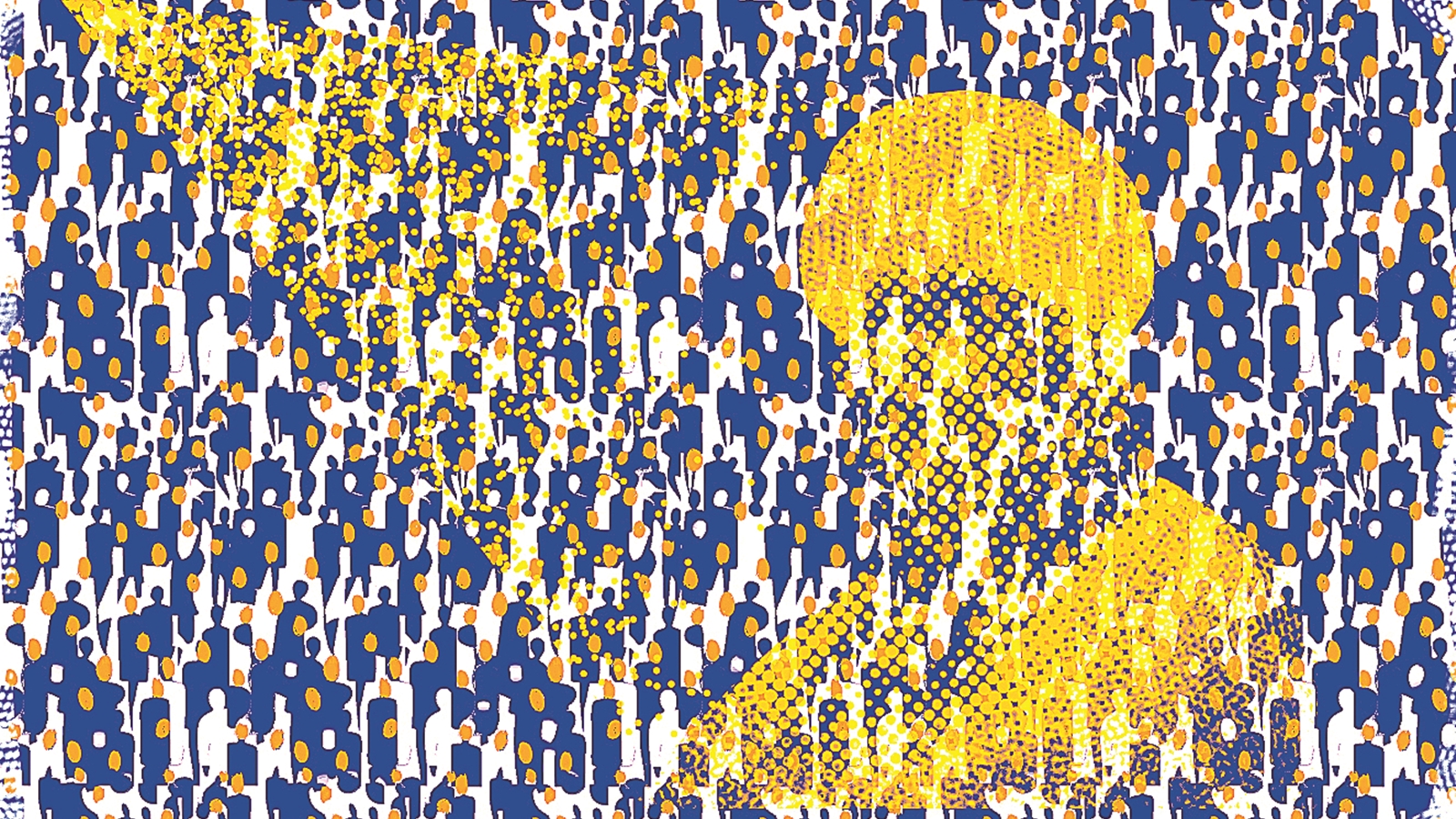
Nations ultimately judge their leaders not by the measure of fleeting achievements, but by the breadth of their vision and their steadfastness before the judgement of history. (Illustration: C R Sasikumar)
Written by: Mohammad Fathali
6 min readJul 8, 2026 06:24 AM IST
First published on: Jul 8, 2026 at 06:24 AM IST
In the history of nations, certain concepts transcend the lifespan of governments and rulers, becoming inseparable from the very spirit and identity of a people. For the Iranian nation, independence is one such concept — an ideal rooted in centuries of resistance against foreign domination. Yet, it was Imam Khamenei who transformed this longstanding historical aspiration into a living and guiding principle governing every sphere of national life. Throughout four decades of leadership, he treated independence not as a slogan but as the backbone of policymaking in security, diplomacy, economics, and science — a pillar that never bent, even amid the fiercest storms of international pressure.
Strategic independence, in its precise sense, is a nation’s ability to determine its own destiny according to its own interests and values. What made this concept an enduring doctrine in Imam Khamenei’s thought was its remarkable consistency and steadfastness over time. He stood as immovable as a mountain against every temptation toward dependency, regardless of the direction from which it came.
Within the discourse founded and uniquely articulated by Imam Khamenei, independence was never confined to resistance against the West. With the same determination, he rejected strategic dependence on the East. He warned that strategic dependency — even when presented in the language of cooperation or technical partnership — would ultimately become a chain. For the martyred Imam, self-reliance in the defence industry, the flourishing of indigenous technologies, and economic resilience were all manifestations of a single truth: National dignity. Looking far beyond the horizon of day-to-day politics, he saw independence as the continuation of Iran’s ancient narrative of survival and permanence — a narrative in whose service he considered himself a loyal soldier and faithful guardian.
This historical vision, in Imam Khamenei’s thought, was profoundly intertwined with the spiritual grandeur of Ashura. He viewed the tragedy of Karbala not as a distant historical memory, but as an ever-burning beacon illuminating the path of resistance against oppression and the willingness to pay any price in the cause of truth. The words of the martyred Imam were imbued with this Ashura-inspired spirit — a spirit that translated resistance, independence, and sacrifice into the contemporary language of the Iranian nation. From the union of the historical glory of ancient Iran and the spiritual magnificence of Islam, Imam Khamenei formulated the concept of the Iranian-Islamic Civilisation — which, in his view, presented Iran not merely as a political entity but as the rightful heir to two of humanity’s greatest civilisational legacies. His life was devoted to the strengthening of this dual identity.
Within this elevated vision, strategic independence was never merely a political instrument. Security, scientific advancement, and international dignity all derived their meaning from it. This intellectual legacy stands as the most enduring and distinguished hallmark of his four decades of leadership.
The martyred Leader regarded independence as a precious trust, nurtured by the blood of the martyrs of the Islamic Revolution and the Sacred Defence. For this reason, he considered it a sacred responsibility that must never be surrendered under any circumstances or at any cost. It was this unwavering conviction that enabled Iran to withstand some of the most severe international pressures of modern history, emerging as a resilient and dignified nation that chose steadfastness over submission.
Yet what transformed Imam Khamenei’s legacy from a political philosophy into an enduring epic was not merely his words or his statesmanship, but the grandeur of his final chapter. At the moment when an overt foreign act of aggression targeted the land of Iran, the very man who had devoted his life to speaking of independence and resistance proved the sincerity of his convictions through his own conduct. He remained in his homeland, beneath the sky whose independence he had spent a lifetime defending, standing firm in the place where he believed duty required him to stand.
In the final hours of his blessed life, he was fasting and engaged in service to the people for whose security and dignity he had devoted his entire life. Such martyrdom can never represent a mere ending in the enduring memory of a nation. It is the culmination of a lifelong journey — the moment when a leader’s words and deeds become forever inseparable. By remaining among his people at a time when fleeing has so often become the familiar course for many leaders around the world, Imam Khamenei left behind an image of leadership that will live forever in the memory of a nation that carries within itself one of the world’s oldest civilisations. The blood of the martyred Imam was poured upon the roots of the very tree he had spent a lifetime nurturing — the mighty tree of Iran’s independence and national dignity.
Nations ultimately judge their leaders not by the measure of fleeting achievements, but by the breadth of their vision and their steadfastness before the judgement of history. The manner in which Imam Khamenei forged an enduring connection between security, independence, progress, and national dignity — and ultimately sacrificed his own life in their defence — has created an image that will remain alive and honoured in Iran’s historical memory.
Today, as the world confronts great-power competition, rapid technological transformation, and increasingly complex forms of economic dependency, Imam Khamenei’s doctrine of strategic independence has acquired greater global relevance than ever before. It is no longer confined to the borders of a single country; rather, it has become a model for any nation seeking to preserve its dignity and sovereign will amid the pressures of international politics. From this perspective, Iran’s experience during Imam Khamenei’s leadership offers a lasting lesson to all those who regard national freedom of decision as more precious than any short-term advantage.
Ultimately, it must be said that, in Imam Khamenei’s thought, independence was never merely a policy or an administrative programme. It was the very essence through which the history, culture, faith, and collective will of a nation were brought together. The legacy of the martyred Leader is today, more than ever, a guiding light for Iran’s future — a light that, through his blood, will burn brighter and endure more steadfastly than ever before.
The writer is the Ambassador of the Islamic Republic of Iran in India
View original source — Indian Express ↗
Related stories

The Punch
WorldJul 8, 2026 · 1 min
States warned against unviable airport projects
The Punch
The Punch
WorldJul 8, 2026 · 1 min
Nigeria Infrastructure Debt Fund (NIDF) announces a N10
The Punch
The Punch
WorldJul 8, 2026 · 1 min
FTSE Russell review not setback for Nigeria – CIS
The Punch
The Punch
WorldJul 8, 2026 · 1 min
NAICOM tasks NIA on prompt claims, digital innovation
The Punch