
RNZ
Uncertainty over NZDF drone directives despite Kiwi troops helping blow them up in Australia
New Zealand troops have taken part in blowing up drones in Australia.
Yet they still do not have any command directives for drones even though defence aims to spend millions on what it says is a top priority.
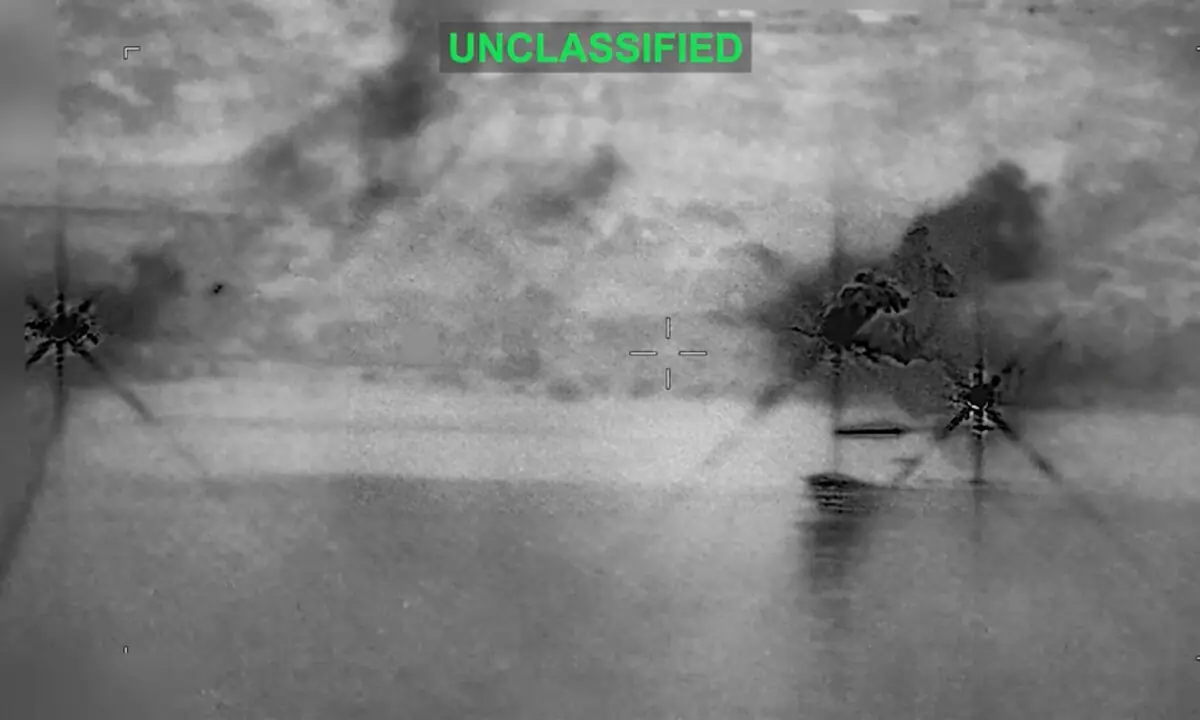
In May, a joint Anzac battlegroup used kamikaze drones and blew up two small ground drones in Exercise Black Prince 3 near Adelaide.
The Australians enthused it was a [https://www.defence.gov.au/news-events/news/2026-07-07/powerful-demonstration-drone-capability
"powerful demonstration" of increased lethality].
But a new Official Information Act request shows it lacks command directives for drones and is still working on operational, training and workforce requirements.
It sounds too ad hoc to former Major General John Howard, who said defence has had 20 years to embrace drones better than this.
"To do so without clear direction and directives imposes risk on the operators, the tactical humans who are moving forward into harm's way, and also risk at the senior level because ... you don't know what you've got, you don't know how you're using it," said Howard, a veteran of defence intelligence.
He had issued command directives himself - they existed to provide "absolute clarity" about how to bring a weapons system into service, Howard said.
"Without a command directive, then the operators of the system will lack the clarity they need to be able to practically and safely employ the systems they've been given, which means operations will tend to take on an ad hoc nature and no one needs that in a military world."
Other militaries are racing to get machines and learn the drone lessons of the Ukraine and Iran wars, increasing their drone budgets exponentially - the US into the multi-billions of dollars. The NZDF has spent about a million dollars on some machines in the last year.
Concept for robots
In the OIA last month, the New Zealand Defence Force said it has some rules for training, safety and employment when it comes to aerial drones used over land.
It is working on others in an overarching "concept" for robotic and autonomous systems due in December - though only after it's done more drone experiments.
Former chief of defence till 2014 Rhys Jones said defence's past resource problems are well known.
"We're not as slow as it might seem."
But Jones added he was having discussions about strike drones a dozen years ago and he is urging more speed.
"New Zealand does need to rapidly move," said Jones.
"Having very clear guidance as to how they're to be used, what capabilities are being procured, and what kind of organisational structure and training needs to be achieved, that needs to be settled very quickly and very early, because otherwise we'll risk on falling behind and not having a capability that protects our people on the battlefield."
Shared struggle
Former Lieutenant Colonel Josh Wineera said the thinking lags tech.
Now a drone consultant, he is sympathetic at a time all militaries were grappling with this.
"You can buy the technology today, but to buy the thinking that goes with how you use it, in the broader sense of all of your military capabilities, that's the tricky part," said Wineera.
Command directives would naturally follow on from a concept of operations, he added.
"It's actually the concept of operations of how autonomous systems will be integrated into the arsenal."
However, RNZ understands that at the front line of drone development, the lack of directives has constrained budgets and created uncertainty around whether robotic systems are a must-have or nice-to-have.
'Our training systems are degraded'
The pace of change presents huge dilemmas.
Defence is giving itself just 2-to-4 years to boost combat capability and its "warfighting ethos" in a big way. It would be done "at pace", it said.
Yet an internal workforce strategy released to RNZ states, "Our training systems are degraded and cannot easily or rapidly support battlefield adaptability and agility in the face of new techniques, tactics and technologies."
RNZ asked for the three most important documents guiding the NZDF's workforce development for implementing emerging technology done since the defence capability plan was released in April 2025 but defence said there were none.
'Overly bureaucratic'
Former defence minister and army officer Ron Mark said the criticism he hears is that the defence force does not know what it's doing or what it wants with drones - no wonder when the pace is spinning heads, he added.
However, they must get rid of traditional slow ways, Mark said.
"They're about 20 years of mucking around the fringes and really have not introduced anything in the way of a strategy or joint operating model or a product that is embedded into units.
"They live in a peacetime environment where they think they've got the luxury of time to be able to take time to go through these steps and to be very overly bureaucratic in the way in which they are approaching problems."
Mark asked, "Why don't they just adopt the Australian strategies?"
They also should start listening to "people in who have live experience of being chased by a drone, who have learned how to survive drone attacks", he said.
Mojave experiments
In the OIA, the NZDF said it has set up a drone experimentation programme and in the past year had also been working on understanding autonomy software and domestic drone production.
It has been getting ready, it said, for the big US drone experiments, called Project Covergence Capstone, this month in the Mojave Desert.
Howard said: "If you're asking young New Zealanders to step into harm's way and use technology that you haven't thought through in intimate detail, then you expose the troops on the ground, Army, Navy and Air Force and special operations, to risks that inherently should be held at a higher level."
The NZDF said on Wednesday that while a robotics and automated systems concept remains under develpment, it already has doctrine, training and safety frameworks, including an adopted unmanned aircraft systems doctrine.
"The absence of specific command directives relating to drones, as reflected in the OIA response, should not be interpreted as meaning NZDF personnel are operating such systems without doctrine or direction," it said.
In the exploding drone exercise Black Prince 3, its soldiers operated Australian equipment within Australian Defence Force directives and procedures, it said.
Related stories

France 24
TechnologyJul 8, 2026 · 1 min
Zelensky signs defence deals with Denmark, Estonia and Netherlands
France 24

Indian Express
TechnologyJul 8, 2026 · 1 min
Meta details AI-powered measures to fight child exploitation after Instagram ad scrutiny
Indian Express

TechRadar
TechnologyJul 8, 2026 · 1 min
I know it’s winter, but these all-time low Ninja Creami and Slushi Prime Day deals have me tempted
TechRadar
Dawn
TechnologyJul 8, 2026 · 1 min
US unleashes new wave of strikes on Iran after reinstating oil sanctions over attacks in Strait of Hormuz
Dawn