The Guardian
Disability benefits in England and Wales not fit for purpose, Timms review to find
Disability benefits in England and Wales are “not fit for purpose” and the entire assessment system must be redrawn as part of a radical welfare overhaul, the government’s landmark review of personal independence payments will say.
The Guardian understands the review will conclude that the points-based system of assessment is in effect worthless because of the rising number of new conditions – particularly relating to mental health – that can fluctuate considerably in severity.
The review by the disability minister, Stephen Timms, which was commissioned in the aftermath of Keir Starmer’s U-turn on welfare cuts, will also conclude that the assessment process is dehumanising for disabled people and the system actively hinders people from seeking work.
The Timms review has been prepared in collaboration with disabled people and charities and is expected to be released in two parts. The interim review of the system is expected this week, followed this autumn by recommendations on how the new system should be designed.
The current system awards points on the basis of the severity of a condition for mobility and for daily living, such as washing and dressing. Campaigners have long argued that some parts of the system, such as points for navigating a route or planning a budget, may have been intended to capture learning disabilities but now cover some mental health conditions where the ability to do an activity may vary from day to day.
The conclusions of the review make it likely that the government will not pursue using a harsher points-based system and instead will explore much more root-and-branch welfare reform.
The Department for Work and Pensions declined to comment on the interim report. The review’s remit is not to find cuts, but its steering committee is not allowed to suggest changes that would increase the overall projected welfare spend.
Pip is not working for disabled people or for the government and bold changes are needed, the report will say. “Our message is simple: Pip is not working. It is not working for the people that go through the process, nor for a government committed to supporting disabled people.
“We are committed to making changes so that Pip can fulfil its purpose for disabled people and those with long-term conditions, both now and into the future. Doing so will require us to be radical in our thinking and bold in our recommendations for reform.”
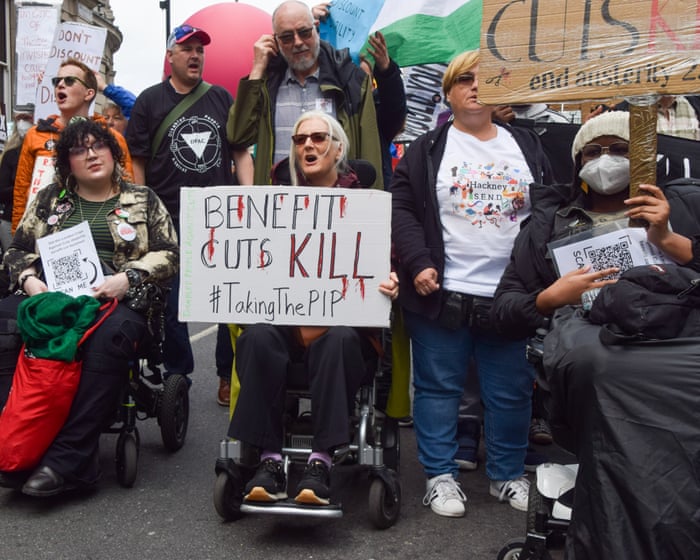
The review was commissioned as part of the government climbdown over cuts to Pip last summer, where Starmer’s government faced defeat in the Commons over tighter eligibility rules for the disability benefit.
The review has two co-chairs and a 12-member steering group comprising people with disability or long-term health conditions.
One of the major findings of the review will be that the points-based system for assessing disability has not kept pace with fluctuating and less visible conditions, which can include physical conditions such as cystic fibrosis and arthritis as well as mental health conditions. It will say there should be a new system that “adequately reflects the diverse reality and needs of disabled people today”.
Pip is a benefit for adults with a long-term physical or mental health condition to help them meet the additional costs of their disability. It is not means-tested and about one in six people receiving Pip are currently in work. About 4 million adults now receive the payment, double the number in 2019.
The Timms review, which has been running for 10 weeks, received more than 38,000 submissions from members of the disabled community, the majority of whom said they had had negative experiences of the assessment process.
The government has previously signalled it wishes to abolish the work capability assessment and have one single assessment for Pip and the health-based component for universal credit, as well as expanding face-to-face assessments for claimants.
Andy Burnham, who is likely to be prime minister when the review’s second part is published, is believed to be keen to tackle the growing numbers of people who are receiving Pip, especially younger people.
Louise Haigh, the former cabinet minister who was a key architect of the welfare rebellion and is now an influential adviser to Burnham, has said it is essential there is still reform of the welfare system that is compassionate and helps young people into meaningful work but also tackles the ballooning welfare budget.
The review will stress there is low public confidence in Pip and will say the assessment process incentivises people to emphasise the worst aspects of their conditions, and thus acts as a barrier to seeking work.
It will say the public wants to see how Pip enables disabled people to “participate, contribute and live well” and that the next stage should be to examine how the assessment can respond to fluctuating conditions as well as help people to work where able.
“Public confidence in how the system operates is essential to Pip today and in the future – it is important that the public can see how investment in Pip enables people to participate, contribute and live well,” it will say. “We need to examine how Pip can respond to the rising number of people seeking support and whether it adequately reflects the diverse reality and needs of disabled people today.”
View original source — The Guardian ↗
Related stories

The Punch
PoliticsJul 8, 2026 · 1 min
Suspend Gbajabiamila before ICPC probes PFIPC, Atiku’s aide tells Tinubu
The Punch

Euronews
PoliticsJul 8, 2026 · 1 min
The key global economic risks to watch in the second half of 2026
Euronews

RFI
PoliticsJul 8, 2026 · 1 min
Greenland 'not for sale', Danish PM says at NATO summit
RFI

The New York Times
PoliticsJul 8, 2026 · 1 min
A Look Back at Trump’s Broadsides Against NATO Allies
The New York Times