Indian Express
2 Mumbai lakes are overflowing: Should you worry about flooding?
3 min readMumbaiJul 8, 2026 12:30 PM IST
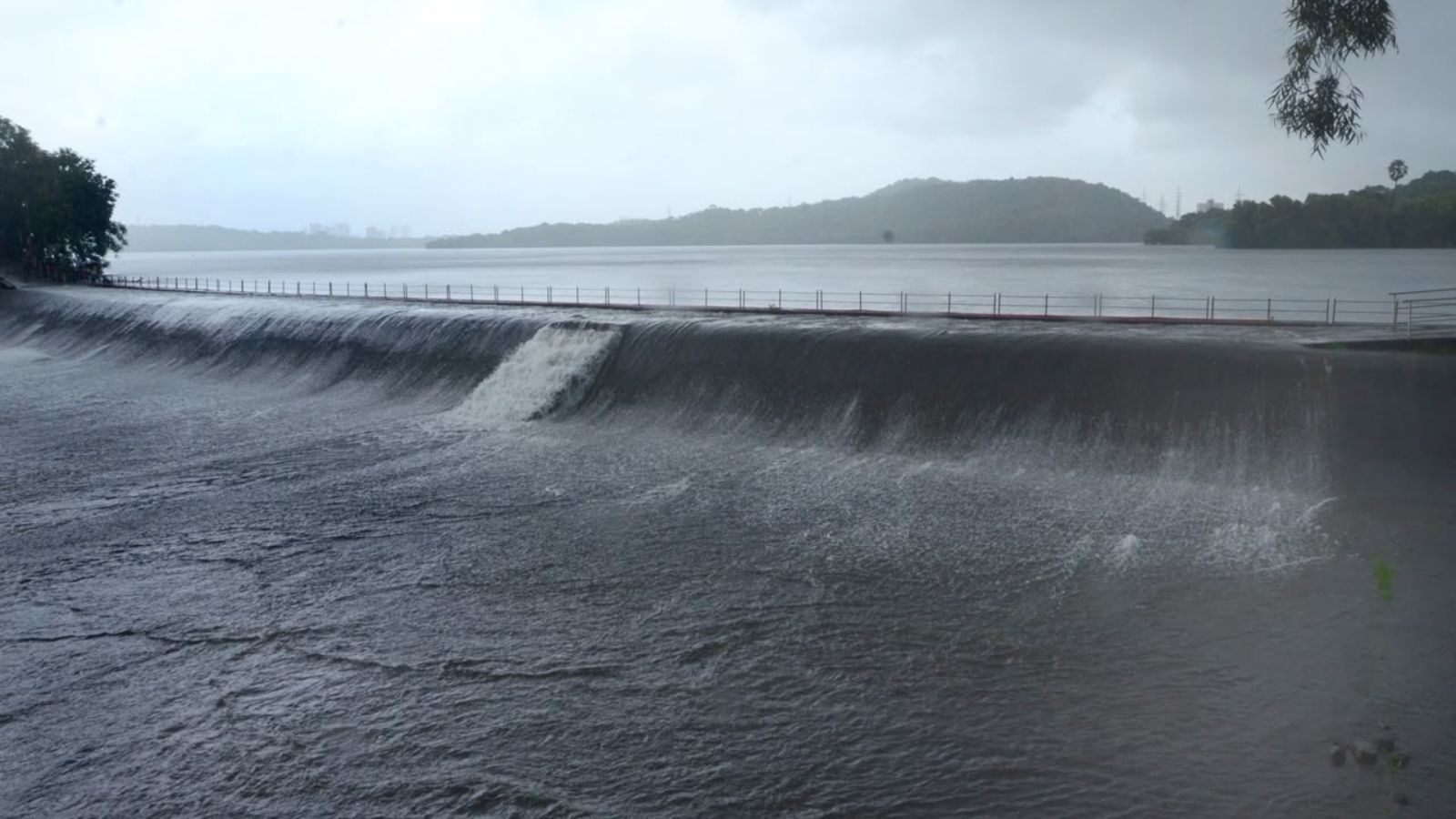
Vihar Lake has reached full capacity after heavy rain (Express photo).
Vihar and Tulsi, two of Mumbai’s smallest potable water-supplying lakes, filled on Tuesday night following heavy, relentless downpours and have begun overflowing.
Vihar Lake hit 100 per cent capacity and started spilling over at 9 pm on Tuesday, followed shortly by Tulsi Lake, which began overflowing at 11.43 pm. Both reservoirs are located within the dense foliage of the Sanjay Gandhi National Park (SGNP) and are part of the seven-lake network that meets Mumbai’s daily drinking water demands.
Tulsi is Mumbai’s smallest lake reservoir, with a total holding capacity of 8,046 million litres. Vihar is the second-smallest, with a storage capacity of 27,698 million litres, supplying 90 million litres of water to the city every day. Commissioned in 1860, Vihar is the oldest man-made reservoir in the city, its origin coinciding with the historical growth of the erstwhile Bombay city. Tulsi Lake’s water was formally channelled into the city by the then-Governor, Sir Richard Temple Bart, on March 15, 1879.
Why overflow means continuous monitoring
The overflow from both Tulsi and Vihar lakes drains directly into the Mithi River, which cuts through the heart of Mumbai before emptying into the Arabian Sea. For city administrators, the overflow from these twin reservoirs underscores the need to monitor the Mithi River’s water levels, especially if heavy rains persist.
“The overflow of Vihar Lake goes into the Mithi River. We will now be closely monitoring the situation,” Mumbai Municipal Commissioner Ashwini Bhide said Wednesday.
For the average citizen, there is no immediate cause for alarm, but those living in low-lying areas near the Mithi River should remain vigilant.
The concern stems from recent history. Heavy, incessant downpours between August 18 and 19 last year caused Vihar Lake to overflow intensely, pushing the Mithi River near its dangerous 4.2-metre breach mark.
Story continues below this ad
The resulting surge caused the Mithi and an adjacent major storm drain to overflow onto city streets, inundating low-lying areas near the airport lands in Kurla. In a preemptive move, the BMC and the Mumbai Police evacuated more than 350 residents from the area.
Lake levels overall
While the Vihar and Tulsi lakes have reached 100 per cent of their capacity, the total water stock in the seven lakes on Wednesday was at 41.36 per cent of 5.98 lakh million litres.
Besides Tulsi and Vihar, Mumbai draws its daily water supply from Bhatsa, Upper Vaitarna, Middle Vaitarna, Modak Sagar, and Tansa, which together have a storage capacity of 14.47 lakh million litres.
Earlier on Wednesday morning, lake levels reached 28.92 per cent, up from 16.92 per cent on Tuesday. This steady rise in lake levels has been driven by heavy rainfall in the catchment areas of the water supply lakes at the beginning of the month.
Story continues below this ad
Despite the continuous rise, the water cut is here to stay. Mumbai’s civic chief Ashwini Bhide said the lakes must be filled by September to ensure the city’s water supply lasts until next summer.
View original source — Indian Express ↗
Related stories

The Punch
TechnologyJul 8, 2026 · 1 min
OpenAI to unveil new model after US freeze
The Punch

TASS
TechnologyJul 8, 2026 · 1 min
US strikes in Iran target air defenses, missile depots, drone launch sites — Axios
TASS

The Moscow Times
TechnologyJul 8, 2026 · 1 min
Ukrainian Drone Attack on Industrial Sites in Saratov Region Kills 1
The Moscow Times

Dawn
TechnologyJul 8, 2026 · 1 min
Foreigners' abduction, sexual assault case: 4 suspects' physical remand extended by 5 days
Dawn