Times of India
Singapore's housing story: How the Lion City wiped out its slums in six decades
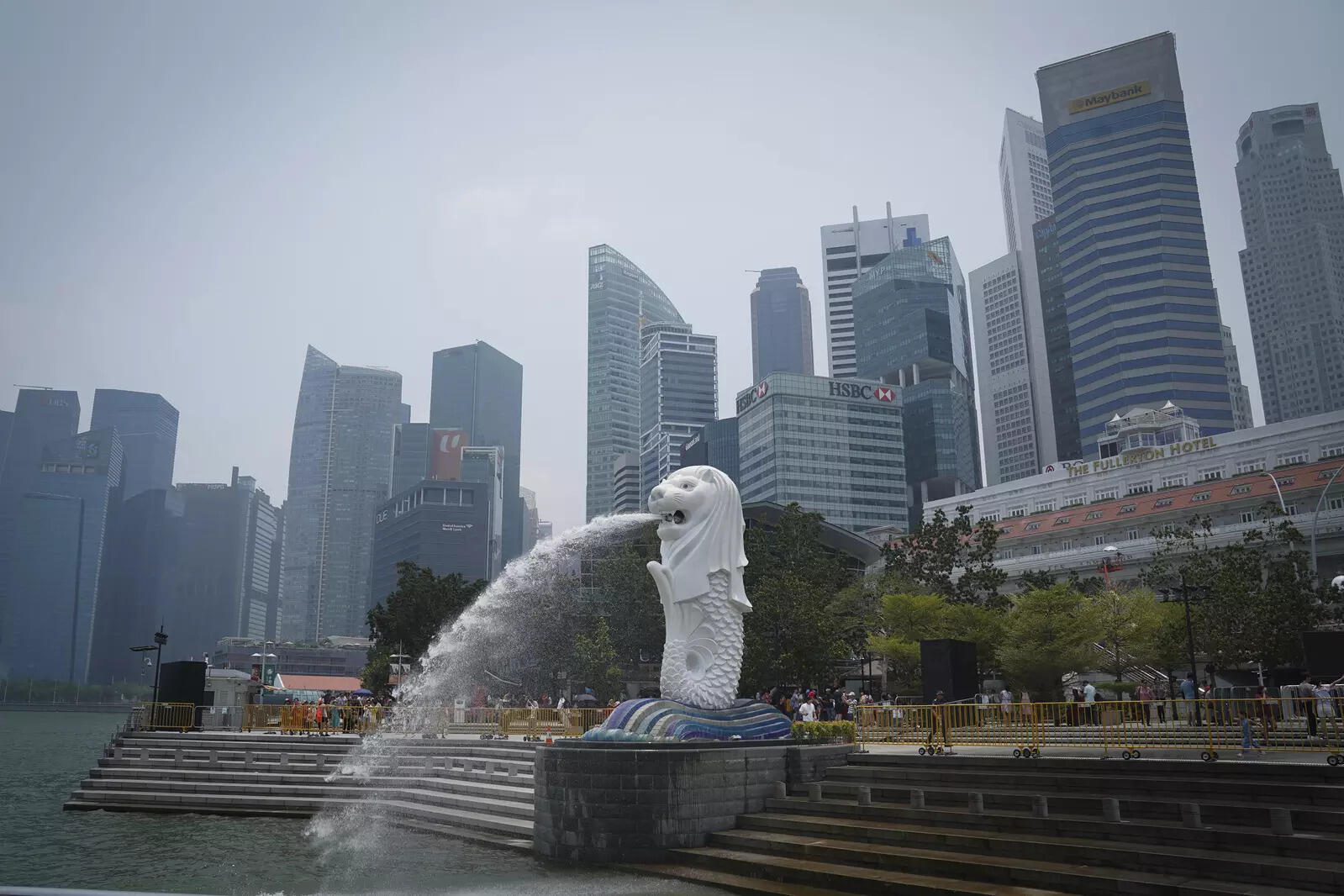
Representational image
Can a country eliminate slums almost entirely within a generation? Singapore's housing story suggests it can. Once plagued by overcrowded settlements and poor sanitation, the city-state today houses more than four in five residents in government-built homes, with the vast majority owning their flats.According to the UN-Habitat report Housing Practice Series: Singapore, more than 80% of the population lives in HDB-built homes, and over 90% of them own their flats. Only a few countries have matched this combination of high homeownership and slum-free urban living.
Inside Singapore's public housing model
82% of residents live in HDB-built flats, comprehensively planned towns with schools, markets, clinics, and transport built in from the start.
Over 1 million housing units have been completed since 1961, replacing what was once one of Southeast Asia's most congested urban cores.
Around 3% of the population lives in public rental housing, which provides affordable homes for families who are not yet able to buy their own.
How Lion City left slums behind
Decades ago, Singapore looked very different. More than half a million people lived in makeshift huts, overcrowded tenements and squatter settlements without running water or proper sanitation.A 1947 housing study painted a grim picture. Of Singapore's population of 938,000 at the time, nearly 72% lived in the crowded Central Area, while new slums continued to spread on the city's outskirts as more immigrants arrived. Many of the living "spaces" were so cramped that they could barely be called homes. People often slept in:
Bunks squeezed into narrow passageways
Multi-level bedlofts stacked one above another
Spaces under or above staircases
Backyards, kitchens and five-foot ways converted into bedrooms
From neglect to nationwide housing
For years, housing was not a priority under colonial rule. The Singapore Improvement Trust (SIT), set up in 1927, focused mainly on roads and drainage rather than providing homes.
Even proposals for the government to buy and redevelop slum land found little support. It was only after the devastation of the Second World War and growing political pressure that housing became a major concern.The turning point came after 1959. The newly self-governing government, followed by the Housing and Development Board (HDB) in 1960, made clearing slums a key part of its housing policy. It did so by:
Building at scale: More than 1 million homes have been built since 1961, compared with around 20,000 flats constructed by the Singapore Improvement Trust over three decades.
Resettling affected families: Families and small businesses displaced by redevelopment were provided with alternative housing, ensuring redevelopment did not simply shift people from one poor settlement to another.
Creating complete townships: Instead of only replacing old homes with new apartment blocks, HDB developed planned towns with schools, markets, jobs and other essential services, helping residents settle into well-connected communities.
By 1959, only 9% of Singapore's population lived in public housing, today, 82% of residents live in HDB homes.
This focus on homeownership helped many former slum residents become homeowners in the very communities that replaced their old settlements.According to the report, Singapore's transformation from a city of crowded slums to one with widespread public housing took place within a single generation. While it notes that the model may not be easy to replicate elsewhere, it offers valuable lessons for cities that continue to struggle with overcrowding and inadequate housing.
View original source — Times of India ↗
Related stories

The Punch
WorldJul 8, 2026 · 1 min
Man arrested for defiling neighbour’s eight-year-old daughter in Bauchi
The Punch

Straits Times
WorldJul 8, 2026 · 1 min
Ex-Wisconsin judge to be sentenced for obstructing immigration arrest
Straits Times
The Punch
WorldJul 8, 2026 · 1 min
PFIPC scandal: Arrest of Adeyemi’s father cannot be justified under the law – Falana
The Punch

Antara News
WorldJul 8, 2026 · 1 min
Danantara breaks ground on Bali waste-to-energy plant
Antara News