Indian Express
Anthropic expands Claude Cowork to mobile and web, letting AI agent work across devices
Anthropic is bringing Claude Cowork to the web and mobile, allowing power users to start a task on their computer, check in from their phone, and come back to the completed work later, even with their laptop closed.
The AI startup said Claude Cowork will be available on web and mobile for its Max plan subscribers from Tuesday, July 8. Launched as a desktop app in January, Cowork is a Claude Code-style agent designed for autonomously handling general knowledge tasks.
However, Anthropic said that the desktop app for Claude Cowork will remain functional in order to let users give the AI agent access to local files and the browser for deep work.
The expansion of Claude Cowork to mobile is part of a broader push by Anthropic to ensure that it is used less like a coding tool and more like an agentic administrative coworker. With this update, Cowork can work in the background, tag along across devices, and request human input when a decision pops up only the user can make.
The move comes as AI companies race to ship products beyond chatbots into everyday user-facing surfaces. Anthropic rival OpenAI has also been similarly looking to upgrade and expand its AI-powered software development tool, Codex, so that it is used by non-developers for reports, spreadsheets, presentations, research, data analysis, and more.
“While coding is still — understandably — one of the uses of AI that gets the most attention, the use of AI for everyday business work is on the rise, and the kinds of tasks people are finding it most helpful for are coming into focus,” Anthropic said in a statement. “Our goal is to make this a reference point for people who are figuring out how to integrate AI products into their daily work, and to show where value is most concentrated,” it added.
How to use Claude Cowork on your phone?
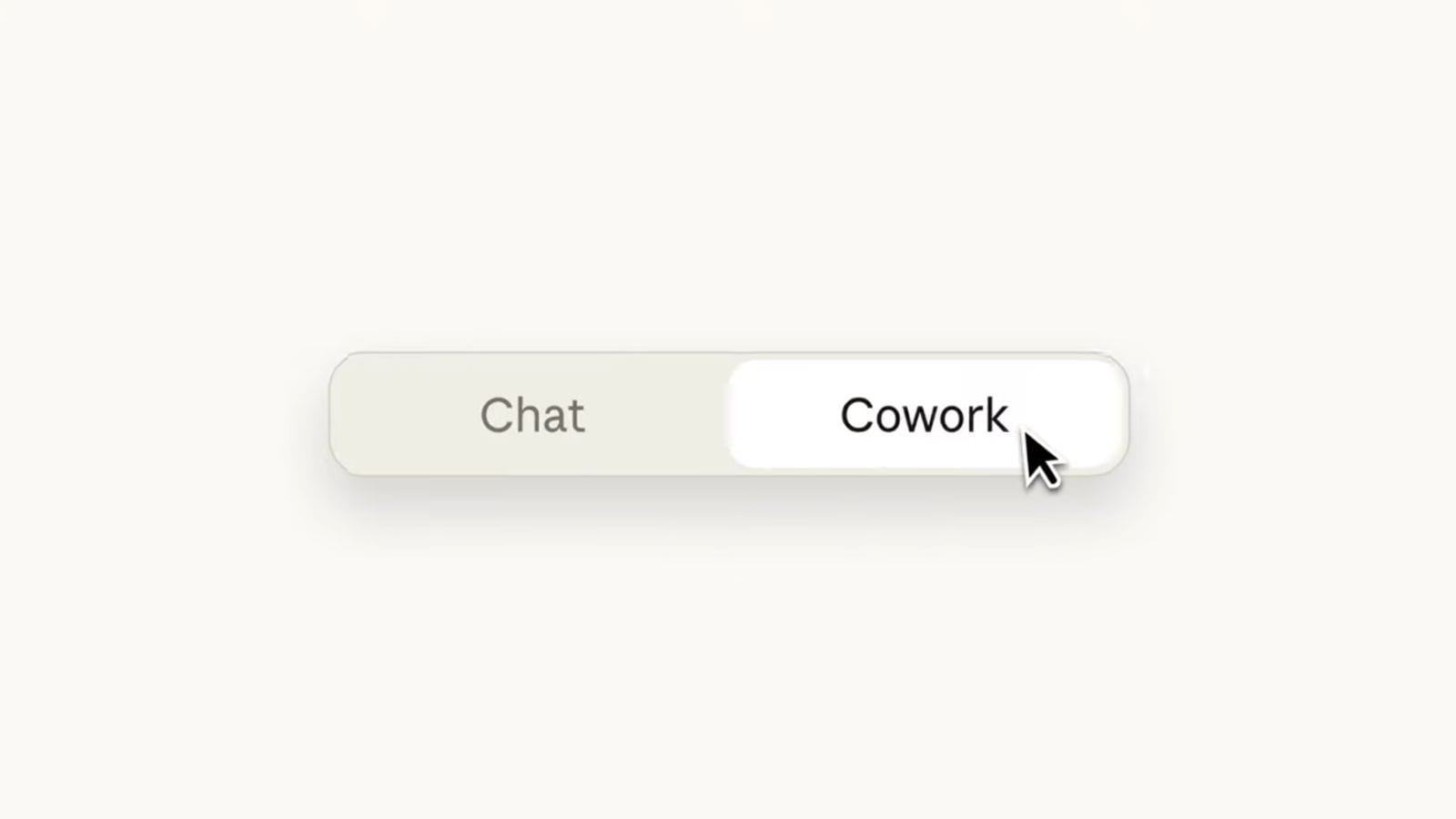
By bringing Cowork to web and mobile, users no longer need to install the app to use it. Anthropic has said that chat and Cowork will be unified in web and desktop to start, with projects and artifacts living together across both.
Story continues below this ad
This means that the agent can continue running tasks in the background without a device online, according to the company.
One of the example prompts shared by Anthropic reads: “Set Monday’s client prep for 6 am: Claude works through the email threads, transcripts, and recent news, builds the briefing doc, and leaves the follow-up email drafted but unsent. Review it over coffee.”
What are popular use cases of Cowork?
Alongside Tuesday’s announcement, Anthropic released Cowork usage data, which suggests that the clearest use case for the tool is the “work around the work” that keeps companies functioning. This includes the “tasks that are part of a broad swath of jobs, but are rarely a person’s core responsibility.”
The findings are based on Anthropic’s study analysing 1.2 million anonymised and aggregated Cowork sessions from more than 600,000 organisations over the last two weeks of May this year.
Story continues below this ad
Over 33.4 per cent of Cowork sessions were related to business process operations which entailed pulling scattered updates into a single report, building onboarding checklists, and reconciling spreadsheets. These tasks were commonly undertaken among roles in finance, HR, and administration.
Additionally, 16.4 per cent of Cowork sessions involved content creation and copywriting, including tasks such as drafts, slide decks, social posts, proposals, and other communications work that is usually performed by marketing and management positions. Using Claude Cowork for software development tasks only accounted for 8.7 per cent of total usage, as per the study.
View original source — Indian Express ↗
Related stories

TechRadar
TechnologyJul 8, 2026 · 1 min
UK government gives data centers the ability to skirt building regulations and local authority oversight by applying…
TechRadar

CNET
TechnologyJul 8, 2026 · 1 min
Want to Lock or Hide Specific Apps on Your iPhone? Here's How
CNET

ZDNet
TechnologyJul 8, 2026 · 1 min
Why leaving extension cords plugged in permanently is riskier than you realize
ZDNet

TechRadar
TechnologyJul 8, 2026 · 1 min
X-Men 97 season 2 episode 4 ending explained
TechRadar