Indian Express
Trump declares Iran ceasefire is ‘over’ after US attacks
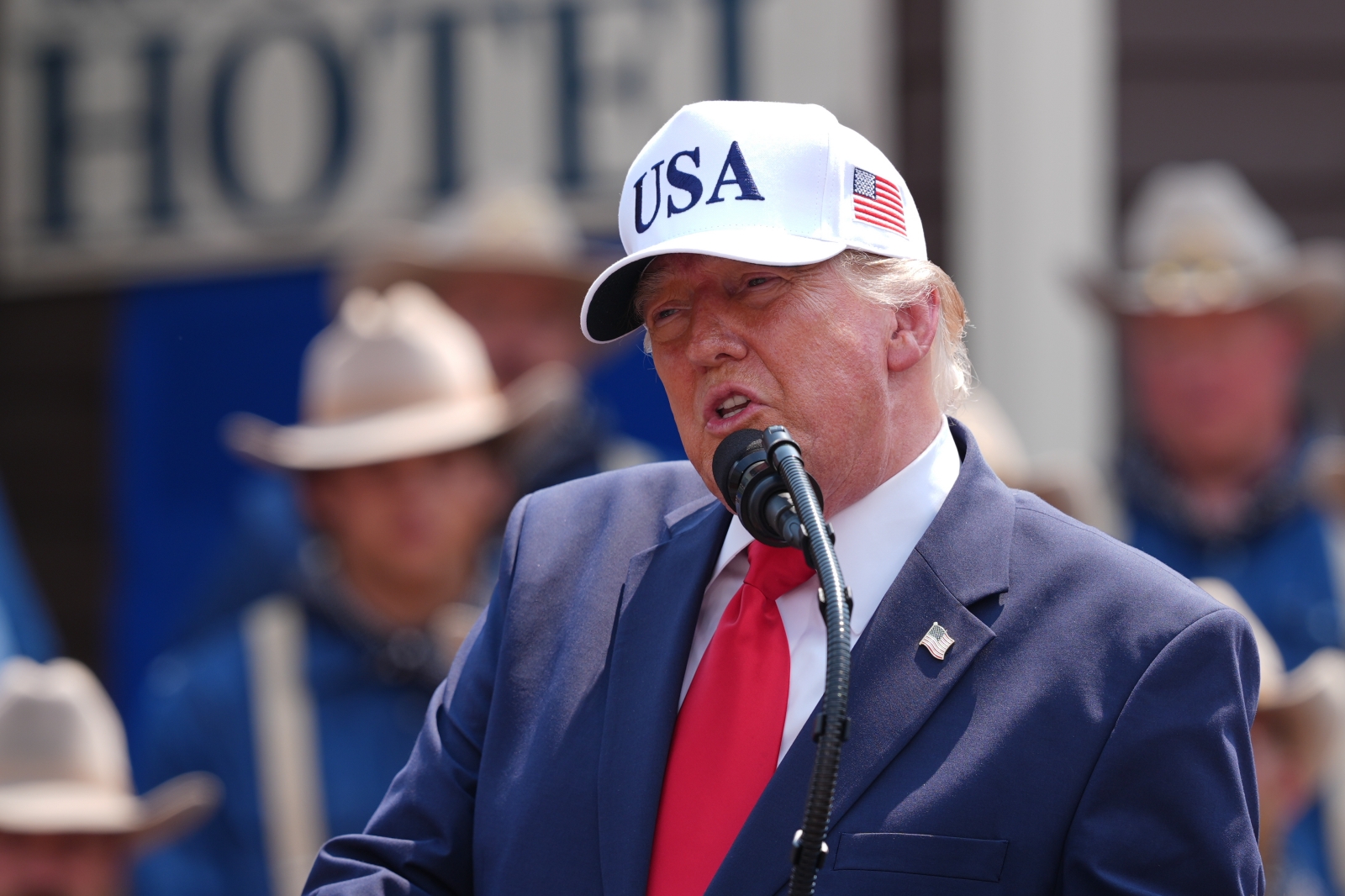
US President Donald Trump on Wednesday said that the interim agreement with Iran is “over” even as he maintained that the talks over the peace deal will continue.
“For me, I think it’s over. It’s just a waste of time dealing with them,” Trump told reporters when asked about the status of the ceasefire. He was speaking on the sidelines of the two-day NATO summit in Ankara, Turkey.
BREAKING:
🇺🇸🇮🇷 U.S President Trump announced that the CEASEFIRE WITH IRAN IS OVER.
“To me, I think it’s over. I don’t want to deal with them…They’re scum. They’re sick people.” pic.twitter.com/qvDXZY60fc
— Commentary Donald J. Trump Truth Social Posts On X (@TrumpTruthOnX) July 8, 2026
US launches strikes on over 80 Iranian military targets
The US president’s remark comes hours after the US launched strikes on over 80 Iranian military targets after merchant ships were attacked in the Strait of Hormuz. Washington also revoked a license authorising the sale of Iranian oil over fresh attacks.
In a statement on social media, the US Central Command said it launched “a series of powerful strikes against Iran to impose heavy costs for targeting and attacking commercial shipping crewed by innocent civilians in an international waterway.”
The US military said it targeted Iranian air defence systems, radars and over 60 small boats used by Tehran’s Revolutionary Guard. Explosions were reported in several locations across Iran, including in Bandar Mahshahr and Bushehr. In retaliation, Tehran struck back on Bahrain and Kuwait.
The exchange of fire has raised concerns over the resumption of the conflict, which seemed to have subsided following a Memorandum of Understanding signed by the two countries on June 17.
The flare-up also comes amid the 6-day funeral of Iranian Supreme Leader Ayatollah Ali Khamenei, who died on February 28, the first day of the conflict.
Oil prices surge
Shortly after Trump’s statement, oil prices surged by 6 per cent, according to the Associated Press. The price of Brent crude oil jumped 5.4 per cent to more than $78 a barrel, while US benchmark crude also surged by 5.8 per cent to reach $74.55 per barrel.
Story continues below this ad
.
Market snapshot
What moved & why
The Hormuz factor
India read-through
Brent crude
~$78.64
▲ ~6% on the day
WTI crude
~$74.83
▲ ~6.25%
10-yr US Treasury yield
4.581%
▲ +5 bps · 1-mth high
US stock futures (Dow)
−0.67%
▼ S&P −0.44% · Nasdaq −0.54%
European stocks (STOXX 600)
−1.46%
▼ oil & gas the only gainers
S. Korea Kospi
~−5%
▼ into a bear market
As of early Wednesday, July 8 — US index futures (pre-market), Europe and Asia in early trade, and Brent, WTI and the 10-yr yield per CNBC. Markets move continuously; verify the latest prints before use.
The chain reaction
Tuesday
Three commercial vessels transiting the Strait of Hormuz come under attack; the US responds with strikes on Iran, which CENTCOM calls a violation of the ceasefire.
↓
Trigger
In Ankara, Trump says the Iran deal is finished — “I think it's over” — and that he no longer wants to negotiate with Tehran.
↓
Then
Oil surges ~6% (Brent ~$78.6, WTI ~$74.8) as investors price in fresh supply risk.
↓
Which brings
Renewed inflation risk into bond markets — sharpened by months of drawn-down oil inventories.
↓
So
Yields rise, equities fall, volatility jumps — the 10-yr yield near 4.58%; US futures, European and Asian shares down (Korea's Kospi into a bear market); the VIX up sharply.
Sequence as reported by Reuters; market moves reflect many factors, not a single cause.
The swing factor
Does the Strait of Hormuz stay open?
Analysts say the key question is whether the strait — through which about a fifth of the world's oil trade passes — stays open and oil keeps flowing (ANZ). Any disruption there is what markets fear most. The strait had reopened under last month's ceasefire, but this week's vessel attacks and US strikes have revived the threat — a US-led naval coalition has raised the threat level for ships in the strait to “severe.”
The vulnerability
Thin buffers
US Strategic Petroleum Reserve stocks are at their lowest since 1983, leaving markets more exposed to any future supply shock.
Oil in context ($/barrel, Brent)
Now~$78.6
.
Wartime peak>$120
.
Roughly pre-conflict~$68
.
Today's spike is real but well below the war's peaks above $120. Bars are illustrative; pre-conflict level approximate.
Why it matters for India
⚖
A big import bill
India imports the bulk of the crude it uses, so a sharp oil rise widens the import bill and the trade deficit.
⚓
Hormuz exposure
A large share of India's oil transits or passes near the strait; India ran Navy escorts (Operation Sankalp) during the closure.
₹
Rupee & inflation
Costlier oil tends to pressure the rupee and feed imported (fuel-led) inflation.
◉
What to watch
The oil price, the rupee, and whether Hormuz flows hold up in the days ahead.
India context reflects standard oil-import linkages and India's documented Hormuz exposure; specific rupee, inflation and import-bill impacts need Express's own reporting and are not in the wire.
Sources: CNBC & Reuters (July 8, 2026) · US CENTCOM · Joint Maritime Information Center · analyst comments (IG, ANZ, ING, Ortus). Figures are intraday and move continuously.
.
Wednesday’s rise comes after oil prices fell below $100 per barrel to reach pre-war levels.
The US and Iran agreed as part of the interim deal to allow ships to pass through the strait without paying any charges for 60 days. The Strait of Hormuz, through which one-fifth of the global energy supplies pass, has been the collateral ever since the war began in February.
(With inputs from AP)
View original source — Indian Express ↗
Related stories

The Punch
PoliticsJul 8, 2026 · 1 min
Iranian leaders scum, ceasefire is over, says Trump
The Punch
The Punch
PoliticsJul 8, 2026 · 1 min
Oyo APC members protest over N’Assembly list
The Punch
The Punch
PoliticsJul 8, 2026 · 1 min
‘So hot’, great friend, Trump praises Nicki Minaj
The Punch

South China Morning Post
PoliticsJul 8, 2026 · 1 min
Nato, Indo-Pacific 4 pledge defence, tech boost as deeper China-Russia ties spark alarm
South China Morning Post