Indian Express
Balen Shah’s first 100 days: Did Nepal’s government deliver on its promises?
Nepal’s government says it fulfilled 70 of the 100 commitments in its self-imposed 100-day reform agenda under Prime Minister Balendra “Balen” Shah, a claim disputed by independent assessments.
The government marked its first 100 days in office on July 4 with a press briefing at the Office of the Prime Minister and Council of Ministers in Singha Durbar. Spokesperson and Education Minister Sasmit Pokharel told reporters the administration had achieved 87.2% of its self-imposed 100-point governance reform agenda, with 70 of the 100 points fully implemented.
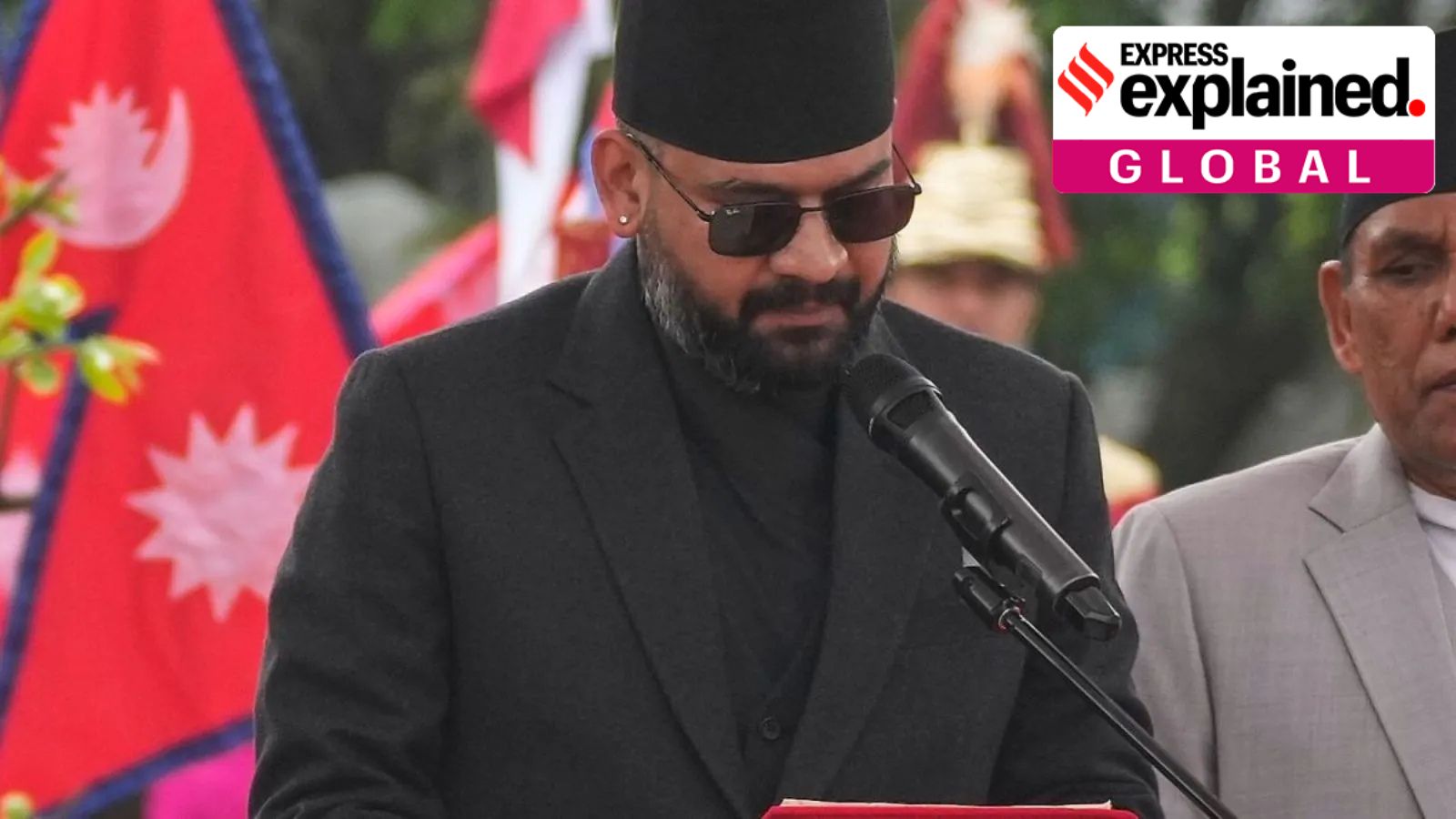
Shah, a 36-year-old former Kathmandu mayor and rapper-turned-politician, came to power on March 27 after his Rastriya Swatantra Party (RSP) won a near two-thirds majority in the House of Representatives. The polls followed months of anti-government protests that brought down the previous KP Sharma Oli government.
His administration entered office promising sweeping reforms to governance, the economy and public institutions, setting out a 100-point agenda to be completed within its first 100 days.
What the government says it has delivered
The government says its achievements span governance, foreign affairs and infrastructure.
On governance, the government says it established a Property Investigation Commission, introduced a National Ethics Policy and an Employee Code of Conduct, and opened more than 1,500 constitutional and senior posts to competitive recruitment.
Story continues below this ad
On foreign affairs, it says it launched the MoFA Mitra app to digitise consular services for Nepali expatriates, rescued 819 Nepalis from online scam operations in Southeast Asia, and secured amnesty for 161 Nepalis imprisoned in the UAE and Saudi Arabia.
It also says it added 138 MW of electricity generation capacity during the period.
Why is this disputed?
Independent assessments present a markedly different picture. The Kathmandu Post found only 38 commitments had been implemented. Nepal News reached an even lower figure, concluding only 16 commitments had been fully implemented, while 22 were underway, and 62 showed little substantial progress. Digital Pratikpashya, an independent civic initiative that tracks each of the 100 promises individually, counted 17 as completed, 10 in progress, and 73 pending.
Much of the disagreement stems from how the commitments are assessed. Three examples illustrate the differing approaches.
Story continues below this ad
Blue Bus Safety Service: The 100-point plan promised a Blue Bus women’s safety service with 25 buses within 100 days. The government counts the service as delivered, while Digital Pratikpashya marks the commitment “Not Done,” because only eight buses have been deployed, short of the promised fleet of 25.
Public land: The government’s “Public Land Protection” pledge called for a nationwide campaign against encroachment. While more than 1,000 squatters were evicted from Kathmandu’s riverbanks, Digital Pratikpashya still marks the commitment “Not Done”, arguing that a single eviction drive in one city does not amount to a nationwide campaign.
Business Process Re-engineering: A reform intended to reduce bureaucratic delays by limiting approval chains to three levels, also shows that independent assessors do not always agree with one another. Nepal News described the reform as “largely unfulfilled”, while Digital Pratikpashya marked it “Done”.
Foreign Minister Shishir Khanal, responding to the independent assessments, told The Kathmandu Post the cabinet had shown “far greater capacity, drive, dedication and public accountability” than its predecessors.
Other areas of contention
Story continues below this ad
Beyond the debate over the 100-day agenda, several other decisions by the government have drawn criticism.
Its anti-corruption drive has also been contentious. On March 28, a day after Shah took office, police arrested former prime minister KP Sharma Oli and former home minister Ramesh Lekhak after a high-level inquiry found both criminally negligent over the killing of 19 unarmed protesters during the September 2025 unrest.
Police later arrested prominent business figures and politicians in separate money-laundering investigations. Some secured bail within days, while businessmen Deepak Bhatta and Sulav Agrawal remain in custody, as well as former finance minister and UML vice-chair Bishnu Poudel.
The government’s drive to clear settlements along Kathmandu’s riverbanks has also been criticised. It had initially promised to build replacement housing within 10 to 15 days, but later extended the deadline to July 3, following public backlash. Amnesty International and Human Rights Watch criticised the lack of a concrete relocation plan.
Questions over institutional reforms
Story continues below this ad
Nepal News has also questioned whether some of the government’s changes amount to genuine institutional reform. It noted that while ministries have been consolidated, a new directive allows ministers to appoint several advisers at the secretary level, potentially increasing the number of political appointments overall despite reductions elsewhere.
It also argued that appointing a Chief Justice who ranked fourth in seniority broke with long-standing judicial tradition and raised concerns about judicial independence. It further questioned Shah’s inconsistent attendance at parliamentary question sessions, arguing it weakened parliamentary accountability.
The author is an intern with The Indian Express.
View original source — Indian Express ↗
Related stories

TechRadar
TechnologyJul 8, 2026 · 1 min
How to embrace the spirit of ‘Tokenmaxxing’ without breaking the bank
TechRadar

Wired
TechnologyJul 8, 2026 · 1 min
OnlyFans Models Are Accidentally Making Hacked Government Websites Disappear
Wired

Indian Express
TechnologyJul 8, 2026 · 1 min
Meta could be hit with $1.4 trillion penalty in August child safety trial
Indian Express

Indian Express
TechnologyJul 8, 2026 · 1 min
Amazon Echo Dot Max review: Small size, big sound
Indian Express