BBC
'Forgotten' host Canada's unforgettable World Cup
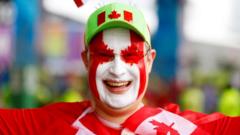
Canada has sometimes been referred to as the "forgotten host" of this World Cup, but for the men's national team and its supporters, the performance during the tournament will be an unforgettable high-water mark.
Led by brash American coach Jesse Marsch, the team surprised many by fighting into the round of 16 - the furthest they've ever gone in the tournament - before being defeated by Morocco.
Canada's underdog run - from claiming their first World Cup point, their first win, and finally a knockout-stage victory as well - is one for the history books.
They "shocked everyone" by making it as far they did, fan Matt Lorincz told the BBC in Calgary.
While football - or soccer - is Canada's most-played sport, its commercial success is overshadowed by the nation's love affair with ice hockey and the popularity of major-league baseball and basketball franchises.
But there's hope that could change after this tournament.
"Most people you talk to watch, like, hockey or other sports, right? There's not a lot of - or as many - soccer fans in Canada. So hopefully there may be a few more of those," said Lorincz.
Sports minister Adam van Koeverden told the BBC that Canada had been "growing up a little bit as a middle power, and the opportunity to host the world for the biggest event of the year this year has been a sincere privilege that we have not taken lightly".
The premise of the original bid for a shared World Cup "was one continent, three countries" said John Kristick, a sports marketing executive with Playfly Sports Consulting, who served as the executive director of the United Bid Committee.
Kristick felt the tournament so far had gone well but had lost the essence of a truly united bid along the way.
"I think it's probably been harder for Canada and Mexico to break through as hosts. I think that the US have taken more of that limelight," he said, pointing to the high-profile politics of the Trump administration and the fact the US was hosting the lion's share of games.
And while Canada has sometimes got lost in the shuffle in the massive tournament, Kristick said "every Canadian knows Canada is hosting it, and I think there's been a great deal of national pride".
Toronto and Vancouver hosted a total of 13 matches of the tournament's 104.
Ian Tostenson, head of the British Columbia Restaurant and Foodservices Association, described being in a host city as a crash course in "the enormity of the World Cup".
The event pulled people in with the excitement around matches, and gave local businesses a significant boost, Tostenson said, adding that alcohol sales were up roughly 5% on last year.
"It raised the spirits of the entire province. I think the whole conversation [for the] last four weeks had been about soccer," he told the BBC.
Canada is facing some economic doldrums, Tostenson said, but "you learn that if you give people a real reason to spend their money and give them value, they'll spend it".
Still, Canada's decision to co-host has come with criticism - especially around the costs.
Taxpayers paid an estimated C$1.1bn ($774m; £578m) to get the country World Cup ready - with Toronto alone shelling out an estimated C$380m.
City Councillor Josh Matlow did not think the price tag made sense given strained municipal finances.
"I don't think that hosting the games made the city's situation any better," he said.
Van Koeverden, the sports minister, countered that the spending was "prudent" and said dollars flowed back into the economy.
"Full stadiums, full parks, full restaurants, and full hotels is a nice problem to have in 2026," he said.
Canada, while a first-time World Cup host, does have a soccer culture.
It has two clubs who compete in the Major League Soccer (MLS) competition: the Vancouver Whitecaps, established in 1973, and Toronto FC, founded 32 years later.
But the country has struggled to translate a recreational league passion into consistent high performance, in particular with the men's national team. Meanwhile, the women's team is currently ranked ninth globally by Fifa.
This tournament has helped to spur massive financial improvements to Canada Soccer, the official national governing body for the sport. The body launched a fundraiser before the tournament that recently met its C$25m target months ahead of schedule.
That windfall could deepen the roots of the game domestically, Canada Soccer says, through more funding for youth participation, coaching development, and support for senior and youth national teams.
Now, the hope is the governing body can build on the buzz and fandom around the team, as well as longer-term projects such as the establishment of a national training centre.
Meanwhile, fans of the men's national team, nicknamed Les Rouges, are just savouring the experience of a strong tournament performance.
"It brought a lot of people together in a very kind of segregated world that we're living in," said Zeileen Reardon, who spoke while watching the team play Morocco in a bar in Calgary.
"So, I think it actually showed the world that we can come together, even for a game," she added.
Additional reporting by Nadine Yousif and Eloise Alanna
Related stories

ESPN
SportsJul 8, 2026 · 1 min
Dump Dansby? Get some Guardians? Second-half moves...
ESPN

ESPN
SportsJul 8, 2026 · 1 min
Rankings for 2026 season: PPR, IDP and dynasty lea...
ESPN

The Punch
SportsJul 8, 2026 · 1 min
World Cup: 17 players risk ban over yellow cards
The Punch

The Guardian
SportsJul 8, 2026 · 1 min
Nato leaders will not mention World Cup to Donald Trump to avoid irritating him at summit
The Guardian