TechRadar
OpenAI’s next ChatGPT-5.6 upgrade may be too powerful to launch like a normal app update
OpenAI is releasing a preview of ChatGPT-5.6 to trusted partners on Thursday
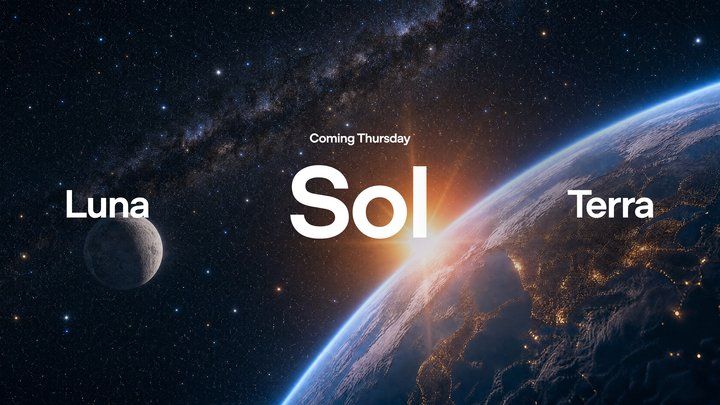
The new GPT-5.6 comes in three versions: Sol, Terra and Luna
Initial access is via API only, with a broader rollout to ChatGPT later
GPT-5.6 is coming in three different versions, Sol, Terra, and Luna, but it won’t be anything like the normal ChatGPT releases we’ve been used to. First there will be a limited preview for trusted partners, followed by a broader rollout later. The preview begins this Thursday for the lucky few.
The staggered rollout is not by OpenAI’s design. In a release about the new models OpenAI said, “As part of our ongoing engagement with the U.S. government, we previewed our plans and the models’ capabilities ahead of today’s launch. At their request, we are starting with a limited preview for a small group of trusted partners whose participation has been shared with the government, before releasing more broadly.“
The delay comes after U.S. President Donald Trump signed an executive order establishing a voluntary framework under which AI developers could provide the U.S. government with access to their new models for up to 30 days before releasing them to trusted partners.
OpenAI is clearly unhappy with the situation: “We don’t believe this kind of government access process should become the long-term default. It keeps the best tools from users, developers, enterprises, cyber defenders, and global partners who need them. “
Meet Sol, Terra and Luna
OpenAI is launching GPT-5.6 as a family of three models named after celestial objects, rather than its more usual naming conventions like “Instant” and “Mini”. Sol, Terra and Luna are three versions of the new ChatGPT-5.6, each aimed at a different balance of intelligence, speed and cost.
GPT-5.6 Sol is the flagship model and OpenAI’s most capable AI yet. This is the model for the hardest jobs: complex coding, multi-step reasoning, agent-style work and specialist tasks where accuracy matters more than speed. OpenAI says Sol has improved capabilities in coding, biology and cybersecurity, and it is also getting new “max” and “ultra” modes designed to give it more time and, in ultra mode, extra subagents to work through complicated tasks. You can think of Sol as the ‘big-brain’ version of GPT-5.6, which you want when the question is difficult enough that waiting a little longer is worth it.
GPT-5.6 Terra is the middle option, and probably the one most ordinary people will use. OpenAI describes it as a balanced model for everyday work, with performance competitive with GPT-5.5 but at half the cost. That makes Terra sound like the likely daily-driver model: powerful enough for writing, planning, research, coding help and general ChatGPT use, but not as expensive or heavyweight as Sol. If Sol is the specialist you call in for the hard problems, Terra is the model you would expect to use for most normal tasks.
Sign up for breaking news, reviews, opinion, top tech deals, and more.
GPT-5.6 Luna is the fast and affordable model. It's designed to offer strong capability at OpenAI’s lowest cost in the GPT-5.6 family, which suggests it is aimed at quick responses, lighter tasks and high-volume use where speed matters. This is the model you would expect to handle simpler questions, summaries, rewrites, quick brainstorming, and everyday back-and-forth without needing the full power of Sol. Luna may not be the showpiece model, but it could end up being the one people interact with most often if it makes ChatGPT feel faster and cheaper to run.
What will you notice?
As I’ve mentioned before, the test for new AI models, like GPT-5.6 or Claude Sonnet 5, will increasingly be how well they manage mult-step tasks and agentic processes.
For ordinary ChatGPT users, the most obvious change when using GPT-5.6 may not be a dramatic new button or interface. It will probably be that ChatGPT feels more capable when you ask it to do something complicated and less like a chatbot that needs to be carefully walked through every step.
That matters because most people do not use ChatGPT by comparing benchmark scores. They notice whether it understands a messy request, remembers the point of the task, follows instructions properly and gets closer to a finished result the first time. If GPT-5.6 works as OpenAI is suggesting, the upgrade should be most visible in those moments where today’s models still feel impressive but slightly fragile.
When can I get it?
OpenAI’s three-model structure is interesting and it’s not clear if the ChatGPT version will automatically send your request to different models depending on how complex it is. Obviously, not every task will need the same level of intelligence. A fast, cheaper model such as Luna could handle simple summaries, rewrites and everyday questions, while a more powerful model such as Sol could be reserved for harder work where depth matters more than speed.
GPT-5.6 is not available in ChatGPT during the preview, so ordinary users may not notice any of this immediately. OpenAI says the models are currently available through the API and Codex to a limited group of trusted partners and organizations, with broader availability through ChatGPT planned later.
Follow TechRadar on Google News and add us as a preferred source to get our expert news, reviews, and opinion in your feeds.
Graham is the Senior Editor for AI at TechRadar. With over 25 years of experience in both online and print journalism, Graham has worked for various market-leading tech brands including Computeractive, PC Pro, iMore, MacFormat, Mac|Life, Maximum PC, and more. He specializes in reporting on everything to do with AI and has appeared on BBC TV shows like BBC One Breakfast and on Radio 4 commenting on the latest trends in tech. Graham has an honors degree in Computer Science and spends his spare time podcasting and blogging.
View original source — TechRadar ↗
Related stories

Indian Express
TechnologyJul 8, 2026 · 1 min
Dire straits: Hormuz flare-up underscores precariousness of US-Iran MoU; oil market on edge
Indian Express

Lovin Malta
TechnologyJul 8, 2026 · 1 min
Watch: A Shitty Situation – Resident Turns To Facebook After Man Defecates In Apartment Block
Lovin Malta

ZDNet
TechnologyJul 8, 2026 · 1 min
GitHub's former CEO launches a distributed Git network built for the agentic coding age
ZDNet

The Verge
TechnologyJul 8, 2026 · 1 min
First look: Fi Ultra Starlink pet tracker
The Verge