Indian Express
Court allows man facing cheating FIR to travel abroad for disabled son’s treatment
A father’s plea to travel abroad for his disabled son’s treatment cannot be rejected in a “casual manner”, the Madhya Pradesh High Court has ruled, holding that such travel is protected by the fundamental right to life and personal liberty under Article 21 of the Constitution. The father, who is facing a cheating case, had sought permission to travel to Russia to care for his permanently disabled son.
Justice Pavan Kumar Dwivedi was hearing a petition filed by one Gaurav Ahlawat, a Russian citizen, challenging a trial court order dated May 22 rejecting his application to travel abroad against the refusal of permission despite an earlier Supreme Court order permitting him to seek relaxation of his bail conditions for overseas travel.
“The petitioner demonstrated that he wishes to visit abroad for the treatment of his son; thus there are two aspects which are involved in the present matter, first the right to travel abroad, and the second to tend to the ailing son of the petitioner; both these aspects can be said to be facets of right to live with freedom as guaranteed by our Constitution in Article 21…This valuable right cannot be denied in such a casual manner,” the high court said on June 22.
Ahlawat is facing prosecution in a case registered in 2024 under Sections 316(5), 318(4) and 61(2) of the Bharatiya Nyaya Sanhita (BNS), 2023, relating to aggravated criminal breach of trust, cheating involving dishonest inducement and criminal conspiracy. The present proceedings, however, were confined to whether he should be allowed to travel abroad while on anticipatory bail and did not concern the merits of the criminal case.
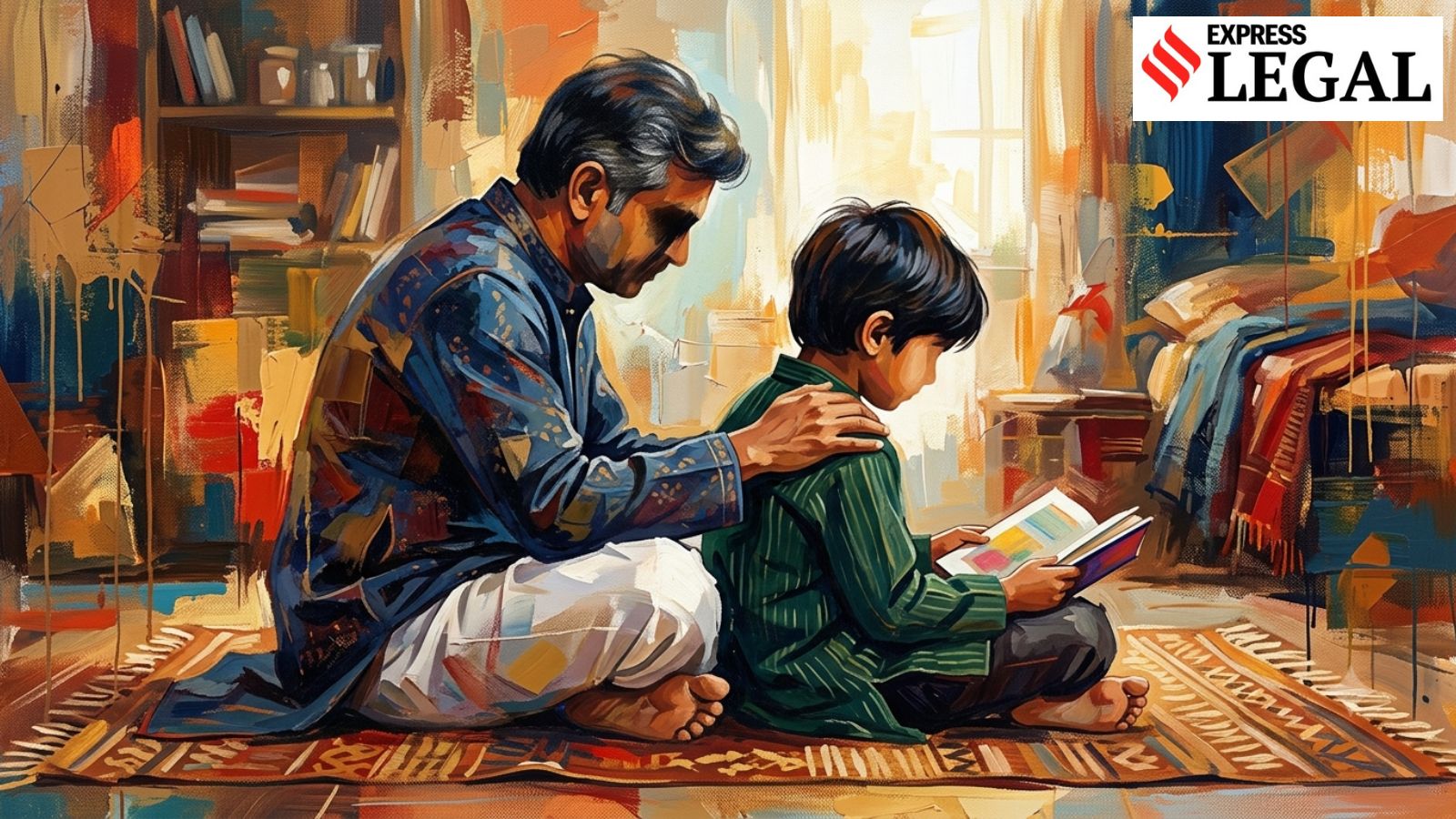
Justice Pavan Kumar Dwivedi said that the trial court had earlier allowed him to travel abroad by an order dated April 27. (Image enhanced using AI)
Supreme Court granted anticipatory bail
Ahlawat’s anticipatory bail application had been rejected up to the Madhya Pradesh High Court, following which he approached the Supreme Court. The apex court first granted him interim protection on September 26, 2025, before granting anticipatory bail on January 23.
Recognising that Ahlawat is a foreign national, the Supreme Court had directed him to surrender his passport before the trial court, cooperate with the investigation and appear whenever required. At the same time, it permitted him to seek modification of the bail conditions before the trial court whenever he needed to travel abroad, leaving the decision to the trial court based on the facts and circumstances of each request.
In compliance with those directions, Ahlawat appeared before the investigating officer on January 30 and later furnished his bail bonds before the trial court on February 3 when he also surrendered his passport. Since then, he has continued to cooperate with the investigation.
Story continues below this ad
Son requires specialised treatment
The petitioner’s son suffers from ‘Residual Organic Damage, Hypertensive-Hydrocephalic Syndrome’ in the sub-compensation stage, mental retardation and ‘Minimal Cerebral Dysfunction’ from childhood and is permanently disabled. According to the petition, Ahlawat’s wife and son live in Russia, and there is nobody else available to care for them.
The trial court had earlier allowed him to travel abroad by an order dated April 27. After attending to his son’s treatment, Ahlawat returned to India within the stipulated period and surrendered his passport before the trial court on May 11, complying with every condition imposed upon him.
Trial court rejected second request
The dispute arose after Ahlawat sought permission for a second visit to Russia, stating that his son’s medical condition had deteriorated and that doctors at “LLC Reatsentr Samara” Children’s Department of Neurology and Reflexology had prescribed another round of rehabilitation between June 25 and August 10.
The trial court, however, rejected the application on May 22. It said that the child had been suffering from the illness since birth and accepted the investigating officer‘s objection that permitting the petitioner, a foreign national, to travel abroad again could create difficulties if he failed to return for trial. Challenging that order, Ahlawat approached the high court.
Story continues below this ad
Rejection unjustified
Justice Dwivedi found that the trial court had failed to consider the medical material placed before it.
The high court noted that the rehabilitation referral issued by the Russian medical institution clearly prescribed treatment between June 25 and August 10.
The court also attached importance to Ahlawat’s conduct after securing bail.
It observed that he had previously travelled abroad with the trial court’s permission, returned to India within the stipulated period and surrendered his passport without any violation.
The high court further noted that his ailing father lived in India, and his wife and disabled son were alone in Russia.
These circumstances, it held, substantially reduced the possibility of him absconding.
It held that the request of the petitioner is backed by genuine medical evidence and the applicant has honoured all previous court-imposed conditions.
Allowing the petition, the high court set aside the trial court’s May 22 order and permitted Ahlawat to travel to Russia from June 23 to August 16. It directed that his passport be released for the journey and ordered him to surrender it before the trial court between August 17 and August 18, while complying with all conditions imposed during his earlier visit.
View original source — Indian Express ↗
Related stories

The Punch
WorldJul 8, 2026 · 1 min
Sokoto assembly summons GSM, internet service providers over poor network
The Punch
The Punch
WorldJul 8, 2026 · 1 min
VIDEO: Police arrest ‘one chance’ kidnapping syndicate, recover N8.8m ransom in Abuja
The Punch
The Punch
WorldJul 8, 2026 · 1 min
Woman gives birth while asleep, finds newborn under blanket
The Punch
The Punch
WorldJul 8, 2026 · 1 min
IMF lowers 2026 world growth forecast as Middle East risks linger
The Punch