Indian Express
Meet the endangered bird that lays eggs near active volcanoes
3 min readNew DelhiJul 8, 2026 08:00 PM IST
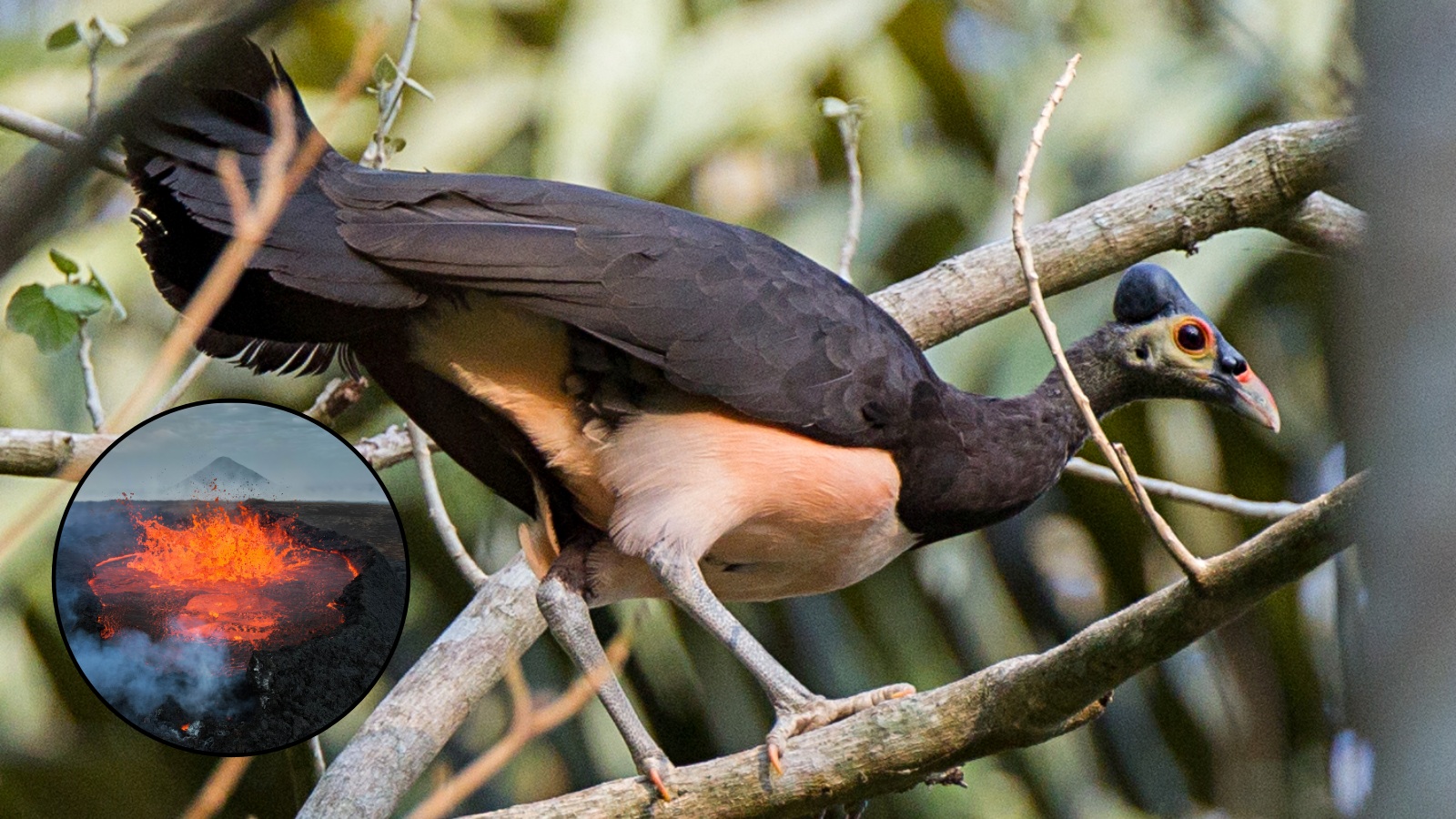
Females bury a single giant egg in deep pits dug into hot volcanic sand (Images: Wikimedia Commons)
When most birds are expecting chicks, they build a nest, lay their eggs and spend days—or even weeks—keeping them warm. But the Maleo, a rare bird found only on Indonesia’s island of Sulawesi, has taken a completely different approach. Instead of sitting on its eggs, it buries them in warm soil around volcanic areas and lets geothermal heat do the incubation.
A volcano becomes the nursery
The Maleo depends on naturally heated ground created by volcanic activity. Breeding pairs travel to special nesting sites where the Earth is warmed from below by geothermal energy.
There, they dig a deep pit—often around a metre (3 feet) deep—lay a single enormous egg, carefully cover it with soil, and leave. The constant warmth from the volcanic ground keeps the egg at the right temperature until it hatches.
Their eggs are surprisingly large
A Maleo lays one of the largest eggs of any bird relative to its body size. Each egg can weigh about 240–270 grams, which is roughly five times heavier than a chicken egg.
The oversized egg is packed with nutrients, giving the developing chick enough energy to grow without any parental care after hatching.
Chicks are on their own from day one
Once the chick has fully developed, it breaks out of the egg underground and digs its way to the surface entirely by itself.
There are no parents waiting nearby. Within hours, the young bird can walk and run, making it one of the most independent newborn birds in the world.
Story continues below this ad
A risky strategy
Relying on volcanic areas has worked for the Maleo for thousands of years, but it also has drawbacks.
The birds must return to a limited number of geothermal nesting grounds, making them vulnerable to habitat loss, human disturbance and egg collection. As forests disappear and nesting sites are disturbed, Maleo numbers have declined sharply, and the species is now classified as Endangered.
A remarkable partnership with nature
Geothermal heat keeps the sand at an ideal incubation temperature for the eggs (Image: Wikimedia Commons)
The Maleo is one of the very few birds that uses the Earth’s own geothermal energy to incubate its eggs. By turning warm ground around volcanic areas into a natural incubator, it has evolved one of the most unusual breeding strategies in the animal kingdom.
View original source — Indian Express ↗
Related stories

Deadline
EntertainmentJul 8, 2026 · 1 min
Bravo’s ‘Summer House’ Makes History With First Emmy Nomination In Outstanding Unstructured Reality Program Category
Deadline

Rolling Stone
EntertainmentJul 8, 2026 · 1 min
Katie Couric Suffered Stroke-Like ‘Transient Global Amnesia’ in June
Rolling Stone

Deadline
EntertainmentJul 8, 2026 · 1 min
Rob Reiner Gets Posthumous Emmy Nomination For Guest Turn In ‘The Bear’
Deadline

The Hollywood Reporter
EntertainmentJul 8, 2026 · 1 min
Connor Storrie Earns His First Emmy Nomination
The Hollywood Reporter