Indian Express
Remembering Shahrnush Parsipur, the Iranian feminist literary icon
4 min readJul 8, 2026 09:06 PM IST
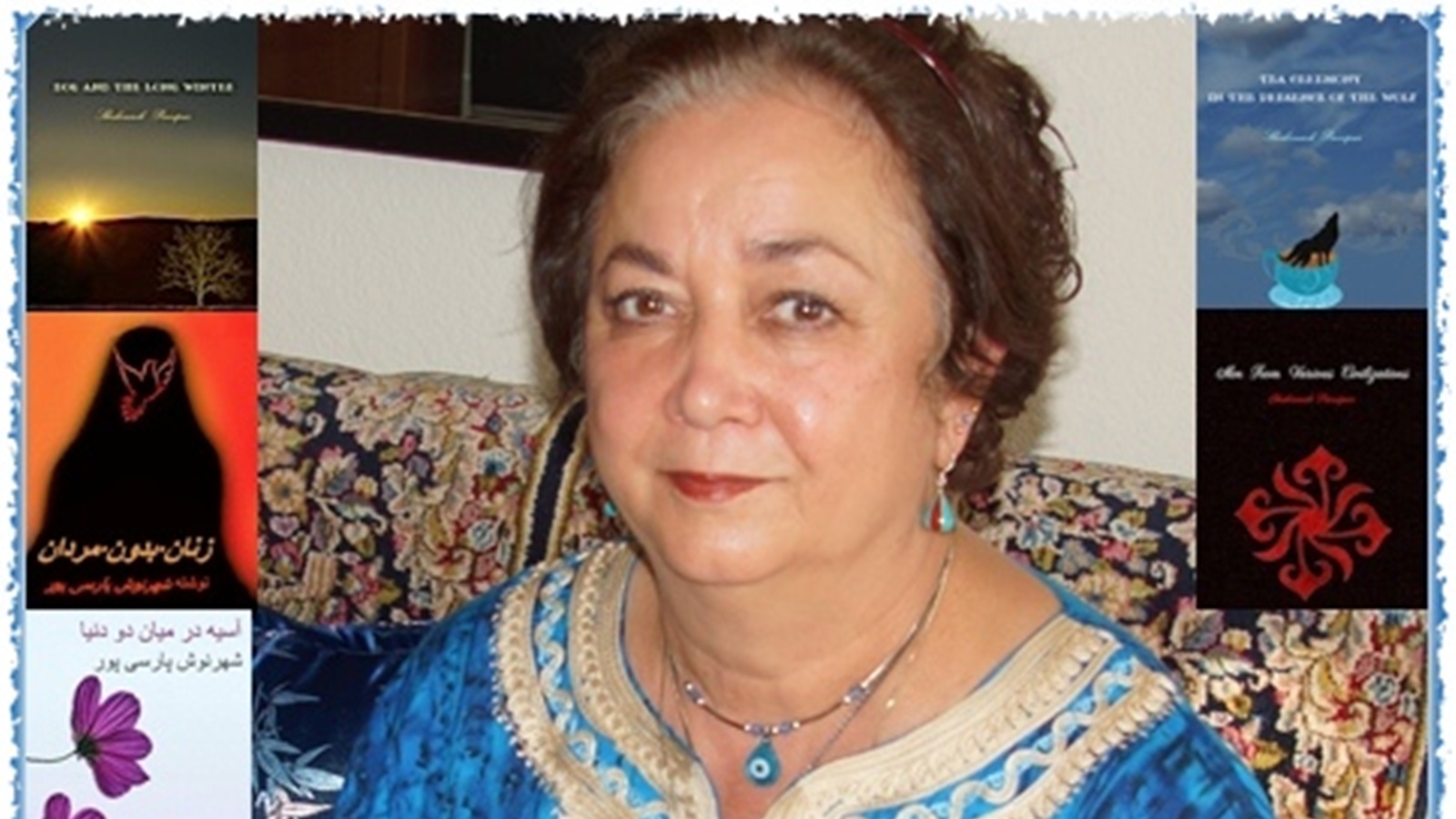
Iranian writer-activist Shahrnush Parsipur (1946-2026).
Shahrnush Parsipur, whom Iranian authorities imprisoned four times under two governments (twice for the writing that made her famous) is no more. The 80-year-old writer-activist passed away in the United States, where she lived in political exile for more than three decades.
Parsipur published her first novel, The Dog and the Long Winter, in 1974, becoming (in her own words) the second woman in Iranian history to publish a novel, after Simin Daneshvar. Two later novels, Touba and the Meaning of Night (1989) and Women Without Men (1989), secured her standing in the firmament of Persian letters.
She wrote part of Touba and the Meaning of Night, about a woman’s search for autonomy in a patriarchal world, in prison. She told the Los Angeles Times she had finished half the manuscript there before guards confiscated it. They did return it, only a year later, but not before destroying two pages about the death of a girl.
The UK edition of Faridoun Farrokh’s translation Women Without Men was longlisted for the International Booker Prize this year. Farrokh had first published the translation in the US in 2011, but Penguin brought it to Britain only in 2026. The novel, however, remains banned in Iran. Set in Tehran around the 1953 coup, it follows five women, among them a wealthy housewife, a sex worker, a schoolteacher, who abandon the constraints of family and society and converge on a garden outside the city. One turns herself into a tree to preserve her virginity, while another is killed by her brother for defying him.
The book circulated for years underground in Iran, passed from reader to reader, until a copy reached the wife of an Islamic Republic official, and Parsipur was arrested again, as per a report in The Guardian. In all, she was detained four times, once under the Shah and three times under the Islamic Republic. The first arrest followed her resignation from Iranian National Radio and Television, where she had worked as a producer, in protest of the execution of two dissident poets by SAVAK, the Shah’s secret police. She was held 54 days without charge. A second arrest, in the early 1980s, came after security agents searching her car found old newspapers and pamphlets from banned political groups. This arrest led to her longest imprisonment, four years and seven months, without formal charges.
She later wrote about that period in a memoir, Kissing the Sword, which the Feminist Press is set to reissue in English in 2027. Her two remaining arrests came over Women Without Men itself. She was jailed once after its initial publication, and again after a copy reached the wrong household.
Parsipur left Iran in 1994 and settled in Northern California, where she remained for the rest of her life. Exile did not silence her, and she published eight more works of fiction, along with the memoir, and kept speaking publicly about Iran until the end. In one of her last interviews, given to The Guardian earlier this year, she described a country transformed. “The women of Iran have changed so much, so many without hijab. They don’t care what the Islamic Republic thinks.” she told the British newspaper, adding, “They will cause the fall of the Islamic Republic.”
In 2009, the Iranian-American artist Shirin Neshat adapted Women Without Men into a feature film that won international awards. Parsipur will be remembered for posterity for articulating the feminine experience in a overwhelmingly patriarchal and censorous society. Her writings also show how myth and magical realism can be used to tell the truth in a world where resistance is punished.
Aishwarya Khosla is a senior editorial figure at The Indian Express, where she spearheads the digital strategy and execution for the Books & Literature and Puzzles & Games sections. With over eight years of experience in high-stakes journalism, Aishwarya specializes in literary criticism, cultural commentary, and long-form features that explore the complex intersection of identity, politics, and social change.
Aishwarya’s analytical depth is anchored by her prestigious Nehru Fellowship in Politics and Elections. This intensive research fellowship in policy analysis and political communications informs her nuanced approach to cultural journalism, allowing her to provide readers with unique insights into how literature and media reflect broader political shifts.
As a trusted voice for the Indian Express audience, she authors the popular newsletters, Meanwhile, Back Home and Books 'n' Bits, and hosts the podcast series, Casually Obsessed.
Before her current role, Aishwarya spent several years at Hindustan Times, where she provided dedicated coverage of the Punjabi diaspora, theater, and national politics. Her career is defined by a commitment to intellectual rigor, making her a definitive authority on modern Indian culture and letters.
Areas of Expertise
Literary Criticism, Cultural Politics, Political Strategy, Long-form Investigative Features, and Newsletter Curation.
Write to her
You can reach her at [email protected] or [email protected]. You can follow her on Instagram:
@aishwarya.khosla, and X: @KhoslaAishwarya.
Her stories can be read here. ... Read More
Tags:
author
Booker prize
Iranian government
literature
View original source — Indian Express ↗
Related stories

The Punch
WorldJul 8, 2026 · 1 min
Court awards ex-Power Minister Agunloye N10m against EFCC
The Punch
The Punch
WorldJul 8, 2026 · 1 min
2027: Kwara APC women seek deputy gov, speaker slots
The Punch
The Punch
WorldJul 8, 2026 · 1 min
Windstorm kills seven, displaces over 5,400 in Jigawa
The Punch
The Punch
WorldJul 8, 2026 · 1 min
Olubadan sues for peace over deadly Ibadan clash
The Punch