The Next Web
Fi’s new collar taps Starlink’s direct-to-cell to track dogs off the grid
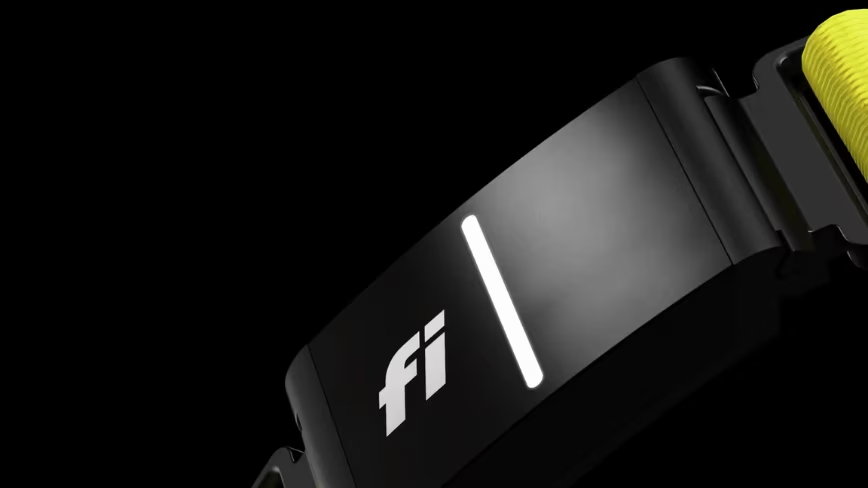
Smart-collar maker Fi is putting Starlink in a dog collar. Its new Fi Ultra taps SpaceX’s direct-to-cell satellites. A bolting dog stays trackable even where phone towers cannot reach.
The next device to run on satellites is not a phone. It is a dog collar. Fi, a smart-collar startup, is launching the Fi Ultra. It is the first pet tracker to run on Starlink’s direct-to-cell network, Fortune reported exclusively.
Today’s GPS trackers, including Fi’s older models and rivals Tractive and Garmin, lean on ground-based mobile towers. The moment a pet runs past the last tower, the tracker goes dark. Fi’s Starlink tie-up aims to close that gap.
A cell tower in orbit
SpaceX has launched more than 650 satellites. Each acts like a cell tower in the sky, talking straight to LTE devices on the ground. No dish, no extra hardware, just a clear view of the sky. “The main limitation of all the tracking products out there is that they are using the LTE network,” founder Jonathan Bensamoun told Fortune. “Starlink obviously offers satellite technology, kind of omniscient access, at least in the US for now.”
The Ultra costs $199 plus Fi’s $99 half-yearly membership, and existing subscribers pay only for the hardware. Its battery lasts up to three months. Machine learning helps, powering down when a dog is home or asleep, then waking everything the moment one goes missing.
A gap in the market
The timing is pointed. Austrian rival Tractive bought pet-wearable maker Whistle last year. It then shut the product down, locking thousands of devices overnight. Fi has raised $45m and spent the past year expanding to 38 countries. It expects to pass $100m in annual recurring revenue this year.
The prize is large. Pet wearables are a $3.8bn market in 2026, on course for $11.4bn by 2033. People are having children later, and spending on dogs first. That market sits next to the wider push into consumer wearables. It also rides the scramble to wire the planet from orbit, from Rocket Lab to SpaceX itself.
Why it matters
Direct-to-cell satellites arrived as a fix for dead zones on phones. A dog collar shows how fast that connectivity spreads to everything else. “The compromise between freedom and safety is something I’m trying to erase with technology,” Bensamoun said. Coverage stays US-first for now. But the pattern looks clear: if a device carries a SIM, it may soon reach a satellite.
Published July 8, 2026 - 6:02 pm UTC
Back to top
View original source — The Next Web ↗
Related stories

Wired
TechnologyJul 8, 2026 · 1 min
I Built a Self-Improving AI, and So Can You
Wired

TechCrunch
TechnologyJul 8, 2026 · 1 min
Autonomous drone delivery startup Manna plots major U.S. expansion
TechCrunch

Engadget
TechnologyJul 8, 2026 · 1 min
FTC reaches settlement that brings right-to-repair to John Deere farm equipment
Engadget

The Verge
TechnologyJul 8, 2026 · 1 min
Get a $30 credit when you reserve Samsung’s upcoming Galaxy phones
The Verge