Times of Israel
Oil shoots back up and stocks slide as Trump indicates Iran ceasefire over
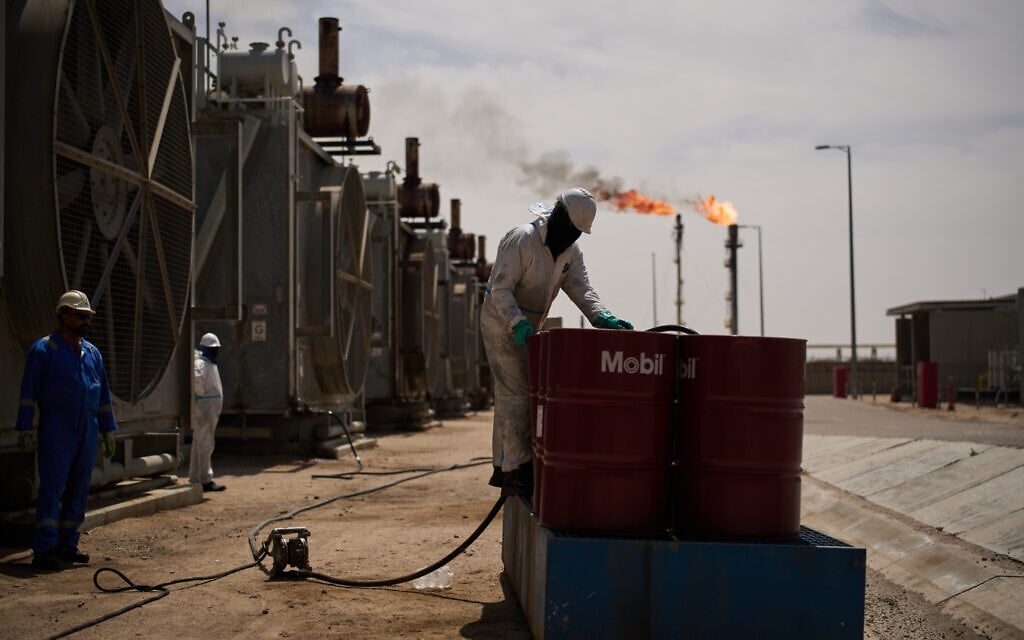
Oil prices briefly soared back above $80 per barrel while stock markets slid Wednesday, after US President Donald Trump said he believed the ceasefire with Iran was over, following renewed strikes in the Middle East.
The latest bout of fighting was sparked by Iranian attacks on ships in the vital Strait of Hormuz shipping route, through which a fifth of the world’s oil transited before the war.
Trump said at a NATO summit in Turkey that he thought the ceasefire was “over,” although he left the door open to more talks. He also said on Wednesday that the US would “hit [Iran] hard tonight.”
The markets responded, with oil shooting back up again, having in recent days come back down towards prewar levels. Trump, who is facing crucial midterm congressional elections in four months, has been especially sensitive to the rising price of gasoline during the Iran war.
International benchmark Brent North Sea crude jumped eight percent to $80.12 per barrel around 3:20 p.m. GMT (6:20 p.m. Israel time), before giving up some of those gains.
Get The Times of Israel's Daily Edition
by email and never miss our top stories
By signing up, you agree to the terms
Meanwhile, the benchmark US oil contract, WTI for August delivery, gained 7.7% to $75.83 per barrel.
The potential reclosure of the Strait of Hormuz led to a sea of red on equity trading screens in markets across the world.
“The looming resumption of war between the US and Iran, or at least a fresh blockade of the latter, has driven a wave of selling in European markets that are heavily exposed to higher energy costs,” said Chris Beauchamp, chief market analyst at online trading and investing platform IG.
Paris and Frankfurt both ended the day down more than 2% and London dropped 1.6%.
On Wall Street, the Dow was down 1.6% in late morning trading, with both the broad-based S&P 500 and the tech-heavy Nasdaq Composite down 1% as Trump’s comments “triggered a sell-off” in markets, said Sam Stovall from CFRA.
“Geopolitical risks are rising” for markets, noted Kathleen Brooks, research director at trading group XTB.
Fawad Razaqzada, market analyst with Forex.com, was even blunter.
“After a long and eventful first half of the year dominated by the US-Israel war on Iran and Trump’s constant flip-flopping, the last thing investors, and, frankly, anyone else, needed with the summer holidays approaching was a return of the same geopolitical environment,” he said. “Unfortunately, it looks like we could be heading back to that.”
The United States launched extensive strikes on Iran following attacks on ships in the strait, triggering a wave of reprisals against American bases in the Gulf. Washington also revoked a temporary sanctions waiver for Iranian oil.
Equities in Asia also suffered, with the geopolitical tensions coming on top of a retreat from the tech sector due to concerns over the eye-watering sums being invested in AI.
Seoul’s Kospi — which has been Asia’s poster child for the tech rally — sank more than 5% and has lost more than 20% since hitting a record high last month.
Samsung took another hit following a rout Tuesday that came despite the firm forecasting a roughly 19-fold jump in second-quarter operating profit from a year earlier on the back of strong AI chip demand.
The company and rival SK hynix both tumbled around 6%.
“Investors have been spooked in recent weeks by fears of excessive spending in the AI world and rich valuations in parts of the tech space, causing widespread profit-taking,” said Dan Coatsworth, head of markets at AJ Bell.
The dollar made some gains against its peers as the prospect of another hit to Middle East oil supplies fueled concerns that inflation could remain elevated for longer than feared, putting pressure on the US Federal Reserve to hike interest rates.
View original source — Times of Israel ↗
Related stories

CNBC
BusinessJul 8, 2026 · 1 min
Levi Strauss beats quarterly expectations, raises guidance and dividend
CNBC
CNA
BusinessJul 8, 2026 · 1 min
Judge approves Elon Musk settlement with US SEC over Twitter disclosures
CNA

CNBC
BusinessJul 8, 2026 · 1 min
SpaceX stock closes below debut price at $148 in two-day slide after Nasdaq 100 inclusion
CNBC
Bloomberg
BusinessJul 8, 2026 · 1 min
Hyperscaler Debt Is Now a Rates Story
Bloomberg