The Next Web
A £35bn plan to fill the UK with 14 mini nuclear reactors
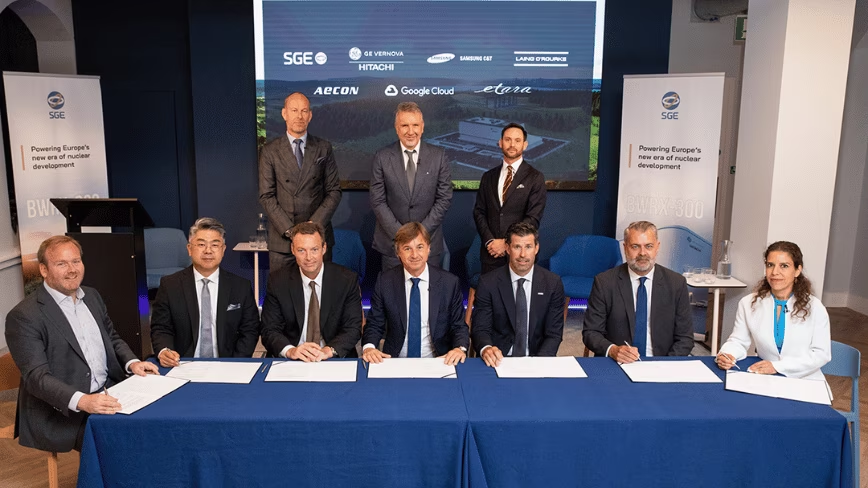
A Polish billionaire has laid out plans to build a fleet of small nuclear reactors across Britain, at an estimated £35bn, TechRadar reported. Michał Sołowow’s firm, SGE, says it wants to install 14 GE Vernova Hitachi BWRX-300 reactors on three UK sites. It is targeting first power in 2034.
The numbers are large. Together the reactors would generate 4.2GW, enough for roughly eight million homes, or about 11 per cent of UK electricity demand, for at least 60 years. SGE, a Warsaw-based developer founded in 2019, has filed under the UK’s new Advanced Nuclear Framework. Its delivery team includes GE Vernova Hitachi, Samsung C&T and Laing O’Rourke.
Why small reactors, why now
Small modular reactors, or SMRs, are the industry’s bet on speed. Each BWRX-300 puts out about 300MW, a fraction of a traditional plant. The pitch is that factory-built, repeatable units cost less and deploy faster than one giant bespoke station.
The timing is not an accident. AI data centres, electric cars and heat pumps are all pushing power demand up at once. Governments that spent years chasing renewables now want firm, always-on supply behind them. Nuclear, long out of fashion, is back in the conversation.
The catch
The 💜 of EU tech
The latest rumblings from the EU tech scene, a story from our wise ol' founder Boris, and some questionable AI art. It's free, every week, in your inbox. Sign up now!
The money is the hard part. Reports put the cost at £2.2bn to £2.5bn for each 300MW reactor. SGE is pitching a privately financed project, but it wants a Contract for Difference, a government-backed guaranteed price, plus engagement from the National Wealth Fund. Under that model, it says, consumers pay nothing before the reactors run.
SMRs also remain largely unproven at scale. No BWRX-300 runs commercially yet, and nuclear projects carry a long history of delay and cost overrun. A 2034 start leaves plenty of room for slippage.
Why it matters
If it works, the plan would make a foreign entrepreneur one of the biggest builders of British power. It also signals where the AI era is heading. The fight is shifting from chips and models to the boring, physical question of who can generate enough electricity, and where. Britain has bet on data centres. Someone has to power them.
View original source — The Next Web ↗
Related stories
TechRadar
TechnologyJul 8, 2026 · 1 min
Quote of the day by former Nintendo President Satoru Iawata
TechRadar

Engadget
TechnologyJul 8, 2026 · 1 min
Elon Musk says X will DM you about posts that receive a Community Note
Engadget

TechCrunch
TechnologyJul 8, 2026 · 1 min
Feds demand autonomous vehicle companies stop interfering with first responders
TechCrunch
ABC News
TechnologyJul 8, 2026 · 1 min
Union says it raised safety concerns day before major train derailment
ABC News