
RNZ
Latest Middle East flare-up reinforces RBNZ's concerns - governor
The Reserve Bank governor says events over the last 24 hours reinforce the bank's concerns about inflation.
The RBNZ lifted the official cash rate by a quarter of a percentage point on Wednesday, marking the first hike in more than three years.
It comes as oil prices have begun to climb again after the resumption of hostilities between the United States and Iran.
The global benchmark Brent Crude rose more than 5 percent to be around US$78 a barrel on Thursday morning New Zealand time, after sharp rises a day earlier.
Governor Anna Breman told RNZ's Nine to Noon that higher fuel prices remained the main risk to inflation, as it was a key cost driver for many businesses.
"What we are concerned about is that, since the conflict did persist for such a long time and as we can see over the past 24 hours, unfortunately, it's not gone yet. That means there's a risk this will become embedded," she said.
"Our job is to ensure that it's not allowed to keep inflation too high for too long."
The RBNZ expected annual inflation to peak at 3.9 percent in the June quarter, up from 3.1 percent in the March quarter.
The revised forecast was better than its previous estimate of a 4.3 percent peak in the September quarter, but remained above its 1 to 3 percent target, and the 2 percent midpoint.
Breman said the duration of the US-Iran war meant there was a risk inflation could become embedded.
"[A resumption of hostilities] is something that we knew could happen and that's why we stressed that the geopolitical environment is still highly uncertain," she said.
But Breman also noted the New Zealand economy's resilience amid the oil shock and disruption to supplies.
"Despite the closure of the Strait of Hormuz we've seen that shipping lanes have been working - not perfectly, but they've been working."
Economic recovery is coming
While households continued to hold out for an economic recovery, Breman stressed it was coming and the recovery could be better than previously thought.
"There are signs that the economic recovery is stronger than we expected," Breman said.
"I fully understand that there are many households that are still not feeling that the economy is recovering. We know that there are lags, we know that some sectors are performing really well ... and others are still struggling."
Breman said getting inflation low and stable again would help improve household purchasing power, which would then improve demand for businesses.
"It will take a little bit of time before we see it [a recovery], unfortunately."
Related stories

South China Morning Post
WorldJul 9, 2026 · 1 min
Legal tender and electronic payments – can we insist on paying in cash?
South China Morning Post

South China Morning Post
WorldJul 9, 2026 · 1 min
Sexual offences law review a chance to make clear what constitutes abuse
South China Morning Post
Antara News
WorldJul 9, 2026 · 1 min
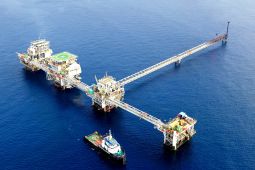
Pertamina's offshore well beats output goal by more than double
Antara News

Antara News
WorldJul 9, 2026 · 1 min
Indonesia to date Meratus cave art in Australia's lab tests
Antara News