CNA
Dollar stands tall as Gulf tensions fuel oil price surge, Fed hike bets
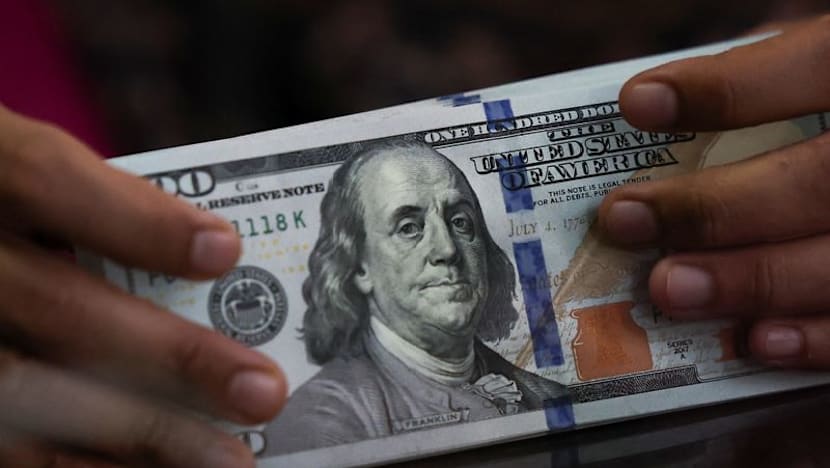
HONG KONG, July 9 : The U.S. dollar held firm against most major currencies on Thursday as renewed Gulf tensions revived safe-haven bids while surging oil prices boosted rate hike bets, keeping the Japanese yen under pressure.
The dollar fetched 162.41 yen, hovering near the strongest level since July 1. The euro and the British pound were largely flat and traded at $1.1426 and $1.3392, respectively.
The New Zealand dollar remained well bid after the previous day's rate hike and the central bank's hawkish stance, extending its gains by 0.5 per cent to $0.5725. The Australian dollar added 0.1 per cent at $0.6936.
The U.S. dollar index, which measures the currency against a basket of six peers, was little changed at 100.96.
"A flare-up of Middle East tensions has rattled global markets again and jammed a war risk premium back into asset prices," said Kyle Rodda, senior financial market analyst at Capital.com.
The most significant second-order effect of the jump in oil prices is what it means for inflation and global interest rates, he added. "A jump in oil prices could bring forward the timing of a Fed hike."
The U.S. military said it launched a round of fresh strikes on Iran hours after President Donald Trump declared that an interim agreement to end the war was "over", sending oil prices sharply higher.
That gave investors a "wake-up call" on how energy prices can stoke inflation pressures, sending U.S. 10-year and 30-year Treasury yields to seven-week highs as the markets priced in a higher risk of rate hikes.
Adding to the pressure, the June FOMC minutes, the first under Chair Kevin Warsh, also showed a hawkish split as concern about high inflation mounted. The markets have increased the implied probability of a hike this year to about 87 per cent, according to CME FedWatch.
Brent crude futures were up at $79.28 a barrel, after settling up more than 5 per cent at $78.02 on Wednesday, the highest in over two weeks.
YEN'S STRUGGLE CONTINUES
Rising oil prices, fuelled by Middle East tensions, are pushing the yen back toward levels that risk eroding confidence in the currency.
The Japanese yen is struggling to regain ground after hitting 162.71 overnight, near its 40-year trough, erasing most of last week's unexplained, sudden jump against the dollar.
That rebound was widely suspected to have been the result of stealth Japanese intervention, but is unlikely to be officially confirmed until the end of the month when the Ministry of Finance releases its intervention data, said Tony Sycamore, analyst at IG.
"Whether it becomes a more meaningful medium-term high will ultimately depend on incoming U.S. data and, to some degree, developments in the Japanese government bond market."
Related stories
Bloomberg
BusinessJul 9, 2026 · 1 min
US-Iran Tensions Put India’s Rupee Back Under Pressure as Oil Climbs
Bloomberg

Japan Times
BusinessJul 9, 2026 · 1 min
Meta to build first data center in Canada in expansion of global fleet
Japan Times

Japan Times
BusinessJul 9, 2026 · 1 min
Rapidus to match TSMC on 2-nanometer chip pricing, Japan firm’s president says
Japan Times

South China Morning Post
BusinessJul 9, 2026 · 1 min
Goldman Sachs forecasts 50% jump for battery giant CATL’s shares as energy storage takes off
South China Morning Post