VnExpress
Woman breaks down at Malaysia airport over airline's Musang King durian ban
A woman broke down in tears at a Malaysian airport when three boxes of Musang King durians she had packed for her flight home to Saudi Arabia were refused under the airline's ban on the fruit.
She had bought them to eat in Saudi Arabia after running out of time to enjoy any during her holiday in Malaysia, she wrote in a Threads post reported by Malaysian news outlet mStar on July 5.
"That's why I thought, it's okay, I'll just bring it to eat in Saudi. It ended up not passing the flight. I couldn't hold back my tears, they just flowed... it was heartbreaking," she wrote.
She had packed fewer than 20 pulps, the fleshy segments around each seed, into her checked luggage.
She claimed that she had carried durian home the same way on earlier trips without trouble.
Commenters offered little sympathy, telling her that durian rules run entirely on the airline and the route and that getting the fruit through before was luck rather than permission.
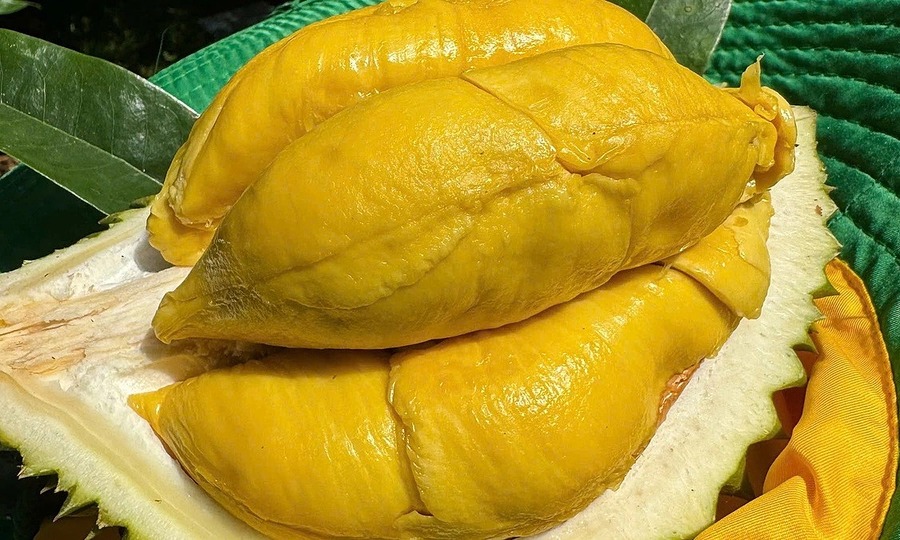
Durians harvested at an orchard in Can Tho, southern Vietnam. Photo by Manh Khuong
Durian's flavor and creamy texture have made it beloved across Southeast Asia, but its smell, that has often been compared to rotten food and dirty socks, earns it as many detractors as fans.
Musang King, prized as the richest of Malaysia's premium cultivars, carries one of the sharpest scents of any durian.
Many carriers keep durian off their aircraft as a result, some barring it from both cabin and hold, others accepting it only when vacuum-sealed in checked baggage.
Freeze-dried chips and paste usually travel without objection, stripped of the raw fruit's punch.
A Turkish Airlines Airbus A330 flying from Istanbul to Barcelona on March 5, 2023, turned back over Bulgarian airspace after a cargo smoke indicator went off, The Aviation Herald reported.
Inspectors traced the alarm to a shipment of durian in the hold, whose ripening flesh gives off gases pungent enough to trip sensors built to detect danger.
View original source — VnExpress ↗
Related stories

Indian Express
WorldJul 9, 2026 · 1 min
TG EAPCET 2026: Round one first seat allotment results on July 10 at tgeapcet.nic.in
Indian Express

Stuff
WorldJul 9, 2026 · 1 min
Toyota RAV4 Hybrid sold out in NZ until 2027
Stuff

Indian Express
WorldJul 9, 2026 · 1 min
US launches new airstrikes on Iran; Ghalibaf says, ‘Strike, and you will be struck’
Indian Express

Stuff
WorldJul 9, 2026 · 1 min
Auckland man wanted on firearms charge evading police
Stuff