Indian Express
FIFA World Cup: Why England, Argentina referees can’t officiate each other’s matches
4 min readUpdated: Jul 9, 2026 08:43 AM IST
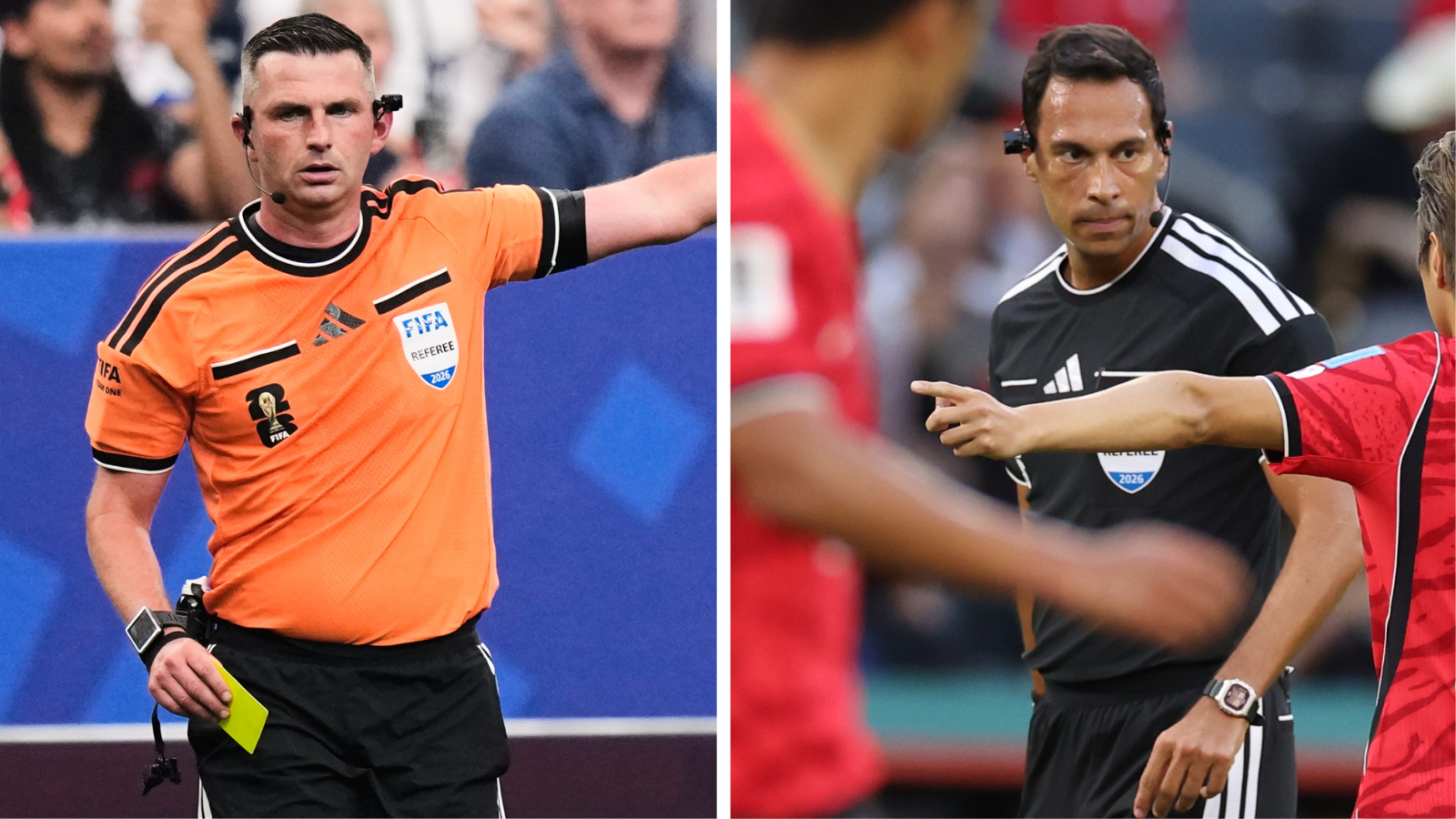
FIFA World Cup: English referee Michael Oliver and Argentine Facundo Tello (R) cannot officiate matches involving each other's country despite a neutral setting. (AP Photo)
As the 2026 FIFA World Cup is leaping towards the final stretch of the knockouts, refereeing decisions have been magnified, and the scrutiny intense. They hit a crescendo during a frenzied Round of 16 match between world champions Argentina and Egypt, officiated by Frenchman Francois Letexier on Tuesday night.
While the neutrality of officials has been said to be overseen by the world football body on a match-to-match basis, Not all such combinations are welcome on the world stage, as Argentina officials may not be seen later in the tournament should England march on towards the final. The reverse is equally problematic, as seasoned English officials, Anthony Taylor and Michael Oliver, will not be able to take the pitch should Argentina proceed past Switzerland from the quarter-finals.
ALSO READ | FIFA World Cup: Morocco’s tireless legs may be answer to stopping Olise, Mbappe
The England-Argentina off-field rivalry
Despite officiating in seven matches through the World Cup, Englishman Oliver could likely miss the final set to be held at the MetLife Stadium in East Rutherford on July 19, should Lionel Messi’s men mark their presence. The unique situation stems from a 44-year-old war involving the two nations, aiming to wrest control over the Falkland Islands, an archipelago in the South Atlantic Ocean.
The Falkland War which began on April 2, 1982 with Argentina invading the English-occupied Falkland Islands, lasted 74 days. The war ended with an Argentine surrender in June 1982, after casualties totalling 649 Argentine military personnel, 255 British military personnel, and three Falkland Islanders.
How do FIFA choose referees for World Cup knockouts
Refereeing neutrality and the selection of officials for matches in the remainder of the World Cup will continue the same policy of match-by-match templates, involving performance and other geo-political factors linked to the respective teams. They would also be barred from officiating matches involving countries that are in the same bracket as their country of berth. For instance, English or Norweigian referees will therefore not be considered to officiate the quarter-final involving Argentina and Switzerland as they are deemed to meet in the semi-finals and vice-versa.
Likewise, Argentine referee Facundo Tello was only considered for the quarter-finals in the upper-half of the bracket, involving France, Morocco, Spain and Belgium.
Story continues below this ad
ALSO READ | Who are the Hassan twins? Egypt’s coach, his brother, and the state backing them
World Cup knockouts: Week of refereeing controversies
Despite their comeback 3-2 win, Argentina fans themselves had taken offence to the neutral referee Letexier’s background during the Round of 16 clash against Egypt. A referee from France, the country that thumped them out of the World Cup in 2018 and came close to shattering their dream in the final in 2022.
Even the Egyptian management, including coach Hossam Hassan, raised severe objections against the referee and FIFA after they lost the plot in just over 11 minutes after leading 2-0 until the 78th minute againt the world champions.
Hassan’s grievances ran wider than the scoreline: earlier in the match, with Egypt already 2-0 up, a goal was disallowed on VAR review that would have made it 3-0; late on, he felt a foul in the box went unreviewed. He had also objected to the referee’s identity before a ball was kicked, telling Francois Letexier that his background was the issue, and later that the Frenchman seemed to be “carrying a scar,” that he had “something to hide.” He was booked for it.
Story continues below this ad
Criticism was also voiced when an all-Argentina officiating line-up, led by Tello, was announced for the first quarter-final involing arch-rivals France and Morocco.
View original source — Indian Express ↗
Related stories
Times of India
SportsJul 9, 2026 · 1 min
Rohit Sharma reaches London early to begin preps for ODIs against England
Times of India
Times of India
SportsJul 9, 2026 · 1 min
Big blow for Morocco ahead of France quarter-final as Ismael Saibari ruled out
Times of India

Al Jazeera
SportsJul 9, 2026 · 1 min
Do fans still trust referees and VAR at the World Cup?
Al Jazeera
ABC News
SportsJul 9, 2026 · 1 min
Swimming Australia fights 'scary' fake news in world-first initiative
ABC News