SBS News
Trump may have offered Ukraine exactly what it wants. But there's a major catch
in brief
Donald Trump has offered missile technology to Ukraine while attending a NATO summit in Ankara.
Experts say the announcement could increase Ukraine's defence capability, but not for some time.
One of the "world's best missiles" could be manufactured in Ukraine as part of its defence against Russia, but experts say it's only good news "down the road" for the war-torn nation.
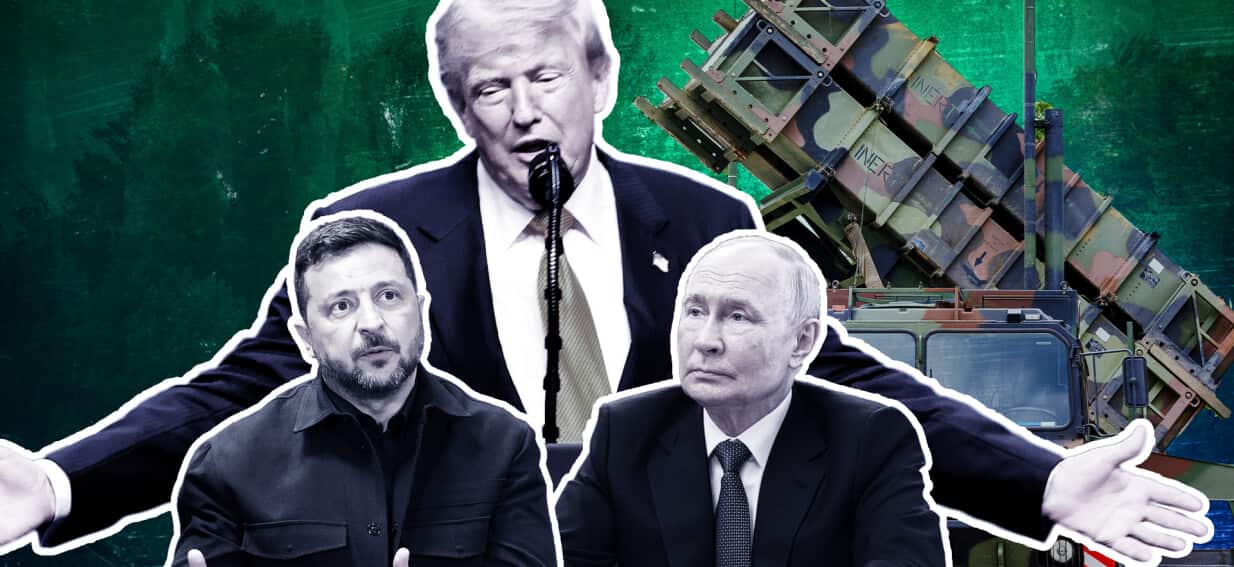
Speaking at a NATO summit overnight, United States President Donald Trump offered to give Ukraine a licence to produce Patriot interceptor missiles.
The missiles are one of the only weapons capable of countering Russia's most brutal attacks, and Ukrainian President Volodymyr Zelenskyy has been asking for them for years and more recently for a licence to manufacture them.
Russian ballistic missile strikes have killed dozens of Ukrainians in the past week and caused significant damage to infrastructure.
While Trump's offer could be a lifeline to Ukraine, it could be too little and too late in its war with Russia, as the president also considers his relationship with other world leaders.
News that makes sense
Your trusted source for staying up-to-date with the world around you. Get free daily news updates and analysis, straight to your inbox.
One of the world's best missiles
Patriot missiles are a little over 5m in length, 40cm in diameter, and have a range of 70km, the Associated Press reports.
The missiles are fired from a battery that costs approximately $US10 million ($14.4 million) to manufacture and can require as many as 90 troops to operate and maintain it.
Oleksandra Molloy, a senior lecturer in aviation safety at the University of New South Wales, told SBS News that the Patriots are widely regarded as among the world's most capable air defence missiles.
"They are very effective at downing incoming ballistic missiles, which fly at much higher altitudes and are much faster than other types of missiles or drones," she said.
The US has previously provided these missiles to Ukraine for its defence, but intelligence suggests the country now has limited means to defend against Russian strikes.
Douglas Lute, a former US ambassador to NATO, said it's likely Ukraine has run out of defensive missiles, leaving it vulnerable.
"Recently, none of the incoming Russian ballistic missiles has been downed. That suggests that Ukraine is essentially out of its Patriot air defence system," he told ABC Radio National on Thursday morning.
When asked if the United States would send additional Patriot interceptors immediately, Trump said "some" could be sent immediately and that he thought Ukraine could begin to produce its own quickly.
"We have Patriots, but we don't have that many. We need them for ourselves too," he said.
When could new missiles be made?
Lute estimated that it takes the US around two years to produce the defensive missiles, saying that while Ukraine has a strong defence industry, manufacturing Patriots could be a challenge.
"The factory today doesn't exist in Ukraine. The workforce is not in place. And of course, any production in Ukraine will face some of the same supply chain challenges as American manufacturers," he said.
"So, this is good news, but it's good news only down the road."
Molloy added that since weapons technology is constantly evolving, the Patriot missiles could also become outdated by the time they are made in Ukraine.
"Russia is continuously upgrading its missiles and making them faster and more manoeuvrable," she said.
"And that has led to a reduced rate of interception in recent engagements."
Any manufacturing of the Patriots would likely require approval from the US license holders, Raytheon and Lockheed Martin, adding a further barrier to future Ukrainian-made missiles.
SBS News has contacted both companies for comment.
Trump, Putin and the war in Ukraine
Jessica Genauer, an expert in international conflict and international relations at the University of NSW, told SBS News that the missile offer is also symbolic.
"The US wants to show it still supports Ukraine and is broadly on their side," she said.
"However, it was a fairly off-the-cuff comment from Trump, and we will have to see what, if anything, comes of it."
When asked how the offer could affect Trump's relationship with Russian President Vladimir Putin, Genauer said it's not a "major turning point".
Trump tends to be quite supportive of whoever he is with at any given time, she said, and, in this case, at the NATO summit, he wanted to be seen as backing Europe.
"I fully expect that at the same time, Trump still maintains his attachment to what he sees as quite a positive relationship with President Putin of Russia," she said.
"He will keep talking to Putin and most likely still holds an aspiration to try to influence Putin to get to some kind of conclusion to this conflict under a Trump presidency."
Genauer added that Trump could also be looking to shift focus away from the "crumbling" US-Iran ceasefire deal by announcing support for Ukraine.
"Trump does not like to look weak or unsuccessful to his European counterparts," she said.
"So I think this is also partly Trump pivoting away from a focus on US-Iran relations and going back to another very serious high-level ongoing conflict, which is that of the war between Russia and Ukraine."
As for Trump's sometimes "tumultuous" relationship with Ukrainian President Volodymyr Zelenskyy, the latter would be "grateful" for the missile technology, Genauer said.
However, Ukraine will likely need at least a temporary cessation of hostilities with Russia soon if it hopes to have the capacity to produce Patriots.
"Ukraine does not have an endless timeline to continue fighting this war; within probably one to two years, there will need to be some kind of agreement around stopping the war," she said.
If licensing is approved and Ukraine can manufacture the missiles, the benefits to its defence would be in the medium- to long-term, Genauer estimated.
"Having a really good air defence system will be critical for Ukraine, not just during this hot phase of this conflict, but probably for at least seven to 10 years after the conflict concludes."
For the latest from SBS News, download our app and subscribe to our newsletter.
View original source — SBS News ↗
Related stories

Japan Times
PoliticsJul 9, 2026 · 1 min
‘Nothing left except death’: Myanmar families grieve huge war toll
Japan Times
ABC News
PoliticsJul 9, 2026 · 1 min
When politics becomes content the risks multiply
ABC News
The Guardian
PoliticsJul 9, 2026 · 1 min
Trump says Iran truce is ‘over’ as US hits 170 targets over two nights – Middle East crisis live
The Guardian

TASS
PoliticsJul 9, 2026 · 1 min
UAC delivers Su-30SM2, Su-34 fighter jets to Russian Defense Ministry — Rostec
TASS