Indian Express
AI no less than colonisation, it’s driven by Western minds, ideas: Humans in the Loop director
4 min readAhmedabadJul 9, 2026 11:13 AM IST
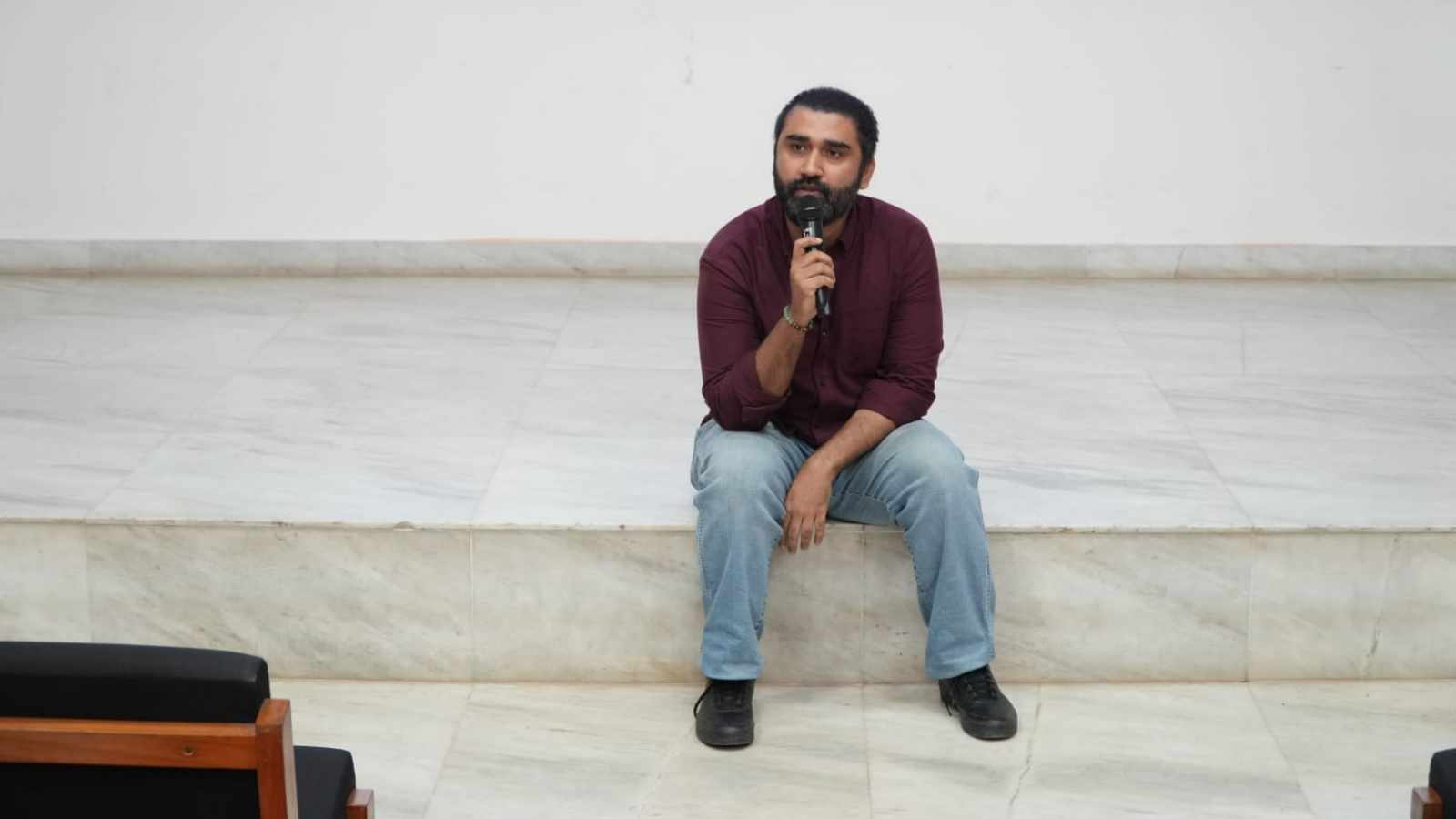
Aranya Sahay on Wednesday said that his debut feature film, Humans in the Loop, was inspired by the reality of technology entering lives.
written by Yashaswi Singh
Addressing how its core idea came from studying sociology and history and observing the realities of Adivasi communities in Jharkhand, Aranya Sahay on Wednesday said that his debut feature film, Humans in the Loop, was inspired by the reality of technology entering lives.
Sahay also believes that the impact of Artificial Intelligence (AI) today is deeply linked to history. During an exclusive interaction with The Indian Express, Sahay said, “AI is no less than colonisation.” He added, “It (AI) is meant for everyone, but it is driven by Western minds and Western ideas.”
The film, which recently transitioned from independent grassroots screenings to a global release on Netflix, explores AI and bias through the story of an Indigenous Adivasi woman. It was released internationally and became eligible for consideration at the 2026 Academy Awards for Best Original Screenplay. Sahay, who comes from a sociology and politics background, sees himself first as a writer and storyteller.
Speaking about his entry into cinema, Sahay noted that it was completely unplanned. Raised in a home where education and the arts were highly respected, his father encouraged him to pursue cinema.
He realised filmmaking was the perfect space to combine his love for music, writing and visual art. Making the film, however, came with several challenges.
Sahay shared details of the “micro-budget production”, which faced financial shortages, location permission issues and crew scouting hurdles. With only three trained actors, the rest of the cast comprised local residents in Jharkhand and the entire shoot was completed in a tight 12-day window.
The hardest part came after production, said Sahay. Recalling the journey to land a global streaming partner, Sahay laughed. “Thoda nahi, kaafi mushkil tha,” he said, noting how tough it was to get a “starless indie film” on board a platform such as Netflix.
Story continues below this ad
Instead of waiting for traditional distributors, the team built a movement. They travelled the country holding nearly 100 grassroots screenings. They built a support network of more than 7,000 people, including journalists and critics. According to the film’s official profile, this momentum eventually caught the attention of filmmaker Kiran Rao, who came on board as executive producer, helping the film secure a global release.
Asked if he expected this journey to end up on the Oscars campaign trail, Sahay sought to clarify a common misconception. “We became eligible for the Oscars. There is a difference,”
he said, explaining that the film was under consideration rather than being a final nominee.
Apart from filmmaking, Sahay is focused on promoting other independent creators. He announced plans to launch a creative fellowship for marginalised filmmakers, specifically in Jharkhand. The initiative will give five filmmakers financial support alongside access to professional post-production facilities such as editing, colour grading, and sound design.
Sahay has a word of advice for young and emerging filmmakers, underlining that a good story alone is not enough to succeed. He stressed that a catchy logline, proper synopsis, clean paperwork and global networking are essential. He urged creators to look far beyond regional cinema. “If I’m making a film, I’m competing with (Hollywood filmmaker) Christopher Nolan,” Sahay stated, pushing filmmakers to tell global stories. He noted that Indian cinema is finally starting to think on a larger scale, pointing to ambitious projects such as S S Rajamouli’s forthcoming film ‘Varanasi’ as a sign of progress.
Story continues below this ad
Sahay advised young creators to trust their instincts when dealing with criticism. He explained that building a good crew happens through a chain reaction, where meeting one person, like a costume designer, naturally links you to an art director and the rest of the team. For him, filmmaking is about “pushing past rejections and making connections so that unheard stories can finally find their place on the global map.”
Yashaswi Singh is an intern at The Indian Express, Ahmedabad
View original source — Indian Express ↗
Related stories

Japan Times
EntertainmentJul 9, 2026 · 1 min
‘Princess Mononoke’ comes alive in Super Kabuki staging
Japan Times

Deadline
EntertainmentJul 9, 2026 · 1 min
‘SNL’ On ITV? Sky Already Plotting How To Megaphone Originals On Its New $2.1B Network
Deadline

Rio Times
EntertainmentJul 9, 2026 · 1 min
African Filmmakers Take Centre Stage at Locarno 2026
Rio Times

The Hollywood Reporter
EntertainmentJul 9, 2026 · 1 min
‘Little House on the Prairie’ Review
The Hollywood Reporter