Indian Express
Visually impaired teacher wins job back as court bars post-hiring eligibility changes
Restoring the services of a visually impaired teacher service with full back wages in a government school, the Chhattisgarh High Court has held that a government job secured under the disability quota cannot be taken away based on an internal committee’s recommendation.
The court ruled in favour of another teacher, also suffering from 40 per cent visual disability, and set aside the showcase issued to him by the school education department. Their predicament stemmed from a departmental committee had identified only candidates with ‘One Arm Affected’ (OA) and ‘Hard of Hearing’ (HH) disabilities as suitable for the post of teacher (Physical Education). Since both petitioners were visually impaired, they were asked to explain why their appointments should not be cancelled. The court, however, ruled that authorities cannot introduce fresh eligibility conditions after completing the recruitment process and making appointments.
Justice Naresh Kumar Chandravanshi was hearing two writ petitions filed by one Shiv Shankar Sahu and Neel Kumari, both appointed as teachers (Physical Education) under the Persons with Disabilities (PwD) reservation quota, challenging show-cause notices issued in January 2023 questioning their eligibility, while Kumari also challenged the cancellation of her appointment.
“The Rights of Persons with Disabilities Act, 2016 is a beneficial and social welfare legislation enacted to secure equality, dignity, participation and non-discrimination for persons with disabilities. Any interpretation restricting employment opportunities under the Act must have clear statutory sanction. In the absence of such authority, executive instructions or committee recommendations cannot be permitted to defeat the object of the legislation,” the court said on July 3.
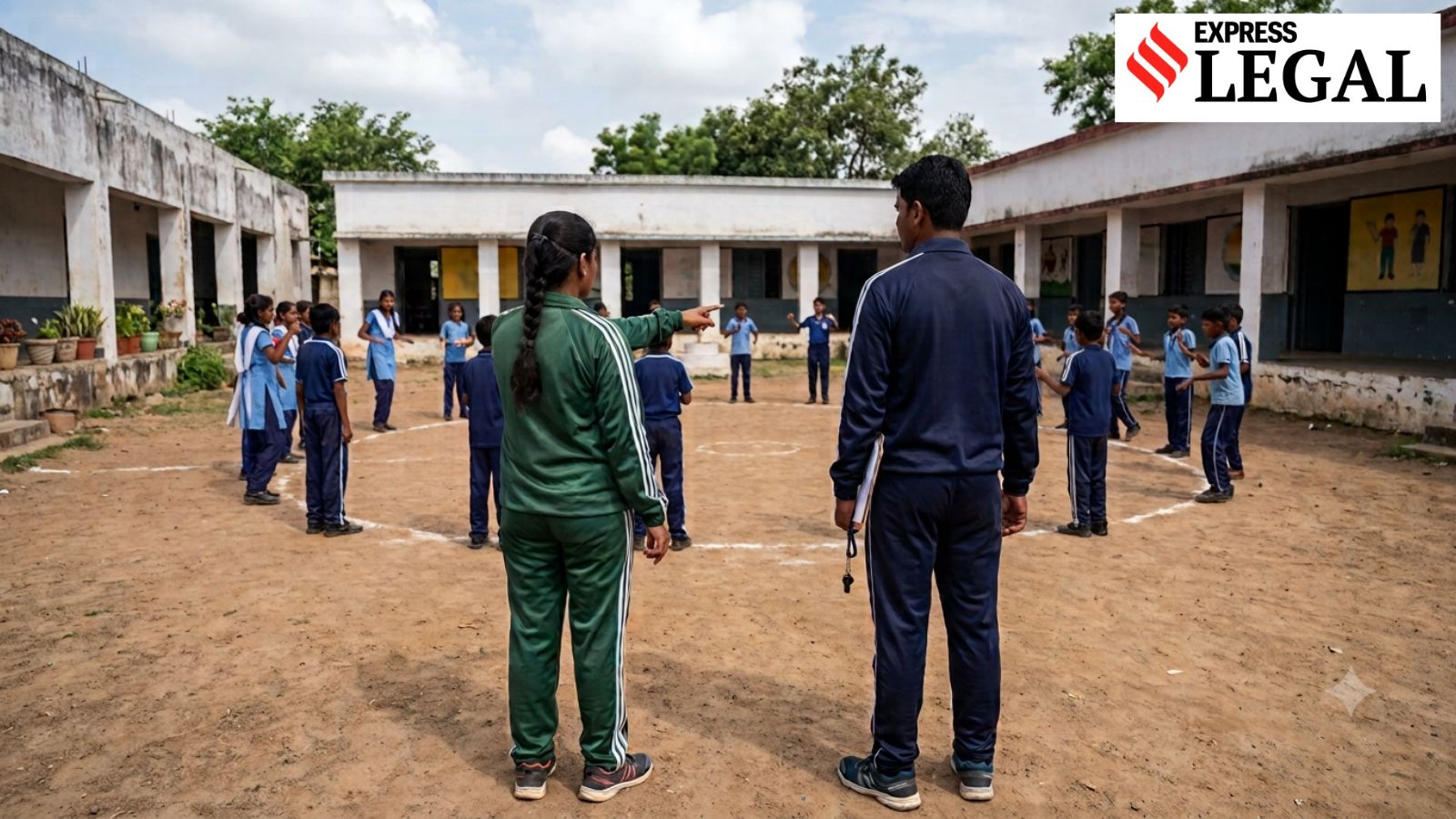
Justice Narendra Kumar Chandravanshi said that the teachers had neither suppressed any material fact nor obtained employment through fraud or misrepresentation. (Image enhanced using AI)
Recruitment under disability quota
The case arose from a recruitment advertisement issued on March 9, 2019, by the Directorate of Public Instructions, Raipur, inviting applications for various posts of teachers, including teacher (Physical Education). The advertisement reserved vacancies for persons with disabilities in accordance with the Rights of Persons with Disabilities Act, 2016. Still, it did not specify that only candidates belonging to particular disability categories would be eligible for the physical education post.
Both teachers, each having 40 per cent visual impairment, applied under the disability quota and completed the selection process. Following verification of their educational qualifications, disability certificates and other documents, they were appointed as teachers (Physical Education) on August 24, 2021. They continued in service without any complaint regarding their performance or conduct.
Nearly two years later, on January 19, 2023, the joint director, education division, Bilaspur issued show-cause notices to both teachers. While Shiv Shankar Sahu immediately approached the high court, Neel Kumari submitted a detailed reply to the notice. Despite her explanation, the authorities cancelled her appointment on February 6, 2023, following which she challenged both the show-cause notice and the termination order.
Story continues below this ad
No legal basis
Defending its decision, the state argued that the committee constituted by the directorate of public instructions had identified only OA and HH disability categories as suitable for the post.
The high court, however, noted that the state failed to place on record any statutory provision, rule, notification or order issued under the Rights of Persons with Disabilities Act, 2016 declaring persons with visual impairment ineligible for appointment as physical education teachers.
Justice Chandravanshi held that the committee report was merely an administrative recommendation and lacked statutory force. Such an executive recommendation, the court said, could not override rights granted under a parliamentary enactment.
The court also pointed out that a 2014 government circular itself contemplated expansion of employment opportunities for persons with disabilities and did not authorise departments to reduce or restrict categories already covered under the reservation policy.
Story continues below this ad
‘Legislative intent’
The legislative intent is to progressively expand employment opportunities for persons with disabilities and not to restrict them.
The judgment held that if the authorities intended to restrict the post to candidates with OA or HH disabilities, the condition ought to have been clearly mentioned in the recruitment advertisement itself.
The authorities could not subsequently introduce a new eligibility condition after allowing them to serve, the court said.
It said that the petitioners had neither suppressed any material fact nor obtained employment through fraud or misrepresentation.
Since their disability certificates were available with the authorities from the very beginning, the state could not invalidate its own appointments based on a later administrative opinion.
The respondents (State and officials of the school education department) cannot seek to invalidate their own decision based on a subsequent administrative opinion.
The respondents have failed to place on record any statutory provision, rule, notification or order issued under the Rights of Persons with Disabilities Act, 2016 prescribing that persons with blindness or low vision are ineligible for appointment to the said post.
Allowing both petitions, the high court quashed the January 19, 2023 show-cause notices issued to the petitioners. In Neel Kumari’s case, the court set aside the February 6, 2023, termination order and directed the state to reinstate her within 30 days of receipt of the certified copy of the judgment. Since Shiv Shankar Sahu had remained in service during the pendency of the proceedings, the court set aside the show-cause notice issued to him.
View original source — Indian Express ↗
Related stories

Antara News
WorldJul 9, 2026 · 1 min
"Garuda" empowers youth eradicate poverty
Antara News

Euronews
WorldJul 9, 2026 · 1 min
Exclusive: Brussels puts trade ban with Israeli settlements on the table
Euronews

Straits Times
WorldJul 9, 2026 · 1 min
Quake-hit Venezuela's push for a swift debt deal raises fears of future crisis
Straits Times

Indian Express
WorldJul 9, 2026 · 1 min
Traffic crawls as incessant rain floods key roads in Delhi; IMD sounds ‘red’ alert
Indian Express