Indian Express
Why Punjab is turning to methadone to supplement its fight against drug addiction
On June 26, the International Day Against Drug Abuse and Illicit Trafficking, Punjab Health and Family Welfare Minister Balbir Singh inaugurated six Methadone Maintenance Therapy clinics in government hospitals. While methadone has been available in Punjab for years, these are the state’s first dedicated MMT clinics. Here’s what the therapy is and how it differs from the treatment already being provided in de-addiction centres in Punjab, a state battling high levels of drug addiction.
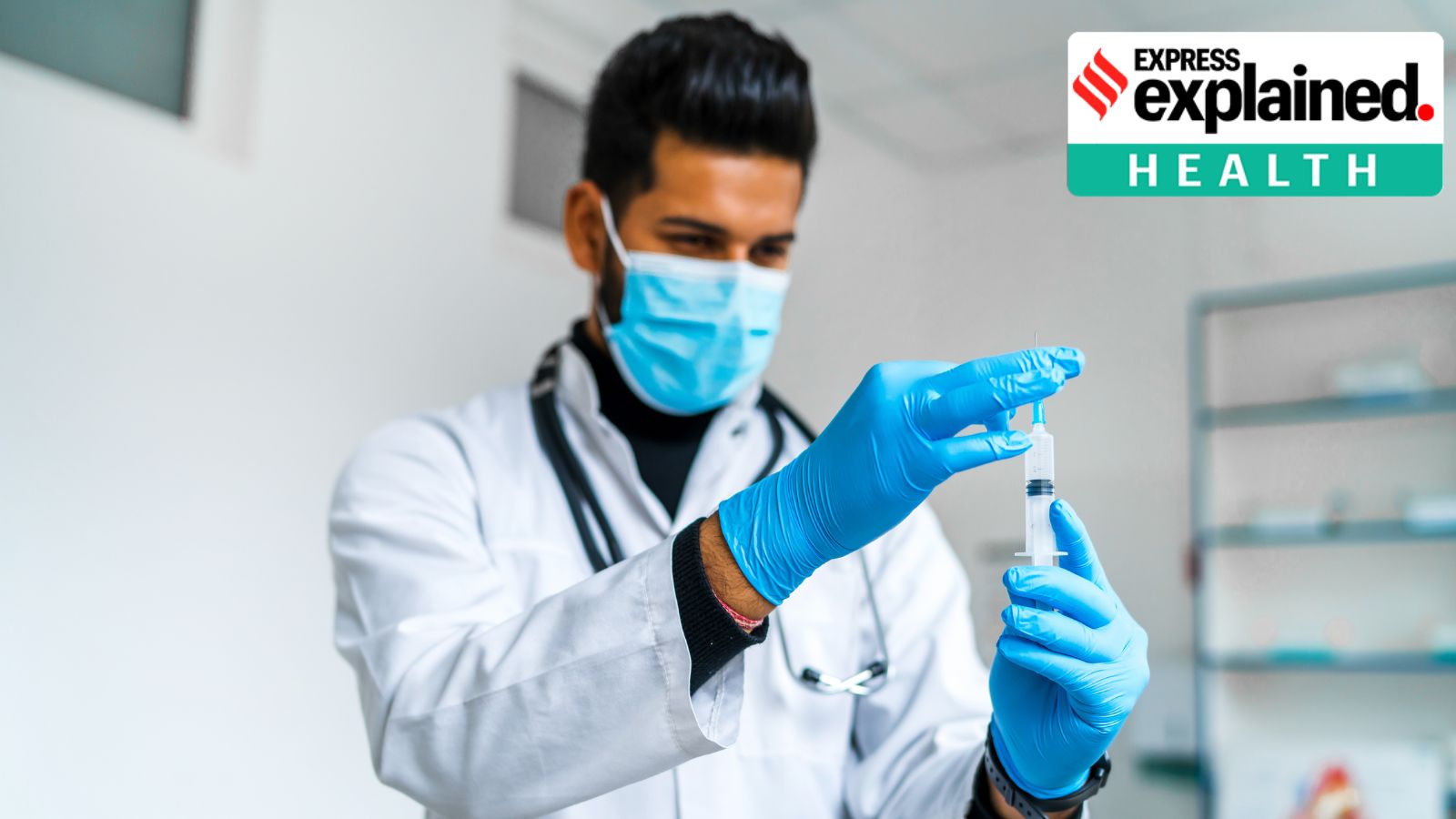
Methadone Maintenance Therapy (MMT), also known as Methadone Treatment Therapy (MTT), is a medically supervised treatment for people addicted to opioids such as heroin, “chitta” (an adulterated form of heroin), opium and prescription opioid painkillers.
It uses methadone, a long-acting opioid agonist, under medical supervision to reduce cravings and prevent withdrawal symptoms without producing the intense high associated with illicit opioid use. The treatment is combined with counselling, psychosocial support and regular medical follow-up to help patients recover and reduce the risk of overdose, relapse and the spread of infectious diseases.
Recommended by the World Health Organisation (WHO) and implemented under the guidelines of the National AIDS Control Organisation (NACO), methadone is administered under strict medical supervision. By replacing repeated use of illicit opioids with a supervised treatment programme, it enables patients to regain physical, psychological and social stability and return to productive family, social and professional lives.
When was MMT introduced in India and Punjab?
Methadone Maintenance Therapy was first introduced in India in 2012 through pilot projects supported by the Ministry of Health and Family Welfare, NACO and the United Nations Office on Drugs and Crime (UNODC).
Punjab became the first state in the country to introduce MMT in 2012, when a pilot methadone treatment programme was launched at the de-addiction centre of Civil Hospital, Kapurthala. The facility was later extended to Bathinda. However, these were part of existing de-addiction services and there were no dedicated MMT clinics.
On June 26, Punjab Health Minister Dr Balbir Singh inaugurated a dedicated MMT clinic at Civil Hospital, Ludhiana. The minister also digitally inaugurated five more MMT clinics at District Hospitals, Jalandhar and Gurdaspur, and Government Medical Colleges at Patiala, Mohali and Faridkot.
Story continues below this ad
With Kapurthala and Bathinda already providing methadone services, eight government hospitals in Punjab are now covered under the MMT programme.
How is MMT different from the existing treatment in Punjab’s government de-addiction centres?
The backbone of Punjab’s government de-addiction programme continues to be Buprenorphine-Naloxone (BNX) therapy, provided through over 450 Outpatient Opioid Assisted Treatment (OOAT) centres across the state.
BNX is the first-line treatment for most patients dependent on “chitta”, opium and similar opioids. It reduces cravings and withdrawal symptoms. During the initial phase, patients take the medicine under supervision, while stable patients may later receive take-home doses.
Dr Rohit Garg, Professor and In-charge of the De-addiction Centre at Rajindra Hospital, Patiala, said: “Methadone is used for selected patients — particularly those who do not respond well to BNX or have severe opioid dependence. It is available at designated Methadone Maintenance Therapy clinics including Patiala. However, as it is given under medical supervision, the patients need to visit the clinic daily and patients living within a 4-km range of the centre are registered for MMT. However, MMT is more effective than BNX as it reduces cravings for opioids, reduces withdrawal symptoms and makes the patient good to go to lead a stable life. It is already available in Punjab but now dedicated clinics have come.”
Story continues below this ad
India’s opioid substitution programme initially relied on buprenorphine because methadone was unavailable, and providers developed greater familiarity with it. Methadone was introduced much later and even today remains subject to stricter licensing, storage and dispensing requirements under the NDPS framework, making it operationally more difficult to scale up. BNX can be given to patients at OOAT clinics and they can take 14 days’ medicine at home as well but methadone can be given in the clinics only under strict medical supervision.
The current consensus is that BNX suits many patients and methadone can be used for others who don’t even respond to BNX. Doctors say that the current consensus internationally is not that one medication should replace the other, but that both should be available so they can individualise treatment.
How many patients are registered in Punjab de-addiction centres?
Over three lakh people are registered for treatment at the state’s government OOAT centres, according to the Punjab Health Department. This figure represents people enrolled for treatment and not the total number of addicts in the state. However Punjab is conducting its first-ever Drug and Socio-Economic Census, a door-to-door survey covering around 65 lakh households. The exercise began in May and aims to estimate the prevalence of drug abuse, identify people requiring treatment and generate data for planning future interventions.
However, the survey has also generated controversy, with the Opposition alleging that the questionnaire focuses more on the AAP government’s welfare schemes than on drug abuse.
View original source — Indian Express ↗
Related stories

Lovin Malta
TechnologyJul 9, 2026 · 1 min
Watch: Person Filmed Doing Handstand On Edge Of Bastion
Lovin Malta
The Next Web
TechnologyJul 9, 2026 · 1 min
Revolut hires ex-Chase UK boss Kuba Fast to lead its European bank
The Next Web

Straits Times
TechnologyJul 9, 2026 · 1 min
Putin likely to escalate Ukraine war, despite Trump peace push, sources say
Straits Times

Euronews
TechnologyJul 9, 2026 · 1 min
Cerebras targets Europe with multibillion-dollar AI expansion, challenging Nvidia
Euronews