Indian Express
Supreme Court weighs larger bench on written arrest grounds
4 min readNew DelhiJul 9, 2026 02:22 PM IST
Solicitor General Tushar Mehta said in Sonam Raghuvanshi’s case, the grounds of arrest were supplied, and the only problem was a typographical error. (File Photo)
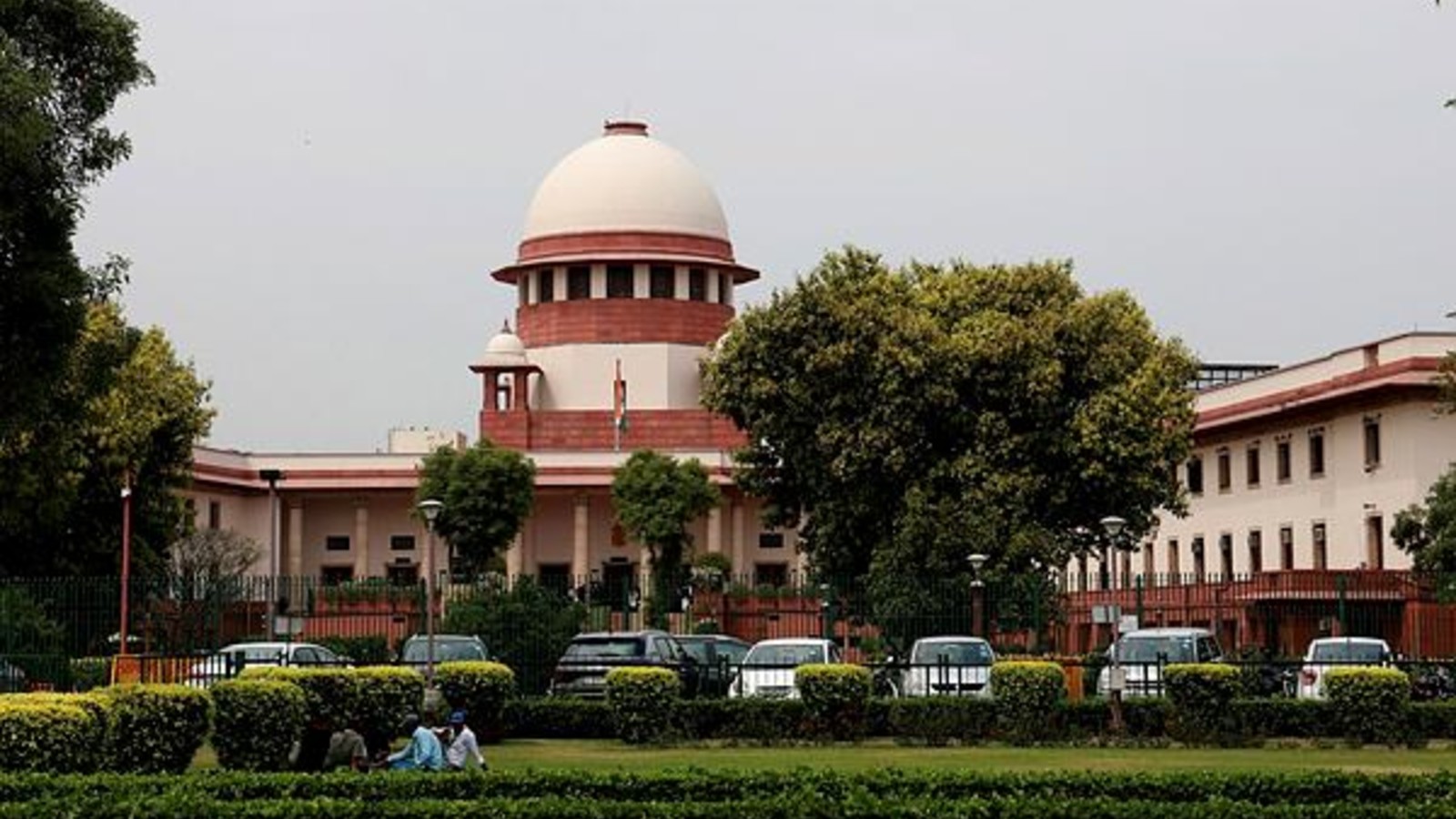
The Supreme Court said Thursday it would consider referring the question to a larger bench of whether investigating agencies are legally required to provide the grounds of arrest to an accused in writing, noting conflicting rulings by other benches.
The issue arose during the hearing of the Meghalaya Government’s appeal against the bail granted to Sonam Raghuvanshi, who has been arrested in connection with the murder of her husband, Indore-based businessman Raja Raghuvanshi, during their honeymoon.
“We will consider this matter at length. You submit written submissions. We will decide if this matter also requires reference to a larger bench or not,” Justice Manoj Misra, presiding over a two-judge bench, said.
Previous judgments
The bench, also comprising Justice Shree Chandrasekhar, was pointed to previous judgments by the Supreme Court.
“There are two judgments. One is Bansal’s judgement, which precedes Vihaan’s judgement, and, of course, Mihir Rajesh Shah. Bansal’s judgment in Paragraph 45 requires the necessity of communication of grounds in writing. There is another judgment of Dr Rajender Ranjan of 2026. And then there is Vihaan’s judgment, which says there is no requirement for grounds in writing. This is a conflict arising from the various coordinate bench judgements,” Justice Misra told Solicitor General Tushar Mehta.
In October 2023, in a decision in Pankaj Bansal vs Union of India, the top court held that the Enforcement Directorate must supply grounds of arrest to an accused in writing in cases under the Prevention of Money Laundering Act (PMLA).
The November 2025 decision in Mihir Raja Shah vs State of Maharashtra and Another held that grounds of arrest should be provided in writing to the accused in all cases and not just those under the PMLA or the Unlawful Activities (Prevention) Act (UAPA). The top court also upheld the requirement to supply grounds of arrest to the accused in the case of Dr Rajinder Rajan vs Union of India and Another, too, in April 2026.
Story continues below this ad
However, in Vihaan Kumar vs State of Haryana and Another, the Supreme Court in February 2025 said that while the grounds of arrest should be communicated to the accused before arrest, it need not necessarily be in writing.
Typographical error
Mehta said in Sonam Raghuvanshi’s case, the grounds of arrest were supplied, and the only problem was a typographical error, wherein Section 103 of the Bharatiya Nyaya Sanhita (BNS) was mentioned as Section 403, which is a non-existent provision.
“This would require some argument. I would be able to satisfy that there is no conflict. One thing is very, very clear, that written grounds are also supplied with one typographical error which does not cause any prejudice,” said Mehta.
The bench, too, pointed out that the June 11 order of the magistrate court “records satisfaction that they (accused) are aware of the ground of arrest.”
Story continues below this ad
Justice Misra added that it is not just about supplying the sections on which the arrest took place, but also the reasons. “It’s not just generally mentioning the sections. You also have to give the basic background that you are involved in the murder of your husband…”, he said.
Fixing the matter for further consideration on July 14, the court asked the state to produce ‘legible photocopies of documents that were provided to the accused, so that we are in a position to understand what was supplied.”
View original source — Indian Express ↗
Related stories

The Punch
WorldJul 9, 2026 · 1 min
Nothing must happen to Peter Obi, Atiku warns Presidency
The Punch
The Punch
WorldJul 9, 2026 · 1 min
Canada extends proof of citizenship processing time to 19 months
The Punch
The Punch
WorldJul 9, 2026 · 1 min
Ebola death toll in DRC hits 600, WHO reports
The Punch
The Punch
WorldJul 9, 2026 · 1 min
Police kill two kidnappers, recover firearm after rescuing Ogun prince
The Punch