Indian Express
‘Hazur Sahib Act debate is more than amendments, it is a test of religious autonomy’: Gurcharanjit Singh Lamba
The Maharashtra government has put on hold its proposed amendments to the Nanded Sikh Gurdwara Sachkhand Shri Hazur Abchalnagar Sahib Act, 1956, following strong objections from the Sikh community. Revenue Minister Chandrashekhar Bawankule said the decision was taken on the instructions of Chief Minister Devendra Fadnavis, adding that the proposed legislation would not be introduced in the state legislature until a high-level committee consults Sikh stakeholders and submits its recommendations.
While the government’s decision has temporarily paused the controversy, it has not ended the larger debate. Sikh religious bodies, scholars and legal experts maintain that the issue is not merely about the composition of a management board but about the constitutional limits of State intervention in the affairs of one of Sikhism’s five Takhts. They argue that any changes to the management of Takht Sachkhand Shri Hazur Sahib must respect the community’s right to administer its own religious institutions under Article 26 of the Constitution and remain consistent with the representative principles established through the historic Gurdwara Reform Movement.
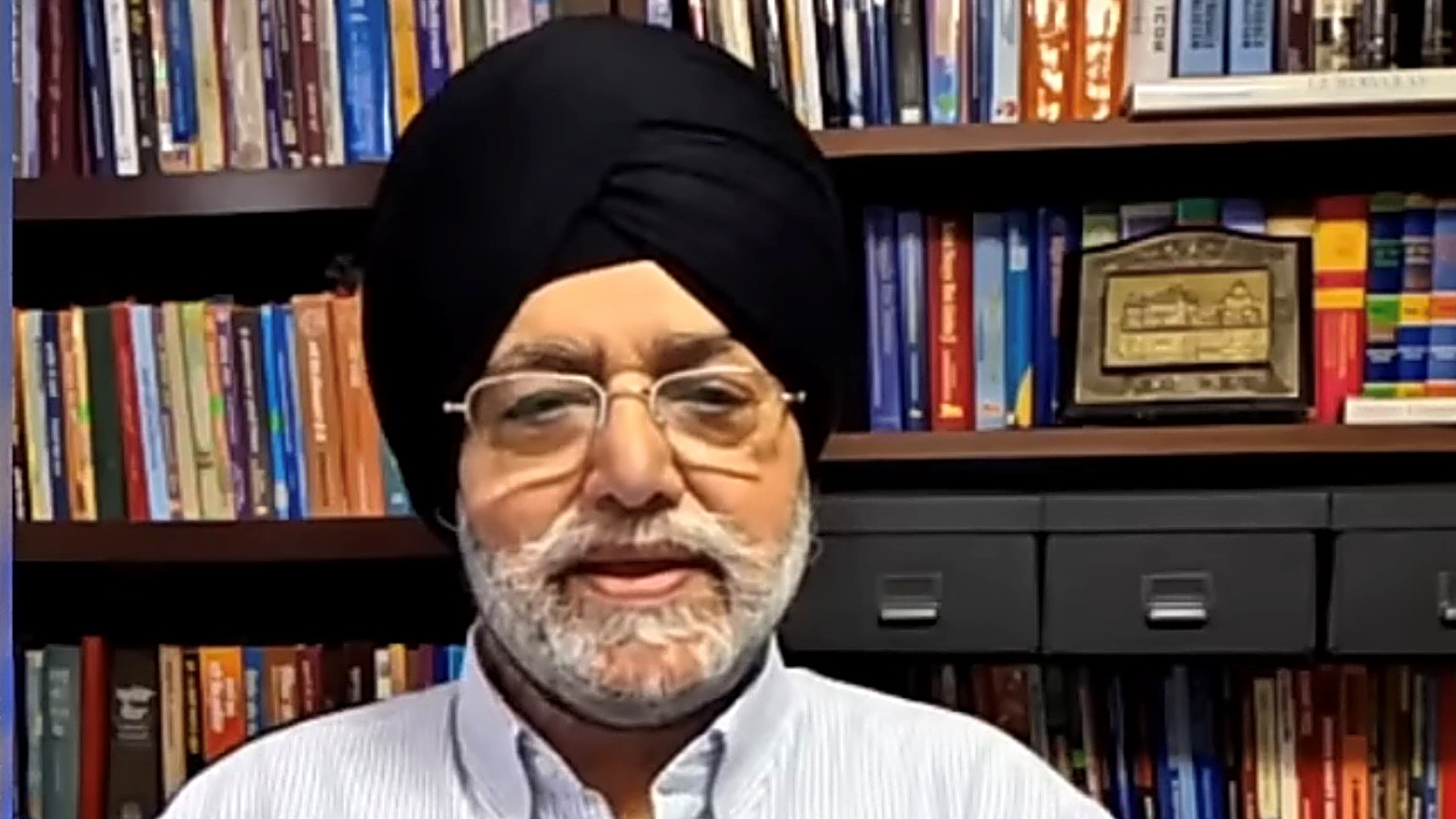
The Indian Express spoke to Gurcharanjit Singh Lamba, who is New York-based Sikh affairs expert, writer and the former Editor of Sant Sipahi, which was founded by Master Tara Singh in 1945. Lamba explains, why the controversy has become a constitutional issue rather than just an administrative one.
Why has the Maharashtra Government’s proposal become such a major issue for the Sikh community?
The issue is much larger than changing the composition of a management committee. It concerns the constitutional relationship between the State and one of Sikhism’s highest religious institutions.
Takht Sachkhand Sri Hazur Sahib is one of the five Takhts of the Sikh faith. A Takht is not merely an administrative institution; it is a supreme religious authority whose management has always carried deep religious significance.
The Maharashtra Government has proposed repealing the 1956 Act and replacing it with a new law. Sikh organisations argue that the proposed framework substantially increases the government’s role in constituting the management board while reducing the representation of traditional Sikh institutions. Many also object to the removal of long-standing institutional representation and the continued role of government officials within the governance structure.
Story continues below this ad
Even the 1956 Act is not perfect. Every law can be improved. The concern is that instead of correcting specific deficiencies through consultation with Sikh institutions, the government is replacing the entire legislative framework. That fundamentally changes the nature of the debate.
Why do Sikh organisations describe this as a constitutional issue rather than merely an administrative one?
Lamba said, “Because the Constitution itself recognises the autonomy of religious denominations”.
Article 26 of the Constitution guarantees every religious denomination the right to establish and maintain religious institutions, manage its own religious affairs, own property and administer that property in accordance with law.
Story continues below this ad
The crucial distinction is between regulating secular administration and controlling religious governance.
The State certainly has powers to legislate for transparency, financial accountability and public administration. However, when legislation begins to alter who represents a religious institution or who ultimately controls its governance, it raises constitutional questions. Takht Sahib derives its authority from the Sikh Panth, not from the government. Therefore, any restructuring of its representative character must necessarily involve the Sikh community itself.
Sachkhand Takhat Sri Hazur Saheb being one of the five Takhats has dual authority temporal and spiritual. This temporal authority cannot be under any other political authority.
Does history support the Sikh community’s concerns about external control over gurdwaras?
Absolutely, said Lamba.
Story continues below this ad
The present debate cannot be separated from the history of the Sikh Gurdwara Reform Movement.
During the early twentieth century, Sikhs launched a peaceful mass movement to free historic gurdwaras from the control of hereditary mahants. Thousands participated in that struggle, many made the ultimate sacrifice, and the movement eventually resulted in the Sikh Gurdwaras Act, 1925.
That legislation established an important principle—that Sikh religious institutions should be managed by representatives of the Sikh community.
The management of Sikh gurdwaras is therefore not merely an administrative arrangement. It is the outcome of one of the most significant religious reform movements in modern Indian history.
Story continues below this ad
Similarly, after Independence, understandings between the Government of India and Sikh leadership, including the Nehru–Tara Singh pact, reflected the importance of addressing Sikh religious concerns through dialogue rather than unilateral intervention. While those developments are well documented, they reinforce a consistent constitutional principle: religious institutions should function with the confidence and participation of the religious community.
The Panj Pyare of Hazur Sahib have also appealed to the Maharashtra Government. Why is that significant?
“Their appeal is extremely significant because it comes from within the religious institution itself.”
The Panj Pyare have reportedly resolved that if amendments are necessary, they should be made within the framework of the 1956 Act rather than by replacing the entire legislation.
That is an important distinction.
Story continues below this ad
They have not argued that the existing Act should never be amended. They have recognised that shortcomings may exist. Their concern is that removing deficiencies should not become an opportunity to fundamentally alter the representative and religious character of Takht Sahib.
In constitutional democracies, governments normally consult the primary stakeholders before introducing major reforms affecting religious institutions. In this case, the Panj Pyare’s appeal reflects precisely that expectation.
What should be the way forward?
The solution lies in consultation, not confrontation.
If reforms are genuinely required, they should be undertaken after meaningful discussions with Takht Sahib, the SGPC, Sikh scholars, legal experts and representative Sikh organisations.
This debate should not be viewed through a political prism. Governments change, but constitutional principles endure.
Story continues below this ad
The issue today concerns a Sikh Takht. Tomorrow, the same constitutional principle could apply to any other religious denomination in India.
Our Constitution guarantees religious freedom not merely as an individual right under Articles 25 and 26 but also recognises the collective autonomy of religious denominations in managing their own institutions.
That is why many Sikh organisations have consistently argued that the governance of historic Sikh institutions should evolve through consensus within the Sikh community. Several scholars have also revived the idea of a comprehensive All India Gurdwara Act to ensure uniform principles for the management of historic Sikh shrines.
Ultimately, the question before Maharashtra is not simply whether a law can be changed. It is whether changes affecting one of Sikhism’s highest institutions respect the constitutional guarantee that religious denominations have the right to manage their own religious affairs, said Lamba.
Story continues below this ad
That principle is larger than any single Act, government or political party. It is part of the constitutional promise made to every faith in India, he concluded.
View original source — Indian Express ↗
Related stories

The Hindu
WorldJul 9, 2026 · 1 min
PM Modi meets Australia Governor General Mostyn, discusses bilateral ties
The Hindu

The Moscow Times
WorldJul 9, 2026 · 1 min
Kazakhstan Court Overturns $1.4Bln Naftogaz Arbitration Award Against Gazprom
The Moscow Times

Straits Times
WorldJul 9, 2026 · 1 min
Russia and Sahel states deepen military ties as insurgent attacks persist
Straits Times

Philippine Daily Inquirer
WorldJul 9, 2026 · 1 min
MIC, PNOC sign deal for Bataan petroleum storage project
Philippine Daily Inquirer