Indian Express
Explained: Why Maharashtra has ordered a statewide audit of church and missionary land
4 min readMumbaiJul 9, 2026 02:55 PM IST
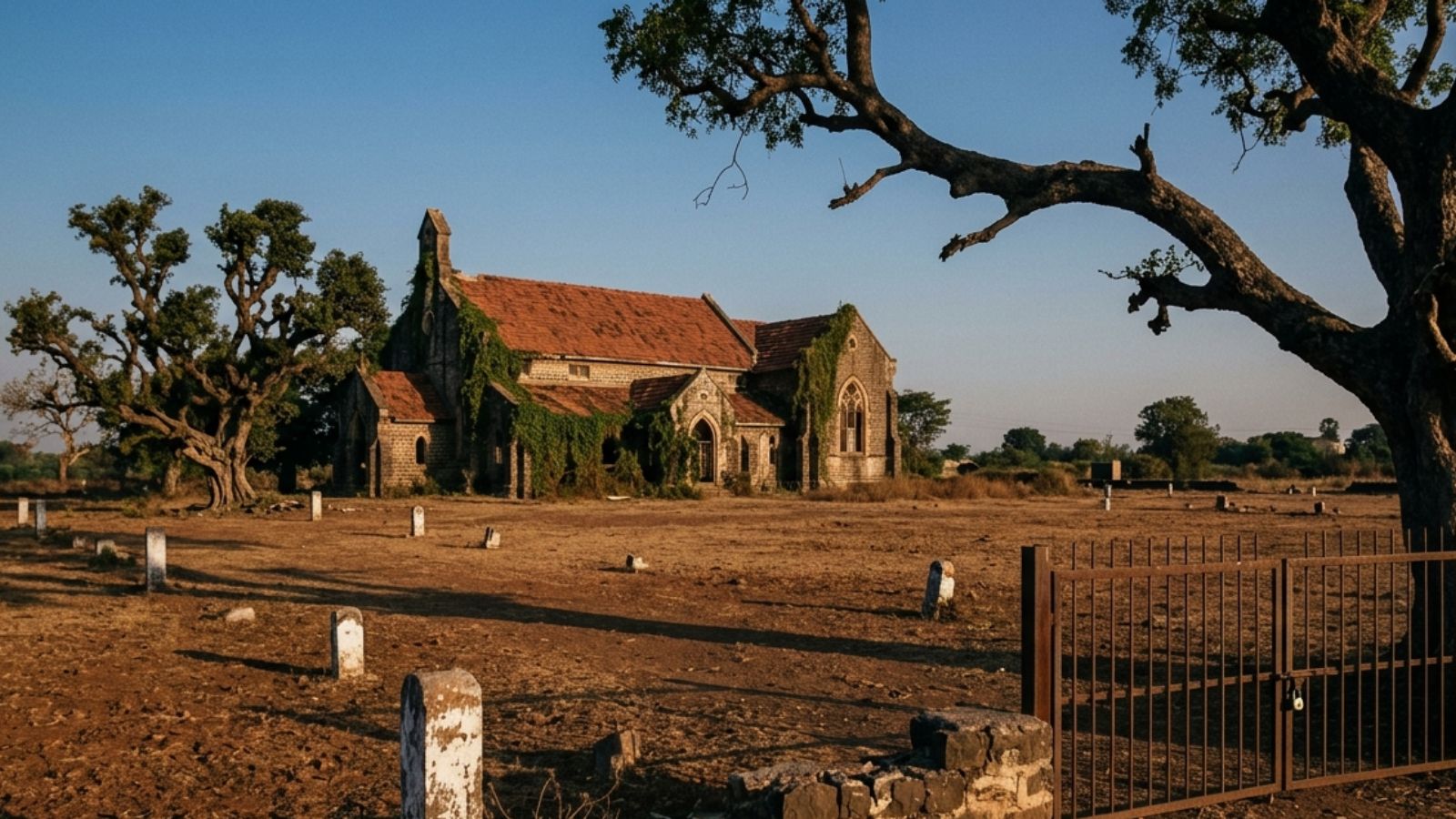
Triggered by an alleged Rs 300 crore land fraud in Nashik, where investigators claim prime church land was illegally leased and sold over decades using forged ownership records, the move has widened into a state level review of land transactions dating back to the British era. (Image generated using AI)
The Maharashtra government’s decision to order a statewide audit of land owned by churches and Christian missionary organisations marks an unprecedented exercise in scrutinising Christian institutional properties. Triggered by an alleged Rs 300 crore land fraud in Nashik, where investigators claim prime church land was illegally leased and sold over decades using forged ownership records, the move has widened into a state level review of land transactions dating back to the British era. The Indian Express explains what the audit will cover, why it has been ordered, and what is known about church landholdings in Maharashtra.
Q. How much land do churches of various Christian denominations own?
Christian institutions in Maharashtra own land through hundreds of legally distinct entities rather than a single church body. The Catholic Church, alongside Protestant dioceses and independent denominations, holds property through individual dioceses, parishes, educational trusts, hospitals and charitable societies, with each entity owning land in its own name under Indian law. Much of this land was acquired over centuries through purchases, donations from private individuals, grants made during the Portuguese period in coastal Konkan and the British era, and subsequent acquisitions for schools, hospitals, churches and social welfare institutions. There is no official government database or verified estimate of the total land held by Christian institutions in Maharashtra or India.
According to the 2011 Census, Christians number about 10.8 lakh in Maharashtra, accounting for 0.96 per cent of the state’s population. The community is concentrated largely in Mumbai, Thane, Palghar, Raigad, Pune, Ahmednagar and parts of Konkan.
Q. What triggered the decision?
The decision was triggered by an alleged land fraud uncovered in Nashik, where police claim church-owned land worth around Rs 300 crore was leased to government departments and sold to private parties over several decades by people who had no legal ownership over it. The case centres on about six acres of land that investigators say legally belongs to the Nashik Diocesan Trust Association (NDTA). According to the FIR, another organisation, the Nashik Diocesan Council (NDC), allegedly dealt with the land as though it were the owner, using forged documents to establish ownership and facilitate the transactions.
The issue was raised in the Assembly by BJP MLA Devyani Pharande, who urged the government to examine whether similar disputes existed elsewhere in Maharashtra. Responding to the discussion, Revenue Minister Chandrashekhar Bawankule announced a statewide audit of church- and missionary-owned land. He said land held since the British era, post-Independence transfers and subsequent transactions would all be examined, with the exercise to be completed within three months. The police estimate that the alleged fraud caused a loss of around Rs 300 crore.
One aspect that made the case unusual is that the Nashik police themselves are among the alleged victims. Since 1990, the Nashik Police Commissionerate had occupied part of the land under lease arrangements. Although the commissioner’s office shifted in 2014, portions of the property continue to house police offices.
The FIR alleges that the government paid rent under lease agreements executed by people who did not have legal authority over the land. That brought the alleged fraud directly to the attention of the police and eventually led to the registration of the case.
Story continues below this ad
Q. What will the statewide audit cover?
According to the government, divisional level committees headed by the divisional commissioners will verify ownership records of church and missionary owned land and also transfers made before and after Independence. It will also look into alleged encroachments and transactions that may have violated existing laws. The committees will include officials from the Settlement Commissioner’s office, the police department and the Inspector General of Registration.
Q. What happens if irregularities are found?
The government says organisations with legally valid titles need not worry. However, if the inquiry finds illegal transfers, forged records or other violations, it says legal proceedings will be initiated. In cases where the land has already been developed or public infrastructure has come up, the government has said it will take a decision after obtaining legal opinion.
© The Indian Express Pvt Ltd
Zeeshan Shaikh is the Associate Editor who heads The Indian Express' Mumbai reporting team. He is recognized for his highly specialized Expertise in analyzing the complex dynamics of Maharashtra politics and critical minority issues, providing in-depth, nuanced, and Trustworthy reports.
Expertise
Senior Editorial Role: As an Associate Editor leading the Mumbai reporting team, Zeeshan Shaikh holds a position of significant Authority and journalistic responsibility at a leading national newspaper.
Core Specialization: His reporting focuses intensely on two interconnected, high-impact areas:
Maharashtra Politics & Urban Power Structures: Provides deep-dive analyses into political strategies, municipal elections (e.g., BMC polls), the history of alliances (e.g., Shiv Sena's shifting partners), and the changing demographics that influence civic power in Mumbai.
Minority Issues and Socio-Political Trends: Excels in coverage of the Muslim community's representation in power, demographic shifts, socio-economic challenges, and the historical context of sensitive political and cultural issues (e.g., the 'Vande Mataram' debate's roots in the BMC).
Investigative Depth: His articles frequently delve into the historical roots and contemporary consequences of major events, ranging from the rise of extremist groups in specific villages (e.g., Borivali-Padgha) to the long-term collapse of established political parties (e.g., Congress in Mumbai).
Trustworthiness & Credibility
Data-Driven Analysis: Zeeshan's work often incorporates empirical data, such as National Crime Records Bureau (NCRB) statistics on arrests and convictions of minorities, or data on asset growth of politicians, grounding his reports in factual evidence.
Focus on Hinterland Issues: While based in Mumbai, he maintains a wide lens, covering issues affecting the state's hinterlands, including water crises, infrastructure delays, and the plight of marginalized communities (e.g., manual scavengers).
Institutional Affiliation: His senior position at The Indian Express—a publication known for its tradition of rigorous political and investigative journalism—underscores the high level of editorial vetting and Trustworthiness of his reports.
He tweets @zeeshansahafi ... Read More
Stay updated with the latest - Click here to follow us on Instagram
Tags:
Christian missionaries
church
Maharashtra
View original source — Indian Express ↗
Related stories

TechRadar
TechnologyJul 9, 2026 · 1 min
'As good as it gets': You won't want to miss this Geekom A8 mini PC deal for office work, content creation, and 4K…
TechRadar

South China Morning Post
TechnologyJul 9, 2026 · 1 min
‘Token economy’ emerging as AI use soars in China: experts tell conference
South China Morning Post

The Guardian
TechnologyJul 9, 2026 · 1 min
Less drugs, less care, less food: how aid cuts have hit Uganda’s 2m refugees
The Guardian

TechRadar
TechnologyJul 9, 2026 · 1 min
The AI security paradox: Why are organizations trusting what they can’t fully see?
TechRadar