CNA
Japan deepens space partnerships as security priorities drive industry growth
East Asia
As Japan expands investment in its space ambitions and seeks closer international collaborations, industry players say the country is becoming an increasingly important hub for commercial and strategic space activities in the Asia Pacific.
New: You can now listen to articles.
This audio is generated by an AI tool.
09 Jul 2026 07:06PM
TOKYO: Japan is stepping up international cooperation in the space sector as it prioritises space as a key national security frontier, with government investment helping to fuel growth in the country's commercial space industry.
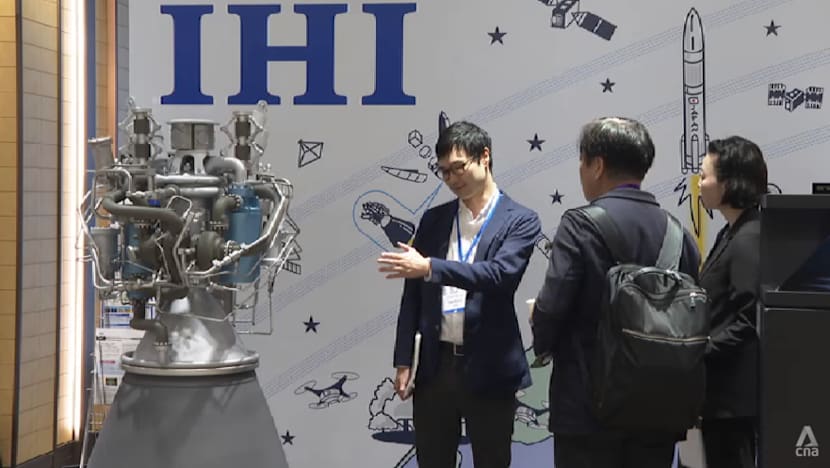
That focus was on display at Spacetide 2026, one of Asia's largest space industry conferences, which concluded in Tokyo on Thursday (Jul 9).
The four-day event drew participants from about 30 countries and regions, bringing together government agencies, businesses, investors and researchers to discuss the future of the space economy.
As geopolitical uncertainties grow, Japan has increasingly identified space as a strategic domain while expanding collaboration with international partners.
"The space industry in Japan has been gaining momentum, and it has generated a lot of attention from all over the world," said Spacetide president and CEO Masayasu Ishida.
The conference saw Japanese and international organisations sign a range of partnership agreements involving government agencies, private companies and educational institutions.
Among them was the first bilateral cooperation agreement between Japan's and Singapore's space agencies, marking a milestone in the two countries’ space ties.
Under the agreement, the National Space Agency of Singapore (NSAS) and the Japan Aerospace Exploration Agency (JAXA) will exchange information and cooperate in areas including space technology development and applications, space science and exploration, industry development, education, as well as policy and regulatory exchanges.
GOVERNMENT INVESTMENTS BOOST SECTOR
Swedish state-owned space corporation SSC Space, which opened its Japan office in January to strengthen its regional presence, also announced several partnerships with Japanese firms during the conference.
They include agreements with Tokyo-based start-up Infostellar, which develops cloud-based ground station services that enable satellite operators to share communications infrastructure; and Seiren Co., which is manufacturing ultra-small satellites.
“SSC Space is growing in Japan and the region. We’ve been working with JAXA … our customer for 20 years. The Japanese market is growing and Spacetide is a great platform to engage with new Japanese companies,” said the firm’s APAC market head Fredrik Gisle.
Japan has allocated more than 1.04 trillion yen (US$6.5 billion) for space-related spending in the current fiscal year, a 12 per cent increase from the previous year.
It also aims to double the size of Japan’s space market to about 8 trillion yen by the early 2030s, double that of 4 trillion yen in 2020.
SINGAPORE FIRMS EYE OPPORTUNITIES
The expanding market is also creating opportunities for Singapore companies, including quantum communications start-up SpeQtral, which partnered with Japanese satellite operator SKY Perfect JSAT Corporation in January.
Speaking on the sidelines of Spacetide, the company said it sees growing potential to work with Japanese partners as Japan expands its investment in the space sector.
“Quantum technology is a dual use technology. Specifically coupled with space and satellite technology, it can be applied for both the commercial sector as well as the defence sector,” said its CEO Chune Yang Lum.
Japan's growing engagement with Singapore's space sector is expected to continue.
Experia Events, organiser of the inaugural Singapore Space Summit in February, said it expects stronger Japanese participation at next year's edition as collaboration between the two countries expands.
Its managing director Leck Chet Lam said: "We think the key lies in data and how it is applied. We (expect) next year's Singapore Space Summit to be bigger … probably 15 to 20 per cent bigger. We are at Spacetide to look for more Japanese exhibitors and I think more will be coming.”
Source: CNA/dn(ca)
Related stories

Euronews
WorldJul 9, 2026 · 1 min
US approves sale of Tomahawk missiles to Germany, Chancellor Friedrich Merz says
Euronews

Euronews
WorldJul 9, 2026 · 1 min
Firefighters tackle large Edinburgh blaze as historic building left in ruins
Euronews

Antara News
WorldJul 9, 2026 · 1 min
Indonesia plans to turn diesel surplus into jet fuel to end imports
Antara News

Portugal Resident
WorldJul 9, 2026 · 1 min
Driver who fled fatal Albufeira crash identified and charged
Portugal Resident