Indian Express
Can a UK-style judicial review mechanism make the UAPA fairer?
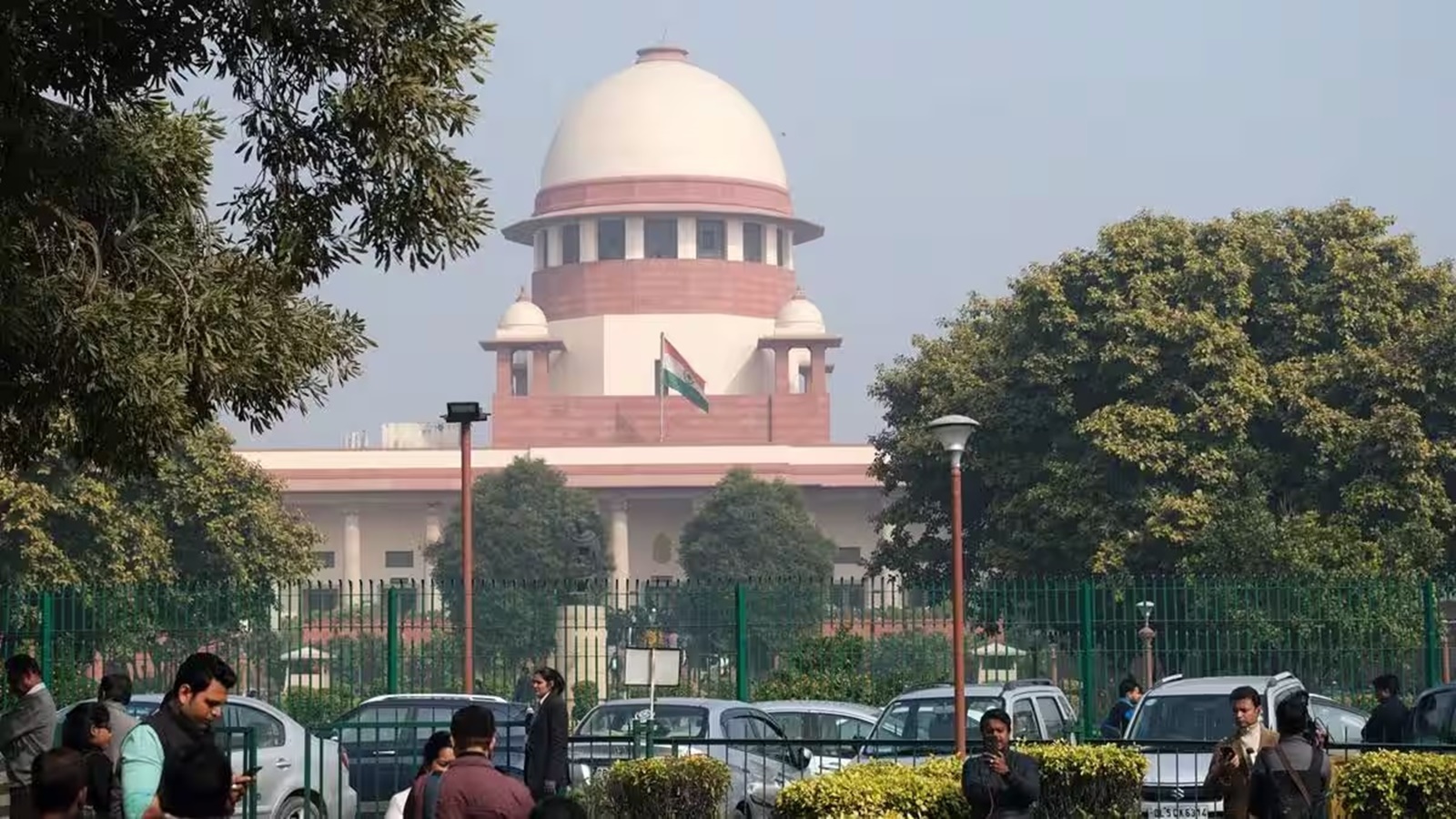
Recently, in Syed Iftikhar Andrabi vs National Investigation Agency (2026), the Supreme Court placed on record a stark fact: Conviction rates under the Unlawful Activities (Prevention) Act, 1967, hover in the low single digits nationally and fall below 1 per cent in Jammu and Kashmir, based on Home Ministry data.
For those accused of nothing more than membership in a banned organisation, the law offers no safe harbour. Membership itself is an offence, and contesting the ban risks being used as evidence of continued unlawful activity. The bail bar under Section 43D(5) has now fractured the Supreme Court into sharply divergent benches, a divergence so acute that on May 22, the Court referred the question to a larger bench.
Over the past decade, reported UAPA cases have remained consistently bracketed, neither falling below 649 cases (NCRB 2024) nor climbing above 1,226 (NCRB 2019). However, across this entire period (2019-2023), the government’s own parliamentary data showed a conviction rate of just 3.2 per cent, with 335 convictions against 10,440 arrests during that period.
This pattern is also corroborated by Article 14’s three-year empirical study in Karnataka (2005-2025), released in February 2026, which found that of 925 persons accused under the UAPA, charges were dropped before trial in over a third of cases, and acquittals outnumbered convictions by a 5-to-1 margin. The trajectory of more arrests, fewer convictions, and longer detentions is the statistical face of a harsh statute.
From an anti-secessionist statute targeting separatist activities, UAPA has been remade by successive amendments, most consequentially in 2019, expanding executive power to designate individuals as terrorists and organisations as unlawful or terrorist organisations, with limited judicial oversight and without any meaningful mechanism for the proscribed organisation to challenge that designation.
In Arup Bhuyan vs State of Assam (2023), the SC clearly highlighted that before any organisation is declared unlawful, a detailed procedure is required to be followed, including wide publicity and even the right of a member of such an association to represent it before the Tribunal. But when a former office-bearer of SIMI appeared before the Tribunal to contest the ban, it was cited as proof of SIMI’s continued unlawful existence, making the right to be heard a trap rather than a safeguard.
Similarly, although the Delhi High Court took a positive step in the Popular Front of India case in October 2025 by admitting a writ against the Tribunal’s confirmation order on the ban, the proscription regime continues to be a concern.
Additionally, six years have passed, and yet, the question of the constitutional validity of Sections 35 and 36 of the UAPA remains unanswered. In February 2025, a bench of the SC directed several high courts before which cognate petitions were pending, to proceed with them and decide on the merits.
These provisions empower the central government to designate individuals as terrorists without trial, disclosure of the evidentiary basis, or any provision for oral hearings. No final judgment has been delivered by any court so far.
Internationally, the problem of allowing a proscribed entity meaningful access to judicial review is neither new nor unresolved. The United Kingdom’s Proscribed Organisations Appeal Commission (POAC) may sit in closed session and appoint special advocates to deal with secret evidence, but a further appeal on questions of law lies with the Court of Appeal.
When “Palestine Action” was banned in 2025 under the Terrorism Act 2000, Justice Chamberlain ruled that unless the ban was swiftly reviewed, there was a risk of “chaos”, with the accused claiming their prosecutions were unjust. The UK’s response was a structured judicial review pathway, precisely the kind of institutional mechanism that the UAPA lacks.
The solution India requires is not just proxy litigation for banned organisations before UAPA tribunals, but also to make the challenge meaningful and fair. Upon proscription, a court-appointed or legal aid-nominated (not Tribunal-appointed) Senior Advocate (Amicus Curiae) could be empowered to represent the organisation’s legal interests before the tribunal, with access to government evidence, including sealed-cover material, subject to standard confidentiality protocols.
Such proxy-advocate appointments must be automatic upon referral, access to classified evidence must be governed by a security-clearance mechanism, the tribunal’s final order must address the proxy’s submissions, and the order must be appealable before a division bench of the High Court on questions of law.
Such reform would give substance to the show-cause notice requirement and allow the tribunal to serve its intended purpose as an independent check on the statute’s promises and constitutional requirements.
The writer is an academic fellow, KL Arora Chair in Criminal Law, National Law University, Delhi
View original source — Indian Express ↗
Related stories

Antara News
WorldJul 9, 2026 · 1 min
Indonesia plans to turn diesel surplus into jet fuel to end imports
Antara News

Portugal Resident
WorldJul 9, 2026 · 1 min
Driver who fled fatal Albufeira crash identified and charged
Portugal Resident

South China Morning Post
WorldJul 9, 2026 · 1 min
Cathay Pacific aircraft’s tail hit runway at Hong Kong airport, airline confirms
South China Morning Post

Philippine Daily Inquirer
WorldJul 9, 2026 · 1 min
Cops seize P7-M worth of shabu, arrest suspect in Ormoc City buy-bust
Philippine Daily Inquirer