Philippine Daily Inquirer
DepEd speeds up rollout of prefab, disaster-resilient classrooms
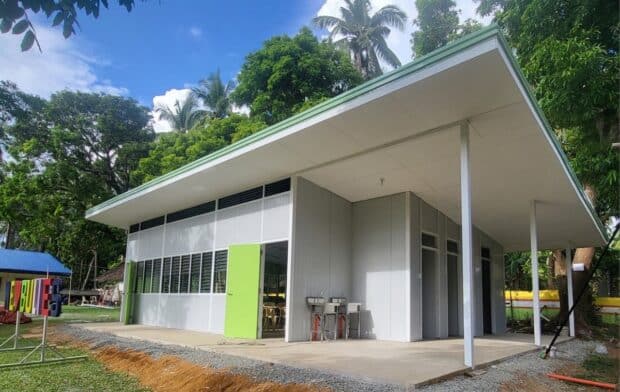
MANILA, Philippines — Education Secretary Sonny Angara has accelerated the setup of Learning Continuity Spaces (LCS), which are prefabricated, disaster-resilient classrooms, to address immediate classroom needs in disaster-affected areas.
The project provides a fast and affordable way to solve classroom shortages, allowing students to continue their lessons without interruption.
According to the latest data, a total of 878 LCS units under the program’s first two phases are underway. Out of these, 453 classrooms are currently under construction, 391 are in the procurement stage, and 34 are fully completed and ready for use.
Article continues after this advertisement
READ: DepEd-BCBP tieup to boost transparency in school infra projects
FEATURED STORIES
NEWSINFO
NEWSINFO
NEWSINFO
Secretary Angara emphasized that these projects are vital stopgaps to address severe classroom shortages over a short period using quality materials.
“According to the order of President [Ferdinand] Bongbong Marcos [Jr.], we need to accelerate the construction of safe facilities to ensure the continued learning of our students, especially in places that are frequently hit by calamities,” Angara said in Filipino.
“Through the accelerated rollout of this LCS, we can address the shortage of high-quality classrooms,” he added.
The program is also expanding for the procurement of two five-classroom buildings at Romana C. Acharon Elementary School and H.N. Cahilsot Central Elementary School in General Santos City, with completion targeted within the month.
Article continues after this advertisement
Furthermore, a separate budget of PHP226.4 million has been set aside to build 109 more ready-to-assemble classrooms across seven regions nationwide.
The majority of these units — 83 out of 109—will be built in the Davao Region (Region XI) to support earthquake-affected schools.
Article continues after this advertisement
READ: DepEd taps LGUs to bridge 165,000 classroom gap
These semi-permanent, modular classrooms can be fully installed within four to eight weeks and are engineered to be disaster-resilient — capable of withstanding wind speeds of up to 250 kilometers per hour and meeting Seismic Zone 4 structural standards.
They are also climate-responsive, featuring passive cooling, optimized ventilation, and natural daylighting to ensure a comfortable, child-safe, and fully accessible learning environment.
Your subscription could not be saved. Please try again.
Your subscription has been successful.
Depending on local needs, these sturdy structures are being built in flexible layouts, ranging from two-classroom buildings to larger five-room facilities. /atm
View original source — Philippine Daily Inquirer ↗
Related stories

Antara News
WorldJul 9, 2026 · 1 min
Indonesia plans to turn diesel surplus into jet fuel to end imports
Antara News

Portugal Resident
WorldJul 9, 2026 · 1 min
Driver who fled fatal Albufeira crash identified and charged
Portugal Resident
South China Morning Post
WorldJul 9, 2026 · 1 min
Cathay Pacific aircraft’s tail hit runway at Hong Kong airport, airline confirms
South China Morning Post

Philippine Daily Inquirer
WorldJul 9, 2026 · 1 min
Cops seize P7-M worth of shabu, arrest suspect in Ormoc City buy-bust
Philippine Daily Inquirer