Indian Express
Egypt wants him gone. FIFA says nothing’s wrong. The referee just waits
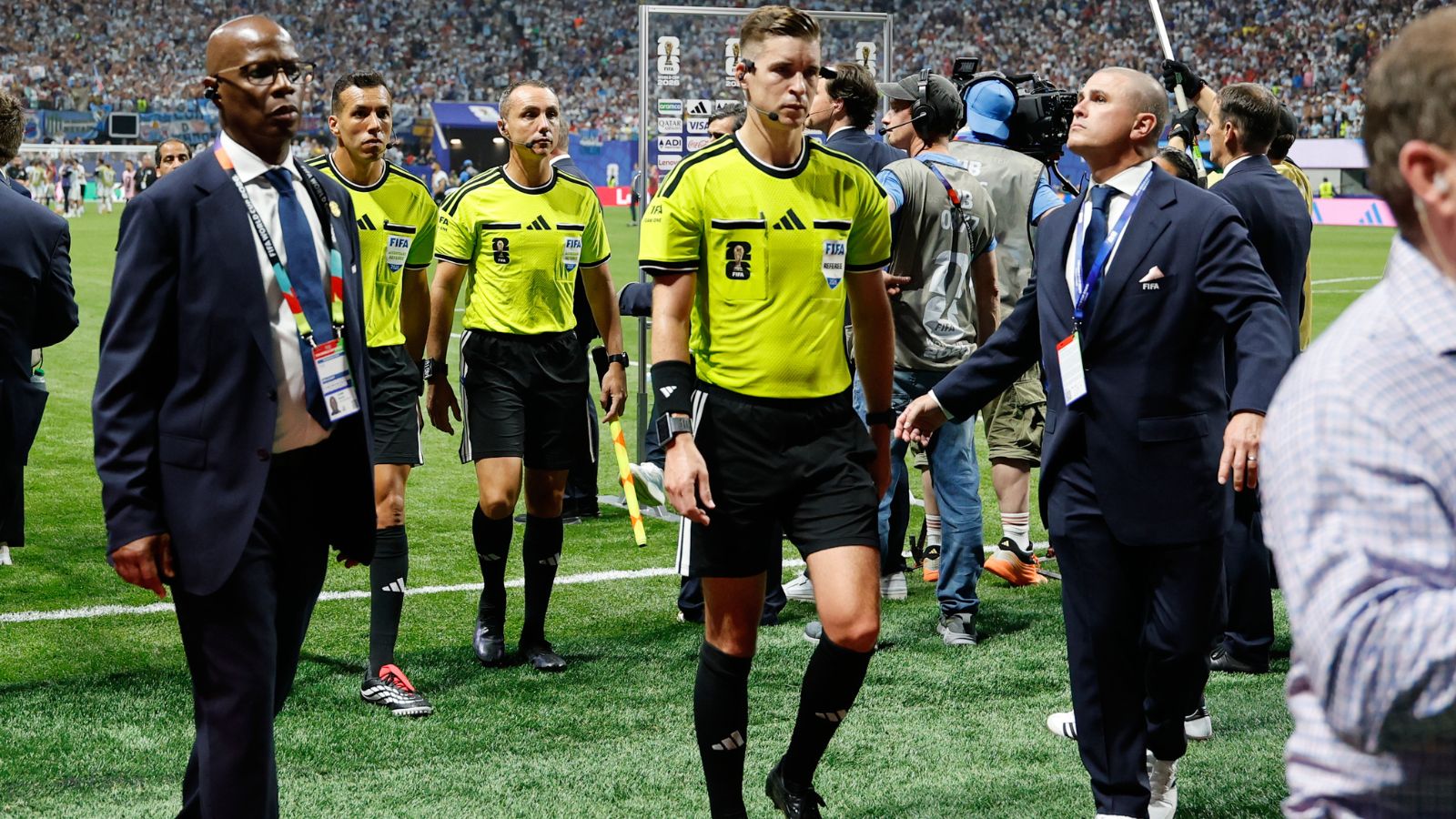
On the days he is not refereeing, Francois Letexier sometimes shows up at a stranger’s door with paperwork that makes him unwelcome before he has said a word. This week he is the most talked-about referee at the World Cup, the man Egypt wants removed from the tournament, and the parallel between his two jobs has never been harder to ignore.
He is a huissier de justice, a bailiff, the person the French legal system sends to serve notices and enforce judgments nobody asked to receive. He specialises in rental disputes and illegal occupation: evictions, mostly, which does not make for easy company at the door. He found the job in law school and liked that it was hands-on. He did not expect it to become the best available description of his other career.
Asked what the two jobs share, he told the French outlet Brut simply: “Football generates some pretty crazy behaviours in terms of emotions, and in my work as a bailiff, often, when I am involved in collection actions, my presence is not always welcome. The situations also generate reactions to which I must adapt.”
He trains five or six times a week for the refereeing, on top of the case files. He has described the arrangement as two careers that complement each other, and there is a plainer reason he has kept it going: French referees aren’t professionals, and football, as he put it, is a fluctuating business. The bailiff work is the steadier income. It is also, he has said, a foothold in ordinary life outside a sport he calls extraordinary.
Referee Francois Letexier of France shows a red card to Egypt assistant coach Mohamed Abdel Wahed during the World Cup round of 16 soccer match between Argentina and Egypt in Atlanta, Tuesday, July 7, 2026. (AP Photo/Mike Stewart)
It has not felt normal this week. On Tuesday night in Atlanta, Letexier disallowed an Egyptian goal for a foul in the build-up, waved away Hamdy Fathy’s penalty appeal in stoppage time, and sent off a member of Egypt’s coaching staff, all before Argentina scored three times in the final minutes to win 3-2. At one point Hossam Hassan, Egypt’s manager, crossed his arms at Letexier, the gesture FIFA uses to report racial abuse. What happened in that moment is disputed. What is not disputed is that Argentina went through.
By Wednesday, Egypt’s federation president had filed a formal complaint demanding Letexier’s removal for the rest of the tournament. Letexier deactivated his Instagram. L’Equipe reported that FIFA would review his performance before deciding whether he takes charge of another match, though there is a simpler reason he might not: FIFA tends not to assign referees from countries still alive in the competition, and France are still alive.
FIFA’s refereeing chief, Pierluigi Collina, went further than promising a review. He called the criticism baseless, said nobody could question the World Cup’s match officials, and warned that doing so exposes referees and their families to threats. “Nobody can question the integrity of the FIFA World Cup match officials,” he said.
Story continues below this ad
Referee Francois Letexier, of France, gestures to Egypt players during the World Cup round of 16 soccer match between Argentina and Egypt in Atlanta, Tuesday, July 7, 2026. (AP Photo/Colin Hubbard)
The story followed him into someone else’s press conference. Asked on Wednesday about Thursday’s quarter-final against Morocco being handed to an all-Argentine 5-referee crew led by Facundo Tello, Didier Deschamps did not duck the question so much as set it down carefully. “Let’s hope our officials are as good as Monsieur Letexier was,” he said.
There is a precedent for what happens next, and it is not encouraging. At the 2002 World Cup, Ecuador’s Byron Moreno was blamed by Italy for their exit to co-host South Korea, and although FIFA never said so directly, he did not referee again that tournament.
He is 37. The IFFHS, the sport’s own historians, named him the best referee in the world in 2024, the first Frenchman to hold the title since Michel Vautrot in 1989. None of that is in question this week. FIFA has spoken up for him. What it has not done is say whether he referees again in this tournament, and that is the part that will actually decide things. He has been here before, in a smaller way: a disputed penalty and two red cards at Nice against Nantes in 2022 brought him death threats. He knows what it is to knock on a door and have it not matter, to anyone inside, that the paperwork is correct.
View original source — Indian Express ↗
Related stories

ESPN
SportsJul 9, 2026 · 1 min
Volpe denies 'BS' report that he refused SS move
ESPN

ESPN
SportsJul 9, 2026 · 1 min
'I got the coaches on curfew': Deion Sanders tops ...
ESPN

France 24
SportsJul 9, 2026 · 1 min
As Iran buries Khamenei, it shifts from 'a theocracy to a nationalistic military leadership'
France 24

Sky Sports
SportsJul 9, 2026 · 1 min
Is Man Utd's midfield rebuild going to plan?
Sky Sports