The Guardian
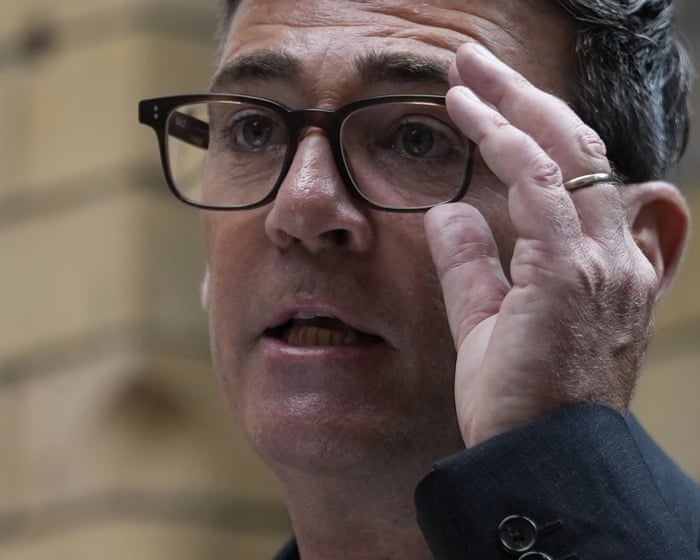
Andy Burnham urged to scrap income tax and NI in radical fiscal overhaul
Prominent economists including Andy Burnham ally Jim O’Neill, are urging him to pursue radical tax and spending reform, to “unlock the gridlock that plagues the country”.
O’Neill joins Jonathan Portes, economics professor at Kings College London, and Danny Sriskandarajah, chief executive of the New Economics Foundation, in calling for bold action in an open letter.
“Taxes in Britain are rising faster than in any comparable economy while public services deteriorate. The country spends £100bn a year in debt interest, more than the entire defence budget and equivalent to half of NHS spending,” they point out.
“Seven prime ministers in 10 years have inherited the same challenge and failed to solve it for the same reasons: the problems are structural and systemic.”
Other signatories to the letter include John Muellbauer, senior research fellow of Nuffield College, Oxford, who has long advocated property tax reform; and professor dame Henrietta Moore, director of the Institute for Global Prosperity at University College London.
They suggest the starting point should be the blueprint for a drastic overhaul of tax and public services laid out in a new report from the institute, published on Thursday.
“Prosperity 2030” suggests replacing six major taxes, including income tax, capital gains tax, inheritance tax and national insurance contributions, with a single levy.
Called “national contributions,” this would be paid on all income, regardless of whether from work, from the sale of assets – or from a late relative’s estate.
The authors of the report claim that depending on the rate it was set at, this could raise a whopping additional £75bn a year within five years.
They call for the proceeds of these and other tax reforms, including a trebling of air passenger duty, to be spent on providing universal services to the public – including free bus services and free lunches for all primary school children, for example.
Moore said: “Prosperity 2030 is about rebuilding the systems that shape everyday life, work, care, housing, skills and the cost of living. It is a plan for an economy that measures success by whether people can live secure, dignified and hopeful lives.”
Tax expert Dan Neidle of consultancy Tax Policy Associates, has raised questions about the plausibility of Prosperity 2030’s assumptions, however, saying, “I don’t see where the numbers come from.”
The report also advocates scrapping stamp duty and council tax in favour of a national 1% levy on the value of property, with the proceeds remitted to local authorities, according to their population.
The latter proposal echoes a suggestion made by Sheffield Hallam MP Lou Haigh, a key member of Burnham’s team, in a recent pamphlet for the Tribune group of Labour MPs. Burnham himself has talked in the past about the benefits of a “land value tax,” levied on property.
This latest intervention comes as policy wonks from across Labour and beyond, vie to influence the incoming regime.
Burnham is expected to be confirmed as Labour leader on 17 July when nominations close, and to take over from Keir Starmer as prime minister on 20 July.
A critical early decision will be who to appoint as chancellor, with energy secretary Ed Miliband regarded as the most likely choice.
O’Neill, a crossbench peer and former chief economist at Goldman Sachs, has collaborated with Burnham in Manchester. He has been mooted as a potential senior adviser to the PM-in-waiting, though no formal announcement has been made.
View original source — The Guardian ↗
Related stories

TASS
BusinessJul 9, 2026 · 1 min
Patriot missile production cycle to take years to fill out — Ukrainian Defense Ministry
TASS

Portugal Resident
BusinessJul 9, 2026 · 1 min
Portugal changed its big tax perk – don’t panic
Portugal Resident
Indian Express
BusinessJul 9, 2026 · 1 min
TCS reports 8.5% rise in net profit for Q1FY27
Indian Express
CNBC
BusinessJul 9, 2026 · 1 min
Arkansas is America's Most Improved State in 2026 as workers move to Walmart's home for low costs, high quality of life
CNBC