Indian Express
Housework, childcare keep 90% of Karnataka’s non-working women out of workforce: Report
3 min readBengaluruJul 9, 2026 07:44 PM IST
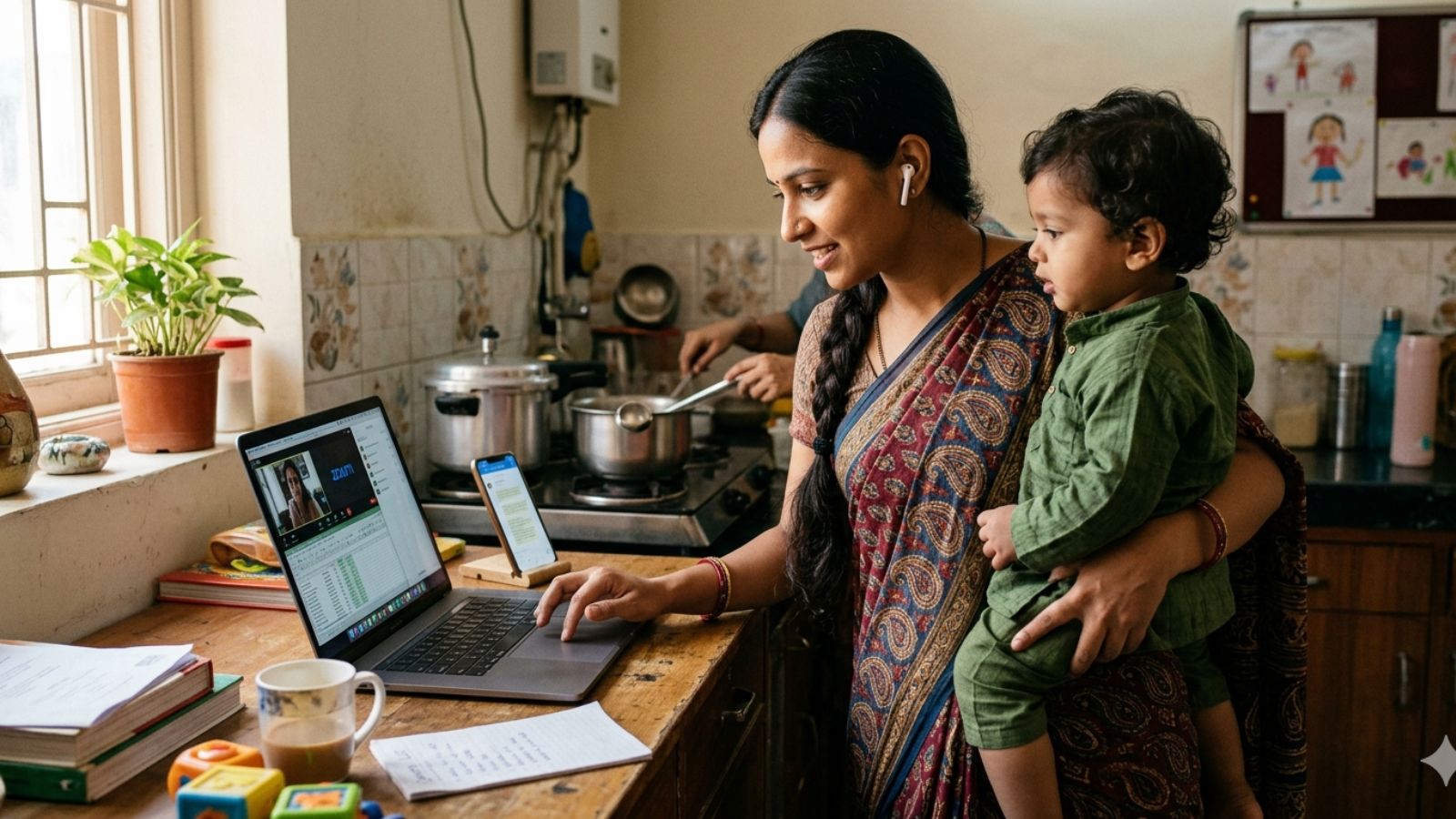
While Karnataka comes out just slightly below the national average, there is considerable variation within the districts. (AI-generated image)
Around 90 per cent of women in Karnataka who are not employed or studying are so because of domestic or childcare responsibilities, according to a report compiled by the Future of India Foundation and released in Bengaluru on Wednesday.
The report, titled The Karnataka Handbook of Youth Opportunity, classifies data mainly at the district level, using 180 data points (based on government-surveyed data) across five “POWER pillars”: participation, opportunities, work, education, and readiness. The raw data points vary widely, building a broad picture—from the stunting rate of children to the number of men who believe domestic violence is always unjustified. The handbook is an expansion of a similar, smaller-scale report released by the foundation last year.
The data is also compiled into a score that approximates the opportunities available to the youth in each state and district. While Karnataka overall comes out just slightly below the national average with a score of 48.5, there is considerable variation within the districts.
For example, Bengaluru Urban and Ramangara boast scores of 65 and 57 respectively; northern districts such as Raichur and Yadgir are lagging far behind with scores around 42.
Future of India Executive Director Ruchi Gupta noted in a foreword to the handbook that the main challenge was “to extend these advantages across the whole state rather than leave them concentrated in Bengaluru. That concentration strains the city’s infrastructure and pushes young people from other districts to migrate in search of opportunity.”
The report also includes an Action Agenda to improve youth opportunities in Karnataka.
The report also highlighted certain issues based on the gender gap. For example, while 17 per cent of working youths are doing unpaid labour (such as in a family farm or enterprise), the figure rises to 24 per cent for women. Further, 24 per cent of female graduates are unemployed, with the figure for male graduates at 13 per cent.
Story continues below this ad
Speaking at the release event, Gupta said, “Eighty-five per cent of Indians live in the district of their birth. The future of India and the future of the youth are the same… and that future will largely be determined at the district level.”
On youthpower.in, the public can access more such data, ranging from indicators at the state or district levels to details of the MP local area development expenditure.
View original source — Indian Express ↗
Related stories

Euronews
WorldJul 9, 2026 · 1 min
EU to probe Chinese Pekin duck imports as market-flooding row hots up
Euronews

TASS
WorldJul 9, 2026 · 1 min
Russia remains main guarantor of Central Asia’s security — expert
TASS

Portugal Resident
WorldJul 9, 2026 · 1 min
Portugal loses enough drinking water to supply 30 million people – DECO
Portugal Resident

Indian Express
WorldJul 9, 2026 · 1 min
Fadnavis-led panel to fast-track Pune’s tunnel network, HCMTR and Inner Ring Road
Indian Express