Indian Express
Women power to widowers honouring their wives: How dindis celebrate memories, music and camaraderie
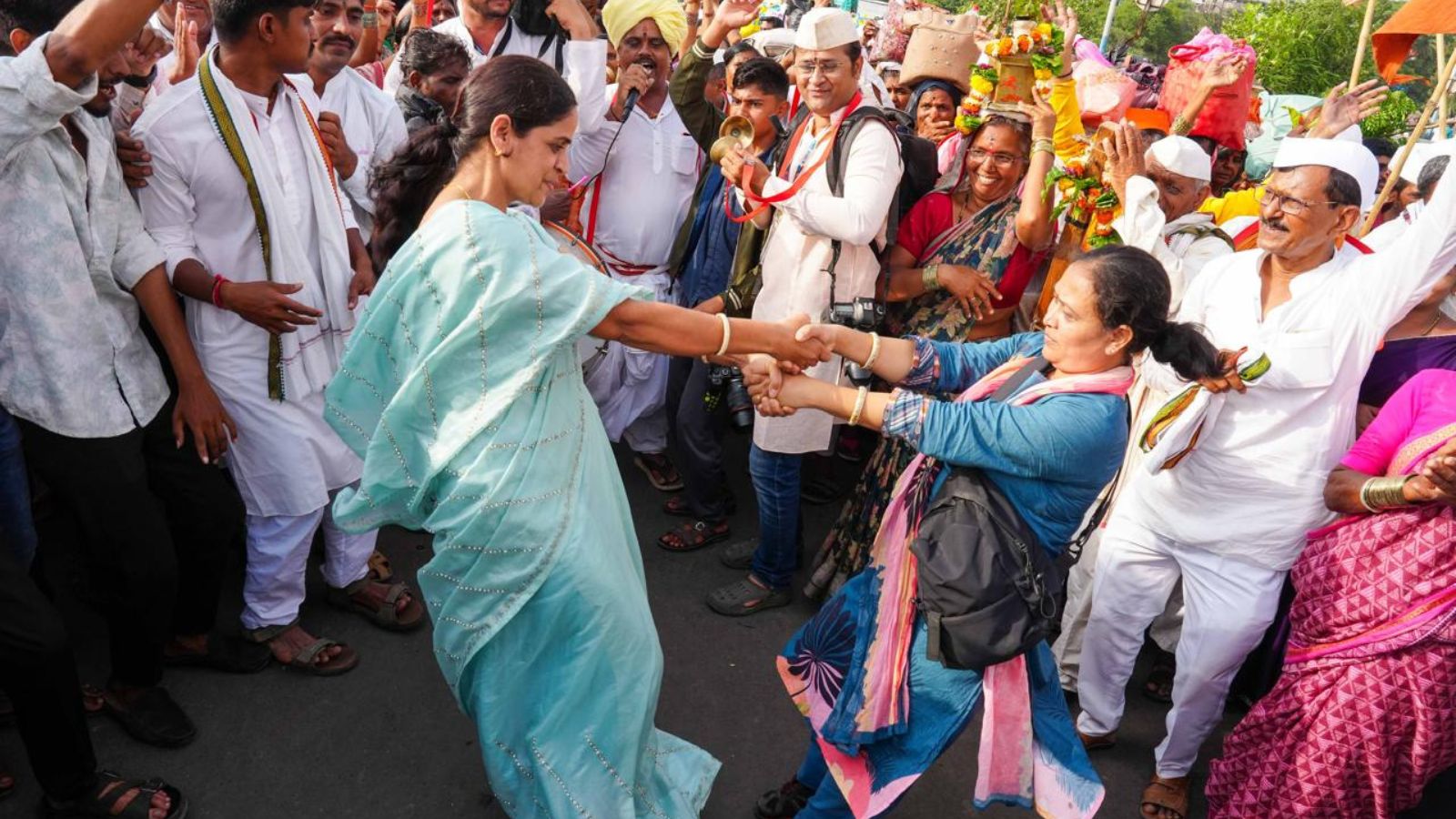
Every year, thousands of Warkaris join the annual pilgrimage to Pandharpur, walking for days with the palkhis of the poet saints Dnyaneshwar Maharaj and Tukaram Maharaj, bound by a shared devotion. But within the sea of saffron flags and chants are hundreds of dindis, each carrying its own story.
While all follow the same route, the journeys are often shaped by personal motivations, some walk to strengthen bonds of sisterhood, others to overcome age and physical hardships, some to celebrate community, and for a few, the Wari has become a way of preserving the memories of loved ones.
Warkaris accompany the Sant Tukaram Maharaj Palkhi as it enters Pune at Wakdewadi on the Mumbai–Pune Highway on Thursday during its annual pilgrimage from Dehu to Pandharpur. (Express photo by Arul Horizon)
One such dindi, from Latur, is made up entirely of women. The group has been participating in the Wari for the past 12 years, creating a space where women from different villages come together to undertake the pilgrimage. Among them is 50-year-old Sunita Kohle, who is participating in the Wari for the first time.
“I had always wanted to experience the Wari. This year, I finally got the opportunity to walk with the women from my village. It has been tiring, but the devotion and support from everyone keeps us going,” Kohle said. She also talks about how this is just not about reaching Pandharpur but it has been an opportunity to experience collective faith, encouragement and companionship, with the women supporting one another.
A few kilometres away walks another dindi that is equally distinctive. Travelling from Telangana, the group is made up entirely of elderly pilgrims between the ages of 60 and 79. Despite advancing age and recurring health concerns, the members have continued returning to the Wari year after year, completing the pilgrimage together for nearly two decades. “We all have knee pain and age-related problems, but once the journey begins, we leave everything to God. He takes care of us, and that belief gives us the strength to keep walking every year,” said 72-year-old Sattu Patel Sakarga.
Travelling from Telangana, a group is made up entirely of elderly pilgrims between the ages of 60 and 79. (Express Photo by Arul Horizon)
For another dindi from Latur, however, the Wari is as much about spreading joy and entertaining others as it is about devotion. Dedicated to Sadashiv Maharaj, the five-year-old dindi has become known among fellow pilgrims for the festive atmosphere it creates along the route. Rather than quietly resting during scheduled halts, members gather to sing kirtans, beat the dhol and perform traditional folk dances such as phugdi, often drawing participants from neighbouring dindis into the celebrations.
Story continues below this ad
“The keertan has been different this year. Every stop becomes a celebration where every other warkaris too joins in. We dance, play the dhol and enjoy ourselves together. It strengthens our bond and reminds us that the Wari is also about community,” said 47-year-old Madhav Waghmare.
While some dindis celebrate through music, another from Alandi carries a quieter story of remembrance. Achintya Kadam, 72, and Neeleshwar Joshi, 69, have been participating in the Wari for the past 27 years. For most of those years, they walked alongside their wives, sharing the physical and spiritual journey together. After both their wives passed away, the two men made the decision to continue the tradition every year, not despite their loss, but because of it.
For another dindi from Latur, however, the Wari is as much about spreading joy and entertaining others as it is about devotion. (Express Photo by Arul Horizon)
“Walking the Wari makes us feel closer not only to God but also to our wives,” Kadam said. Joshi added that they will continue undertaking the pilgrimage ‘for as long as our bodies allow’.
Though every dindi follows the same route towards Pandharpur, the journeys are shaped by different motivations, faith, companionship, perseverance, celebration and remembrance. Together, they reflect the many meanings that the centuries-old Wari continues to hold for its devotees.
View original source — Indian Express ↗
Related stories

AllAfrica
WorldJul 9, 2026 · 1 min
Nigeria: Tinubu Transmits Bill to Reform Secondary Education System to Nass
AllAfrica

Rio Times
WorldJul 9, 2026 · 1 min
Cuba’s Biggest Power Plant Now Fails Every Eleven Days
Rio Times
Times of India
WorldJul 9, 2026 · 1 min
MHA unveils four-layer 'smart border' grid, cites J&K, Northeast gains
Times of India

Philippine Daily Inquirer
WorldJul 9, 2026 · 1 min
919 barangays in Western Visayas face flood, landslide risks
Philippine Daily Inquirer